


Sociodemographics, Comorbidities, Healthcare Utilization and Work Productivity in Japanese Patients with Adult ADHD
- PMID: 26147097
- PMCID: PMC4493035
- DOI: 10.1371/journal.pone.0132233
Sociodemographics, Comorbidities, Healthcare Utilization and Work Productivity in Japanese Patients with Adult ADHD
Abstract
Objectives: This study compared the sociodemographic characteristics, comorbidities, healthcare resource utilization, and work productivity among Japanese adults who reported being diagnosed with attention-deficit/hyperactivity disorder (ADHD) to those of a non-ADHD control population.
Methods: Data for this study were captured from an online survey of adults in Japan conducted by Kantar Health using consumer panels. A total of 84 survey participants reported they had received a diagnosis of ADHD from a physician. Survey responses pertaining to functional status and resource utilization from this ADHD group were compared to those from a non-ADHD control group of 100 participants. Comparisons between the ADHD and non-ADHD groups were made using chi-square tests for categorical variables and t-tests for continuous variables.
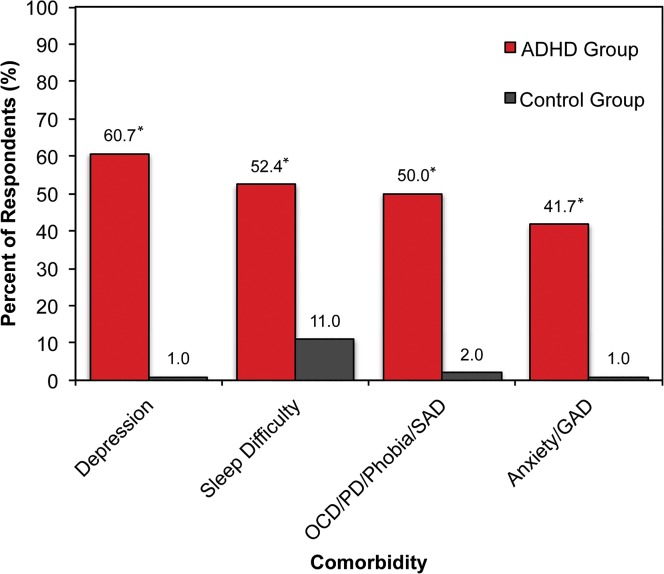
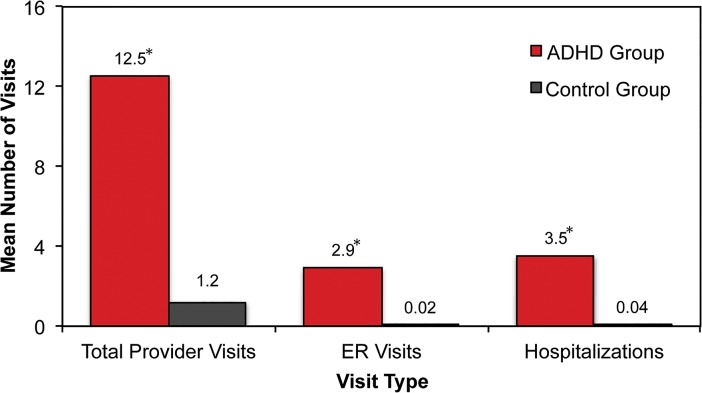
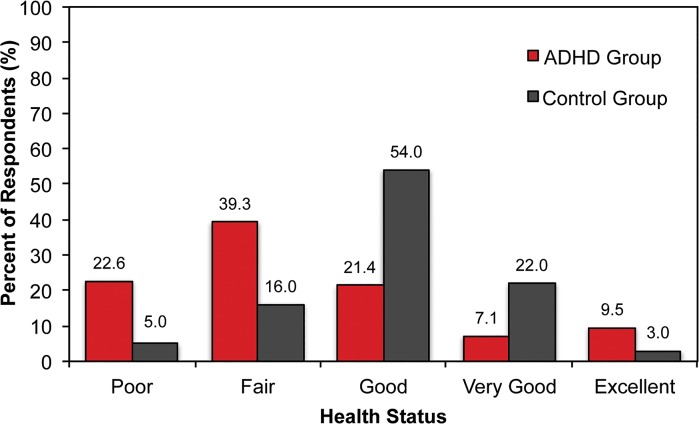
Results: Participants in the ADHD group were on average slightly younger with a higher proportion of males. ADHD respondents reported significantly more comorbid depression, sleep difficulties, headaches, and anxiety than non-ADHD controls. Over the previous 6 months, the ADHD group made more visits to healthcare providers and the emergency room, and had more hospitalizations than non-ADHD controls. The ADHD group also rated their overall health status lower than the non-ADHD control group. Respondents with ADHD reported a significantly higher degree of health-related work impairment compared to non-ADHD, with greater absenteeism and decreased work productivity. The ADHD group indicated their symptoms negatively impacted relationships, self-esteem, and regular daily activities.
Conclusions: Japanese adults with ADHD face a substantial burden of illness, including lower overall health status, increased number of comorbidities, greater healthcare utilization, and significant health-related occupational impairment compared to those without ADHD. Additional research is needed to develop a better understanding of both the consequences and treatment approaches for Japanese adults with ADHD.
Conflict of interest statement
Figures
References
-
- American Psychiatric Association. Diagnostic and Statistical Manual of Mental Disorders DSM-IV-TR Fourth Edition. 4th ed. Washington, DC: American Psychiatric Publishing, Inc; 2000.
-
- Spencer TJ, Biederman J, Mick E. Attention-deficit/hyperactivity disorder: diagnosis, lifespan, comorbidities, and neurobiology. J Pediatr Psychol. 2007;32: 631–642. - PubMed
-
- Barkley RA, Fischer M, Smallish L, Fletcher K. The persistence of attention-deficit/hyperactivity disorder into young adulthood as a function of reporting source and definition of disorder. J Abnorm Psychol. 2002;111: 279–289. - PubMed
-
- Biederman J, Mick E, Faraone SV. Age-dependent decline of symptoms of attention deficit hyperactivity disorder: impact of remission definition and symptom type. Am J Psychiatry. 2000;157: 816–818. - PubMed
Publication types
MeSH terms
LinkOut - more resources
Full Text Sources
Other Literature Sources
Medical
