


Tumour necrosis factor-α inhibition can stabilize disease in progressive vitiligo
- PMID: 26149498
- PMCID: PMC4583813
- DOI: 10.1111/bjd.14016
Tumour necrosis factor-α inhibition can stabilize disease in progressive vitiligo
Abstract
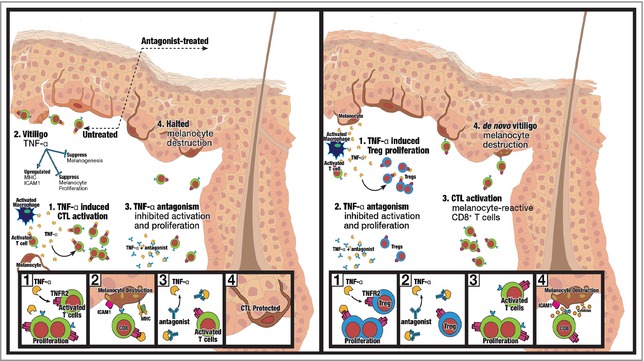
Tumour necrosis factor (TNF)-α, a proinflammatory cytokine central to many autoimmune diseases, has been implicated in the depigmentation process in vitiligo. We review its role in vitiligo by exploring its pro- and anti-inflammatory properties and examine the effects of blocking its actions with TNF-α antagonist therapeutics in reports available in the literature. We found that TNF-α inhibition halts disease progression in patients with progressive vitiligo but that, paradoxically, treatment can be associated with de novo vitiligo development in some patients when used for other autoimmune conditions, particularly when using adalimumab and infliximab. These studies reinforce the importance of stating appropriate outcomes measures, as most pilot trials propose to measure repigmentation, whereas halting depigmentation is commonly overlooked as a measure of success. We conclude that TNF-α inhibition has proven useful for patients with progressive vitiligo, where TNF-α inhibition is able to quash cytotoxic T-cell-mediated melanocyte destruction. However, a lingering concern for initiating de novo disease will likely prevent more widespread application of TNF inhibitors to treat vitiligo.
© 2015 The Authors. British Journal of Dermatology published by John Wiley & Sons Ltd on behalf of British Association of Dermatologists.
Figures
Comment in
-
Tumour necrosis factor-α antagonists as therapies for vitiligo.Br J Dermatol. 2015 Sep;173(3):635. doi: 10.1111/bjd.14057. Br J Dermatol. 2015. PMID: 26404571 No abstract available.
References
-
- Wakefield PE, James WD, Samlaska CP, Meltzer MS. Tumor necrosis factor. J Am Acad Dermatol 1991; 24:675–85. - PubMed
-
- Vassali P. The pathophysiology of tumour necrosis factor. Annu Rev Immunol 1992; 10:411–52. - PubMed
-
- Aggarwal BB. Signaling pathways of the TNF superfamily: a double‐edged sword. Nat Rev Immunol 2003; 3:745–56. - PubMed
-
- Spriggs DR, Deutsch S, Kufe DW. Genomic structure, induction, and production of TNF‐alpha. Immunol Ser 1992; 56:3–34. - PubMed
-
- Black RA, Rauch CT, Kozlosky CT et al A metalloproteinase disintegrin that releases tumour‐necrosis factor‐alpha from cells. Nature 1997; 385:729–33. - PubMed
Publication types
MeSH terms
Substances
Grants and funding
LinkOut - more resources
Full Text Sources
Other Literature Sources
Medical
