


Histologic Features of Intestinal Thrombotic Microangiopathy in Pediatric and Young Adult Patients after Hematopoietic Stem Cell Transplantation
- PMID: 26150023
- PMCID: PMC4604068
- DOI: 10.1016/j.bbmt.2015.06.016
Histologic Features of Intestinal Thrombotic Microangiopathy in Pediatric and Young Adult Patients after Hematopoietic Stem Cell Transplantation
Abstract
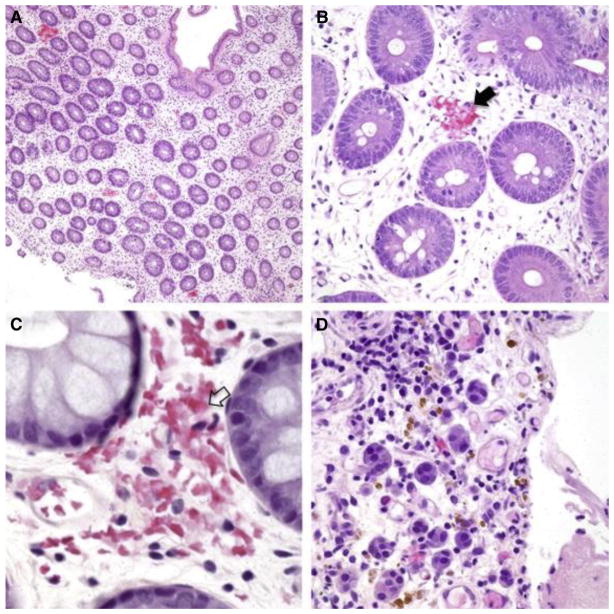
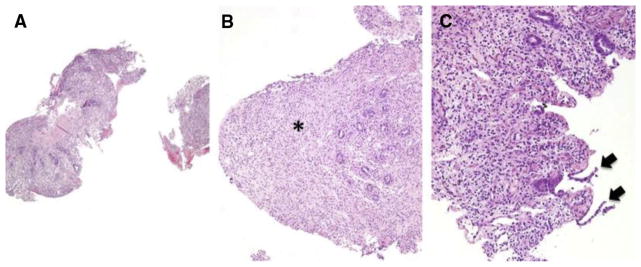
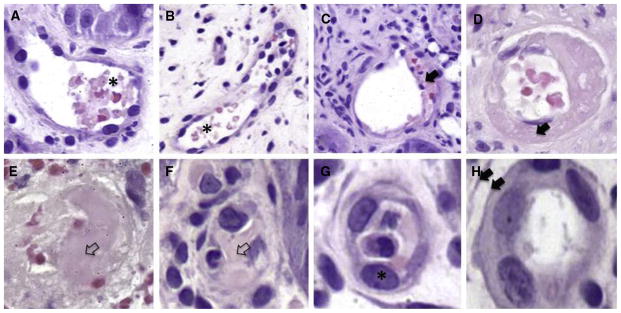
High-risk transplantation-associated thrombotic microangiopathy (TMA) can present with multisystem involvement and is associated with a poor outcome after hematopoietic stem cell transplantation (HSCT), with < 20% 1-year survival. TMA may involve the intestinal vasculature and can present with bleeding and ischemic colitis. There are no established pathologic criteria for the diagnosis of intestinal TMA (iTMA). The goal of our study was to identify histologic features of iTMA and describe associated clinical features. We evaluated endoscopic samples from 50 consecutive HSCT patients for 8 histopathologic signs of iTMA and compared findings in 3 clinical groups based on the presence or absence of systemic high-risk TMA (hrTMA) and the presence or absence of clinically staged intestinal graft-versus-host disease (iGVHD): TMA/iGVHD, no TMA/iGVHD, and no TMA/no iGVHD. Thirty percent of the study subjects had a clinical diagnosis of systemic hrTMA. On histology, loss of glands, intraluminal schistocytes, intraluminal fibrin, intraluminal microthrombi, endothelial cell separation, and total denudation of mucosa were significantly more common in the hrTMA group (P < .05). Intravascular thrombi were seen exclusively in patients with hrTMA. Mucosal hemorrhages and endothelial cell swelling were more common in hrTMA patients but this difference did not reach statistical significance. Patients with hrTMA were more likely to experience significant abdominal pain and gastrointestinal bleeding requiring multiple blood transfusions (P < .05). Our study shows that HSCT patients with systemic hrTMA can have significant bowel vascular injury that can be identified using defined histologic criteria. Recognition of these histologic signs in post-transplantation patients with significant gastrointestinal symptoms may guide clinical decisions.
Keywords: Endothelial injury; Graft-versus-host disease TA-TMA; Intestinal thrombotic microangiopathy; Thrombotic microangiopathy (TMA).
Copyright © 2015 American Society for Blood and Marrow Transplantation. Published by Elsevier Inc. All rights reserved.
Conflict of interest statement
Figures
References
-
- Hingorani S. Chronic kidney disease after pediatric hematopoietic cell transplant. Biol Blood Marrow Transplant. 2008;14:84–87. - PubMed
-
- Hingorani S. Chronic kidney disease in long-term survivors of hematopoietic cell transplantation: epidemiology, pathogenesis, and treatment. J Am Soc Nephrol. 2006;17:1995–2005. - PubMed
-
- Hingorani S, Guthrie KA, Schoch G, et al. Chronic kidney disease in long-term survivors of hematopoietic cell transplant. Bone Marrow Transplant. 2007;39:223–229. - PubMed
-
- Oeffinger KC, Mertens AC, Sklar CA, et al. Chronic health conditions in adult survivors of childhood cancer. N Engl J Med. 2006;355:1572–1582. - PubMed
-
- Oeffinger KC, Hudson MM, Landier W. Survivorship: childhood cancer survivors. Prim Care. 2009;36:743–780. - PubMed
Publication types
MeSH terms
Substances
Grants and funding
LinkOut - more resources
Full Text Sources
Other Literature Sources
Medical
