. 2015 Jul 8:5:12037.
doi: 10.1038/srep12037.

The elusive life cycle of scyphozoan jellyfish--metagenesis revisited

Affiliations

The elusive life cycle of scyphozoan jellyfish--metagenesis revisited

Janja Ceh et al. Sci Rep. .

Abstract

Massive proliferations of scyphozoan jellyfish considerably affect human industries and irreversibly change food webs. Efforts to understand the role of jellyfish in marine ecosystems are based on a life cycle model described 200 years ago. According to this paradigm the pelagic medusae is considered seasonal and alternates with the benthic polyp stage from which it derives. However, we provide evidence that a) the occurrence of several species of medusae is not restricted to a season in the year, they overwinter, b) polyp- and medusa generations are neither temporally nor spatially separated, and c) "metagenesis" which is defined as the alternation between sexual and asexual generations does not always occur. Hence we recommend additions to the current model and argue that the scyphozoan life cycle should be considered multi-modal, rather than metagenetic. The implications of these findings for jellyfish proliferations, including possible consequences and associated environmental drivers, are discussed.


Figures
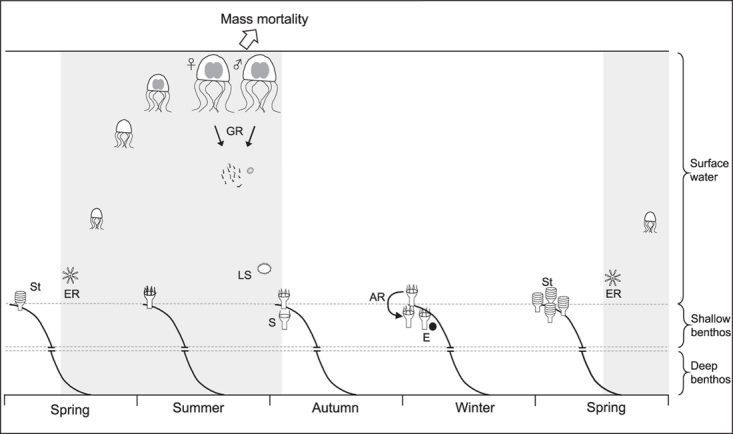
Figure 1
Figure 1. The Metagenetic Life Cycle model, Agassiz (1860).
In early spring, ephyrae develop into young medusae. These grow through summer, reach sexual maturity, reproduce sexually and subsequently die. Planula-larvae sink to the seabed, settle and metamorphose into scyphistoma-polyps. Scyphistomae reproduce asexually through strobilation, or produce cysts. In early spring scyphistomae develop into strobilae and release ephyrae. The temporal and spatial separation of the reproductive activity of the polyp- and the medusa generation (benthic and pelagic phase) is represented by white and grey backgrounds, respectively. Sexual maturity is represented by two dark-grey oval structures (gonads). St strobilation, ER ephyrae release, GR gamete release, LS larval stage, S settlement, E encystment, AR asexual reproduction.
Figure 2
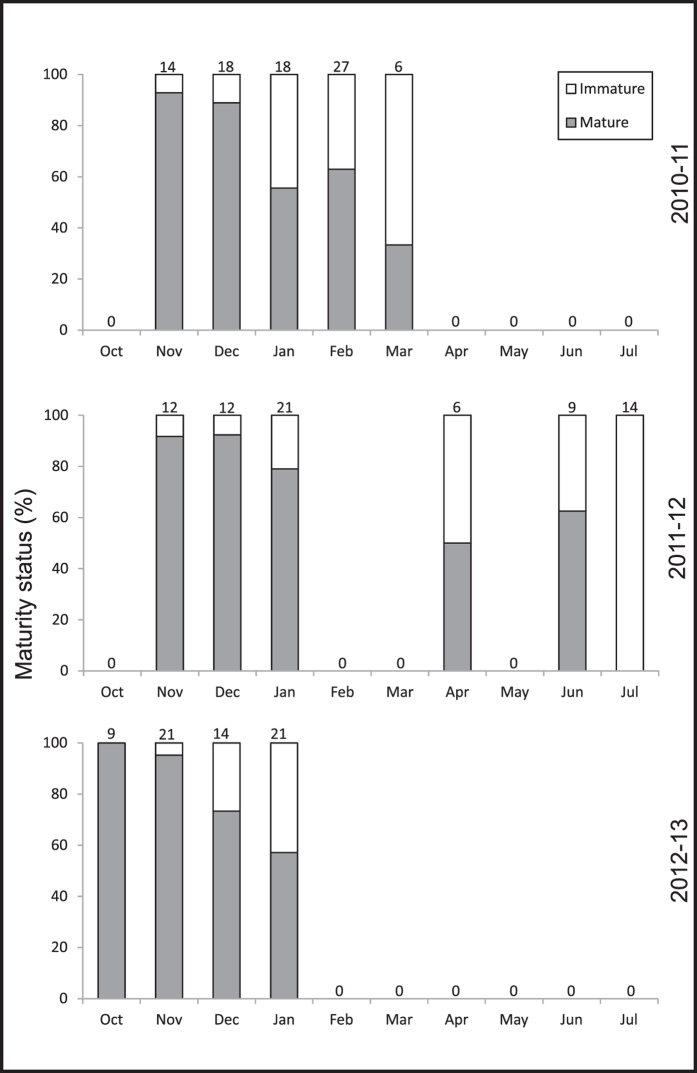
Figure 2. Proportions of mature versus immature C. plocamia medusae in three medusa-seasons.
Numbers above panels represent the number of animals sampled. Zero values indicate the absence of medusae.
Figure 3
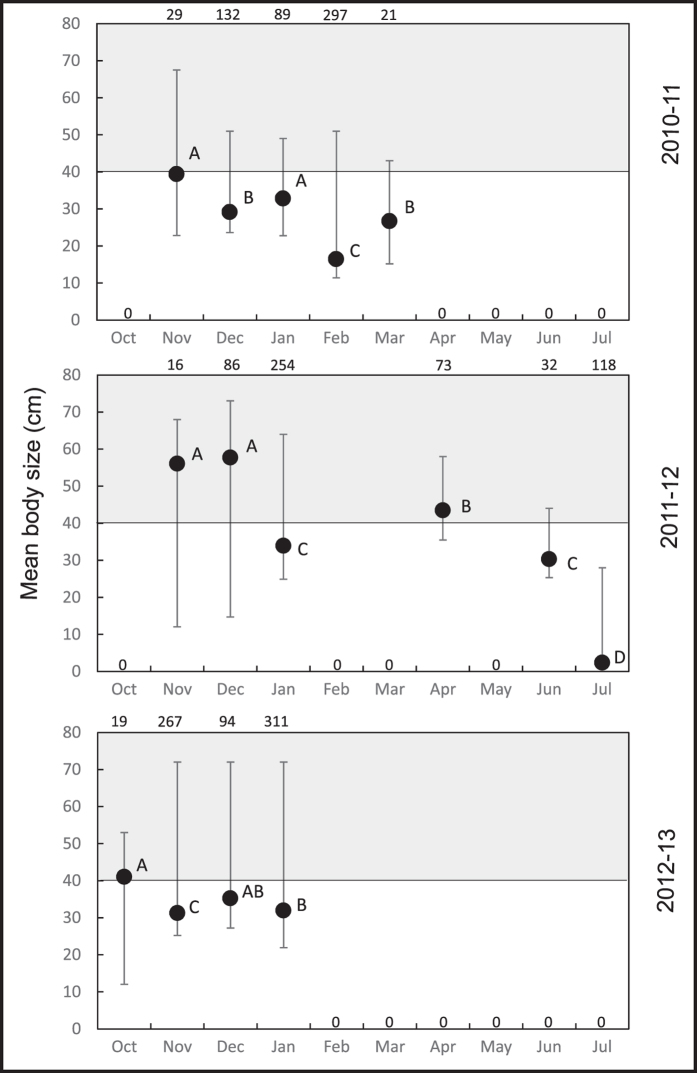
Figure 3. Mean body size of C. plocamia medusae in three medusa-seasons.
Error bars show the maximum and minimum size. The black line represents the body size above which all animals were expected to be sexually mature (see supplementary Fig. S5). Different capital letters indicate significant differences between months (post hoc comparisons, Tukey-Kramer HSD). Numbers above panels represent the number of animals sampled. Zero values indicate the absence of medusae.
Figure 4
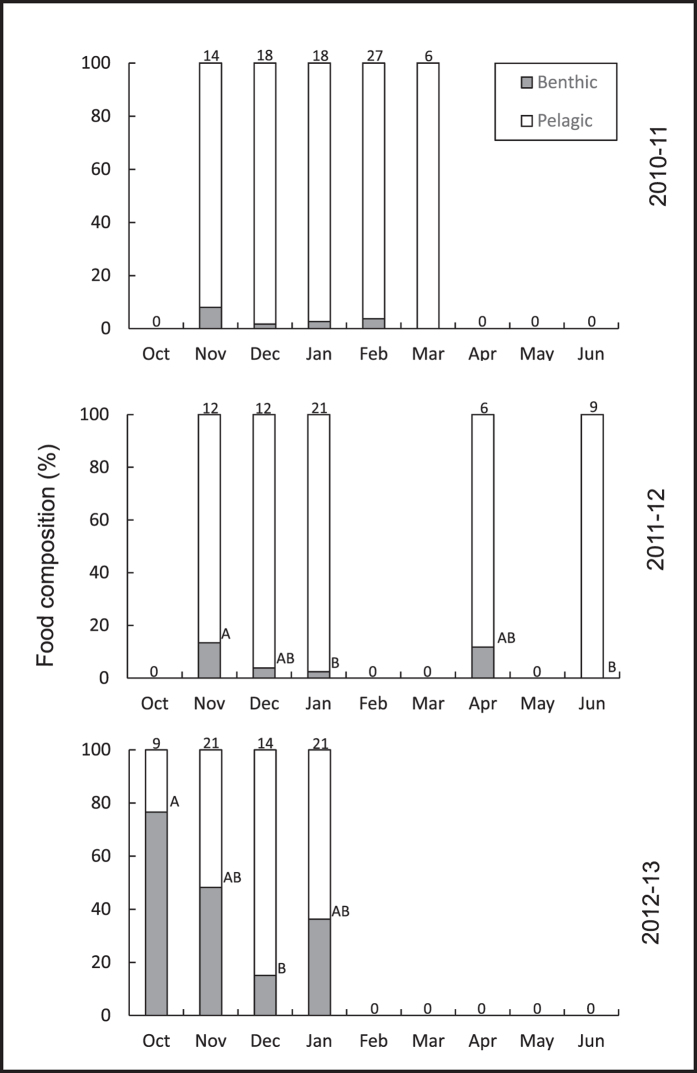
Figure 4. Food composition in gastric pouches of C. plocamia medusae in three medusa-seasons.
Different capital letters indicate significant differences between months (post-hoc comparisons, Bonferroni correction). Numbers above panels represent the number of animals sampled. Zero values indicate the absence of medusae.
Figure 5
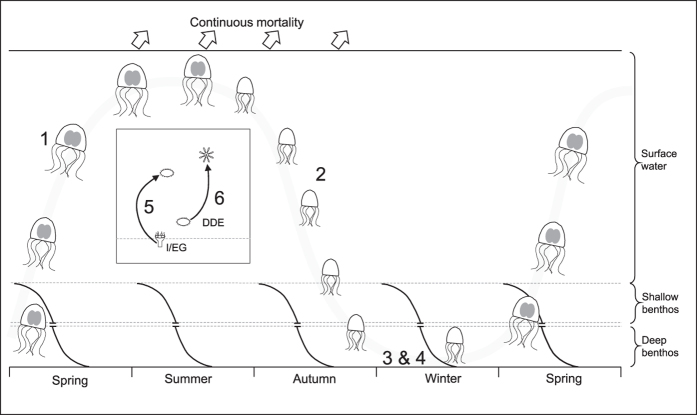
Figure 5. Additions to the present MLC model (Fig. 1), pointing out the multi-modal character of the scyphozoan life cycle.
Medusae in surface waters in late spring are large and sexually mature (1) whereas animals found later in the season tend to be smaller in size. This observation suggests a constant supply of new medusae due continuous strobilation through summer (not shown). In late summer, medium sized medusae sink to the seabed (2), spend the winter near the deep benthos (3)/(4) and ascent as large and sexually mature animals to surface waters in late spring (1). Polyps can produce a mobile planuloid through external/internal gemmation, by-passing the medusa-stage (5) and planula-larvae can directly develop into ephyrae (6), by-passing the medusa stage. The presented life-cycle-traits have been reported for different scyphozoan species worldwide, not all are necessarily applicable to all species. Grey shadings represent medusae movements. DDE direct development of ephyrae; I/EG internal/external gemmation. Numbers 1–6 follow the numbering in Table 1.

References

    1. Graham W. M. et al. Linking human well-being and jellyfish: ecosystem services, impacts, and societal responses. Front. Ecol. Environ. 12, 515–523 (2014).
    1. Purcell J. E. Jellyfish and ctenophore blooms coincide with human proliferations and environmental perturbations. Ann. Rev. Mar. Sci. 4, 209–235 (2012). - PubMed
    1. Richardson A. J., Bakun A., Hays G. C. & Gibbons M. J. The jellyfish joyride: causes, consequences and management responses to a more gelatinous future. Trends Ecol. Evol. 24, 312–322 (2009). - PubMed
    1. Condon R. H. et al. Questioning the rise of gelatinous zooplankton in the world’s oceans. BioScience 62, 160–169 (2012).
    1. Hamner W. & Dawson M. in Jellyfish Blooms: Causes, Consequences, and Recent Advances (eds Pitt K. A. & Purcell J. E. ) Ch. 12, 161–191 (Springer: Netherlands, , 2009).

Publication types

LinkOut - more resources