Knowledge, Attitudes, and Practices of Obstetrician-Gynecologists Regarding Influenza Prevention and Treatment Following the 2009 H1N1 Pandemic
- PMID: 26154997
- PMCID: PMC4808292
- DOI: 10.1089/jwh.2014.5178
Knowledge, Attitudes, and Practices of Obstetrician-Gynecologists Regarding Influenza Prevention and Treatment Following the 2009 H1N1 Pandemic
Abstract
Background: Pregnant women are at increased risk for complications associated with influenza. Influenza vaccination during pregnancy helps protect both pregnant women and infants less than 6 months of age from contracting the flu. This study investigated influenza prevention and treatment practices of obstetrician-gynecologists (ob-gyns) during the influenza season immediately following the 2009-2010 H1N1 season.
Methods: In 2011, surveys were sent to two groups of Fellows of the American College of Obstetricians and Gynecologists. Group 1 was 907 ob-gyns who responded to our previous survey on practice and knowledge of influenza vaccination, diagnosis, and treatment during the 2009-2010 H1N1 influenza pandemic. Group 2 was 2,293 new recipients randomly selected from the American College of Obstetricians and Gynecologists database. Data were analyzed in 2013.
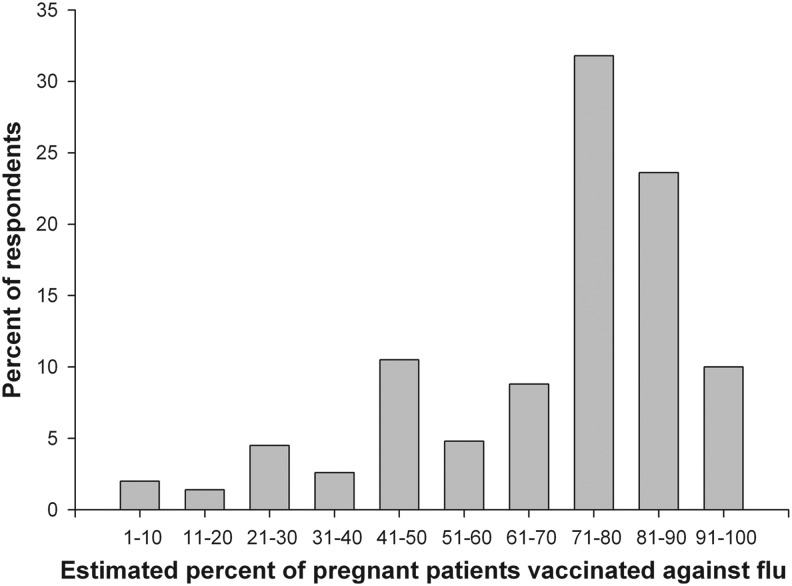
Results: A high proportion of pregnant patients were reported to be vaccinated against influenza (71.7%); however, the data suggest that in general preventative practices decreased between the 2009-2010 H1N1 season and 2010-2011 season. A higher proportion of women eligible for Medicaid in a practice was associated with a lower estimate of vaccination rate. Ob-gyns with more than 20 years of practice were more likely to be concerned about the risks of antivirals and less likely to routinely prescribe them.
Conclusions: Ob-gyns may be overestimating the proportion of pregnant women being vaccinated. The gains in vaccination and influenza prevention practices from the H1N1 pandemic have not been completely retained. Discrepancies in the use of anti-virals to treat suspected or confirmed influenza in pregnant patients exist and need to be addressed.
Figures

References
-
- Rasmussen SA, Jamieson DJ, Uyeki TM. Effects of influenza on pregnant women and infants. Am J Obstet Gynecol 2012;207:S3–8 - PubMed
-
- Centers for Disease Control and Prevention. Prevention and control of seasonal influenza with vaccines. Recommendations of the Advisory Committee on Immunization Practices–United States, 2013–2014. MMWR Recomm Rep 2013;62:1–43 - PubMed
-
- American College of Obstetricians and Gynecologists. ACOG Committee Opinion No. 608: Influenza vaccination during pregnancy. Obstet Gynecol 2014;124:648–651 - PubMed
-
- Steinhoff MC, Omer SB. A review of fetal and infant protection associated with antenatal influenza immunization. Am J Obstet Gynecol 2012;207:S21–7 - PubMed
Publication types
MeSH terms
Grants and funding
LinkOut - more resources
Full Text Sources
Other Literature Sources
Medical
Miscellaneous