


Efficacy and safety of oral branched-chain amino acid supplementation in patients undergoing interventions for hepatocellular carcinoma: a meta-analysis
- PMID: 26155840
- PMCID: PMC4496824
- DOI: 10.1186/s12937-015-0056-6
Efficacy and safety of oral branched-chain amino acid supplementation in patients undergoing interventions for hepatocellular carcinoma: a meta-analysis
Abstract
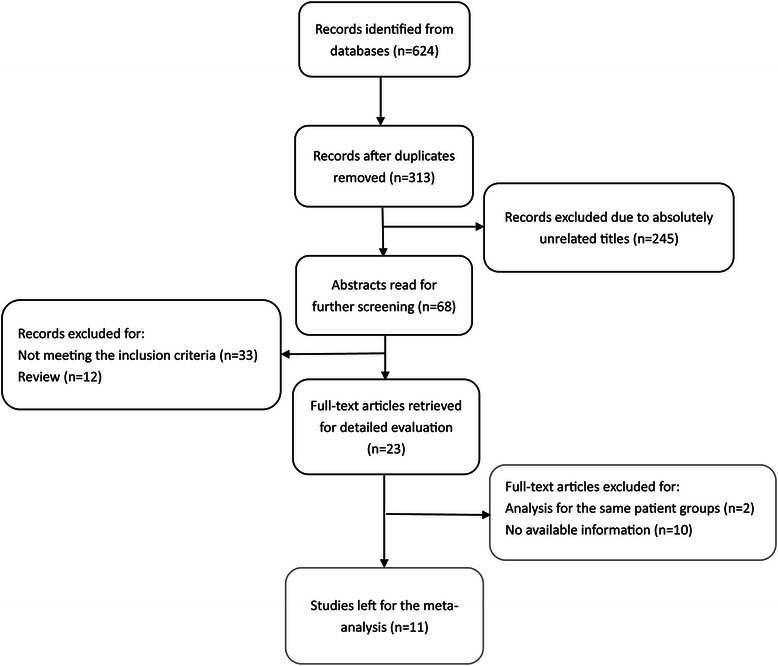
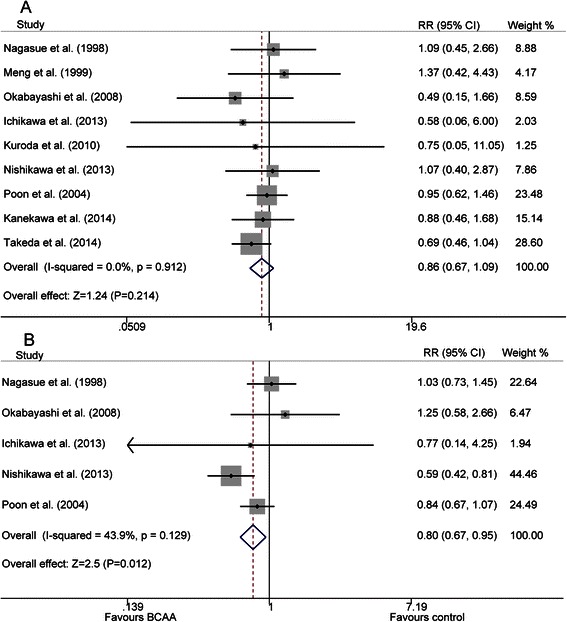
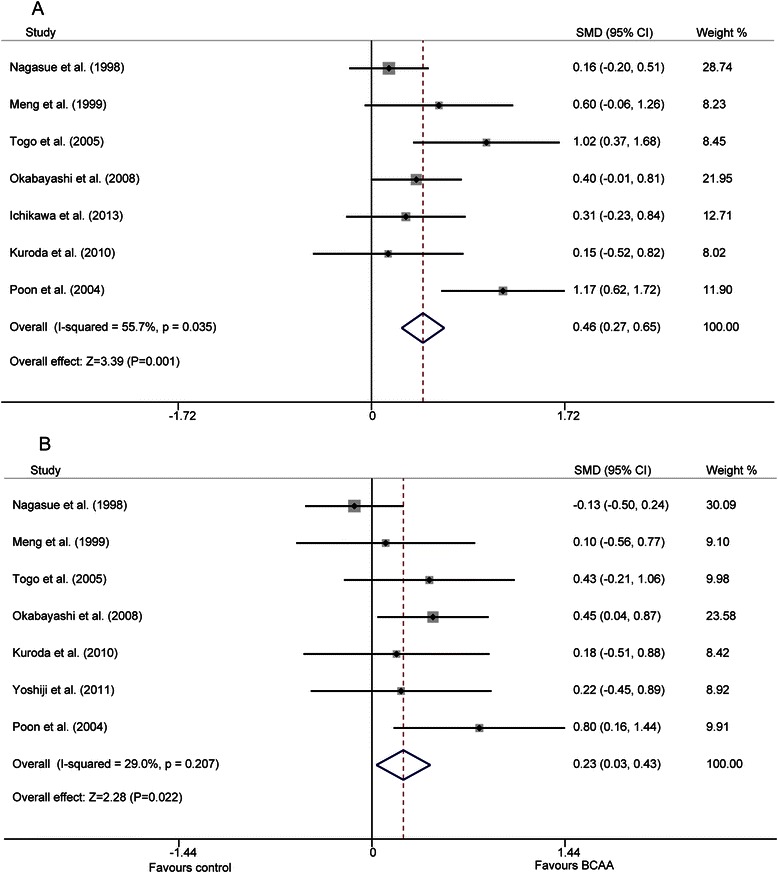
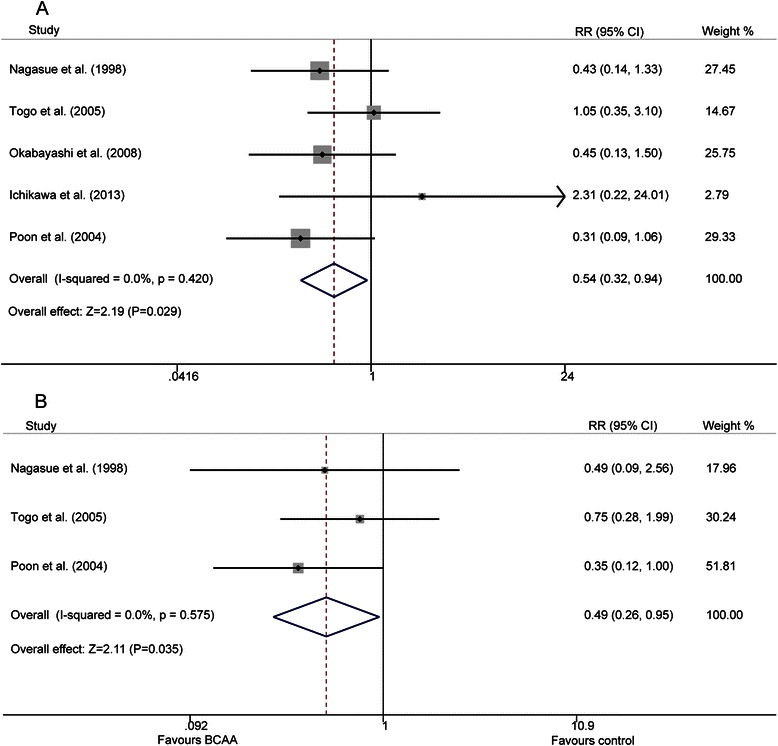
Most hepatocellular carcinoma (HCC) patients have complications, including cirrhosis and malnutrition. The efficacy of dietary supplementation with oral branched-chain amino acids (BCAAs) in HCC patients undergoing interventions has not been confirmed. Relevant publications on the efficacy and safety of oral BCAA supplementation for HCC patients undergoing anti-HCC interventions through September, 2014 were searched for identification in the PubMed, Embase, Web of Science, and the Cochrane Library databases. The pooled risk ratio (RR) and standardized mean difference (SMD) were used to assess the supplementation effects. A total of 11 eligible studies (974 patients in total) were evaluated and included in our analysis. Oral BCAA supplementation helped to maintain liver reserve with higher serum albumin (SMD = 0.234, 95% CI: 0.033-0.435, P = 0.022), and lower rates of ascites (RR = 0.545, 95% CI: 0.316-0.938, P = 0.029) and edema (RR = 0.494, 95% CI: 0.257-0.952, P = 0.035) than in the control group. BCAA supplementation seemed to be effective in improving mortality, especially in Child-Pugh class B patients, but the efficacy was not confirmed. Apparent effects were not found in improving HCC recurrence, total bilirubin, ALT, or AST. BCAA supplementation was relatively safe without serious adverse events. BCAA supplementation may be clinically applied in improving liver functional reserve for HCC patients and further improving the quality of life.
Figures
References
-
- Wilhelm SM, Carter C, Tang L, Wilkie D, McNabola A, Rong H, Chen C, Zhang X, Vincent P, McHugh M, et al. BAY 43–9006 exhibits broad spectrum oral antitumor activity and targets the RAF/MEK/ERK pathway and receptor tyrosine kinases involved in tumor progression and angiogenesis. Cancer Res. 2004;64:7099–7109. doi: 10.1158/0008-5472.CAN-04-1443. - DOI - PubMed
Publication types
MeSH terms
Substances
LinkOut - more resources
Full Text Sources
Other Literature Sources
Medical
