. 2015 Jul 9:6:7659.
doi: 10.1038/ncomms8659.

Lansoprazole is an antituberculous prodrug targeting cytochrome bc1

Affiliations

Lansoprazole is an antituberculous prodrug targeting cytochrome bc1

Jan Rybniker et al. Nat Commun. .

Abstract

Better antibiotics capable of killing multi-drug-resistant Mycobacterium tuberculosis are urgently needed. Despite extensive drug discovery efforts, only a few promising candidates are on the horizon and alternative screening protocols are required. Here, by testing a panel of FDA-approved drugs in a host cell-based assay, we show that the blockbuster drug lansoprazole (Prevacid), a gastric proton-pump inhibitor, has intracellular activity against M. tuberculosis. Ex vivo pharmacokinetics and target identification studies reveal that lansoprazole kills M. tuberculosis by targeting its cytochrome bc1 complex through intracellular sulfoxide reduction to lansoprazole sulfide. This novel class of cytochrome bc1 inhibitors is highly active against drug-resistant clinical isolates and spares the human H(+)K(+)-ATPase thus providing excellent opportunities for targeting the major pathogen M. tuberculosis. Our finding provides proof of concept for hit expansion by metabolic activation, a powerful tool for antibiotic screens.


Conflict of interest statement

J.R. and S.T.C. are named inventors on a patent pertaining to this work. The remaining authors declare no competing financial interests.

Figures
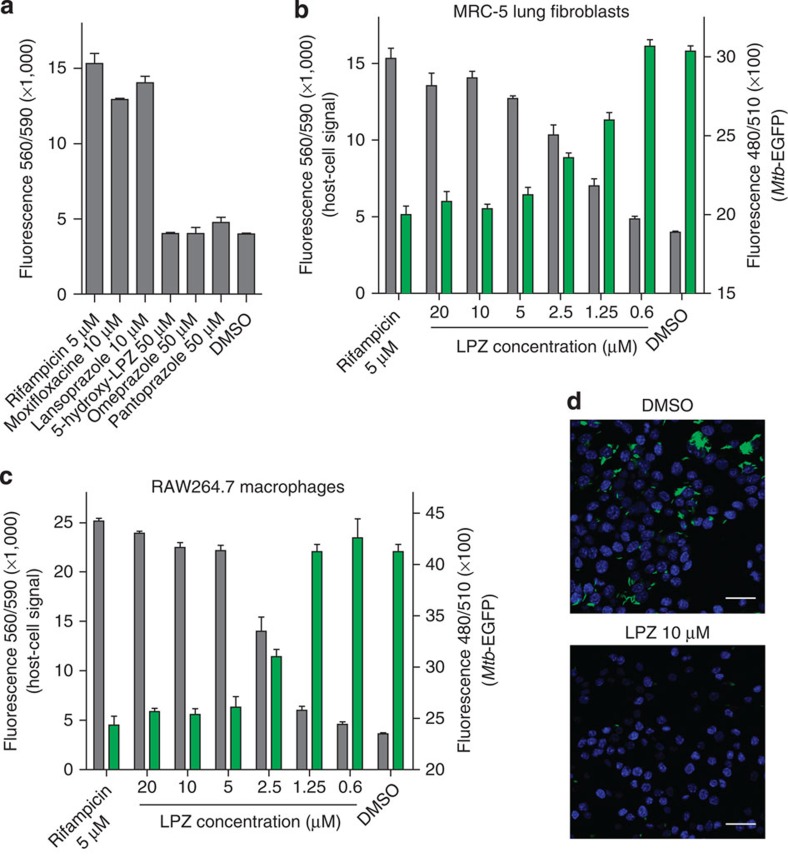
Figure 1
Figure 1. Lansoprazole (LPZ) protects from Mtb-induced cytolysis and reduces intracellular bacterial burden.
(a) Protective activity of LPZ and other drugs against Mtb-induced killing of MRC-5 lung fibroblasts. Data are expressed as the mean±s.d. of three individual experiments. Viable fibroblasts were quantified using Prestoblue. (b) Dose response of LPZ in the fibroblast survival assay using Mtb expressing GFP. Grey bars display host cell survival, green bars quantify intracellular Mtb-GFP (mean±s.d. of three independent experiments; right y axes are truncated for better visualization). (c) Dose response of LPZ in Mtb-infected RAW264.7 macrophages. Grey bars display macrophage survival, green bars quantify intracellular Mtb-GFP (mean±s.d. of 3 independent experiments; right y axes are truncated for better visualization). Growth of intracellular bacteria was inhibited with an IC50 of 2.2 μM. (d) Confocal microscopy of Mtb-GFP-infected RAW264.7 macrophages after treatment with LPZ (10 μM) or vehicle (dimethyl sulfoxide (DMSO)). Macrophage nuclei were stained with 4′,6-diamidino-2-phenylindole (scale bar, 20 μm).
Figure 2
Figure 2. LPZS is a highly selective antituberculous drug with in vivo activity.
(a) Intracellular ratio of LPZ (m/z 370.0834, g mol−1) and its metabolite (m/z 354.0884, g mol−1) determined by electrospray ionization quadrupole time-of-flight mass spectrometry (ESI-Q-TOF-MS) over a 48-h period in MRC-5 cells. Representative example of three individual experiments; the complete data set can be found in Supplementary Table 2. (b) ESI–MS mass spectra in the range m/z 350–375 measured for experiments performed on the cell lysate of MRC-5 fibroblasts exposed to LPZ (extracted ion chromatograms can be found in Supplementary Fig. 4a,b). (c) ESI–MS spectrum at m/z 354.0884 corresponding to the LPZS standard in methanol. (d) Structures of LPZ and LPZS. LPZS is missing the sulfoxide (red), which is essential for LPZ activity on the human proton pump. (e) LPZ/LPZS ratio determined by ESI-Q-TOF-MS over a 48-h period in 7H9 broth. Representative example of three individual experiments; the complete data set can be found in Supplementary Table 2. (f) Dose–response curve of LPZS for Mtb grown in 7H9 broth (mean±s.d. of three individual experiments). (g) Survival of Mtb-infected MRC-5 fibroblasts was quantified at different concentrations of LPZS (mean±s.d. of three individual experiments). (h) Efficacy of LPZS in the mouse model of acute tuberculosis. Bacterial burden (c.f.u.) was determined in the lungs of four mice treated with the vehicle control (TPGS) or four mice treated with LPZS at 300 mg kg−1 b.i.d. given by oral gavage (mean±s.d., Student's t-test was used to compare groups).
Figure 3
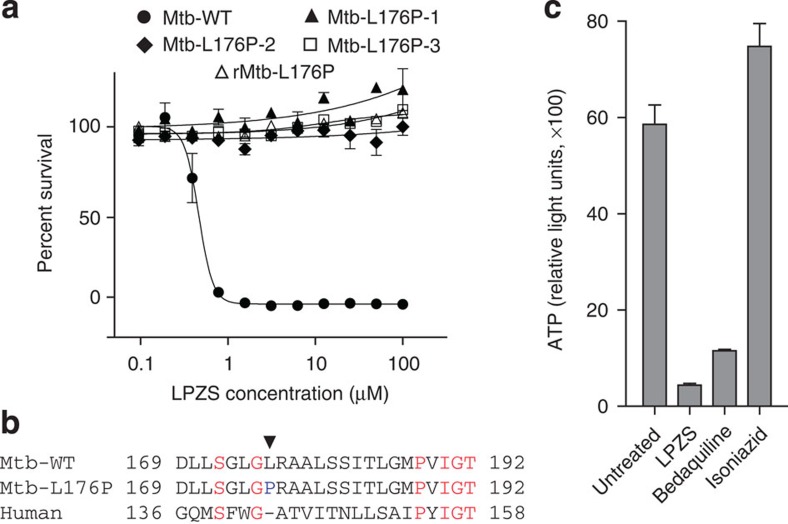
Figure 3. Evidence for LPZS targeting QcrB.
(a) Dose response of LPZS against wild-type Mtb, spontaneous-resistant mutants 1–3 and the genetically engineered recombinant L176P strain (rMtb-L176P) (mean±s.d. of triplicates). (b) Mutation in QcrB conferring LPZS resistance. The arrow indicates the L176P mutation that confers resistance to LPZS. The equivalent region of the human QcrB amino-acid sequence is aligned to the Mtb sequence. (c) LPZS depletes ATP levels after 24 h of treatment (mean±s.d. of three individual experiments). The ATPase inhibitor bedaquiline and the cell-wall inhibitor isoniazid were used as controls. Drug concentrations were 5 × the MIC.
Figure 4
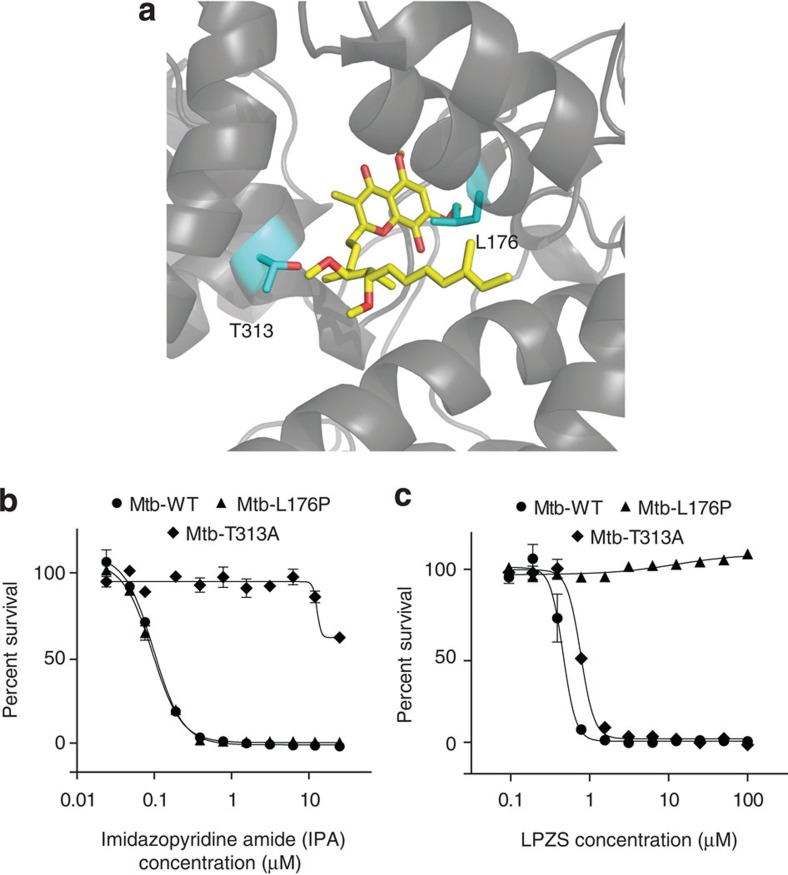
Figure 4. Protein structure model and cross-resistance studies.
(a) Structure of the Mtb QcrB protein homology modelled onto the structure of R. sphaeroides QcrB. Close-up of the Qp-active site containing the inhibitor stigmatellin A (yellow sticks). Leucine-176, mutated in LPZS-resistant mutants, and threonine 313, mutated in imidazopyridine amide (IPA)-resistant mutants, are depicted as cyan sticks. (b) Dose–response curve of the imidazopyridine amide (GSK2111534A) against wild-type Mtb, the L176P mutant and the T313A mutant (mean±s.d. of three individual experiments). (c) Dose–response curve showing that the T313A mutant remains susceptible to LPZS (mean±s.d. of three individual experiments).
Figure 5
Figure 5. Differential prodrug activation of lansoprazole (LPZ).
The proton-pump inhibitor LPZ is converted to a sulfenic acid intermediate in the acidic environment of the gastric gland lumen outside the parietal cell. Further prodrug activation to a sulfenamide (not shown) allows binding to the gastric H+K+-ATPase and its inhibition. We were able to show that sulfoxide reduction in the cytoplasm of Mtb-host cells converts LPZ to the potent antituberculous agent LPZS, which is active against MDR-TB. We provide evidence that LPZS targets cytochrome bc1 (complex III) leading to disruption of the mycobacterial respiratory chain and rapid ATP depletion. Conversion of LPZS to the sulfenic acid intermediate necessary for inactivation of the gastric H+K+-ATPase is not possible, making LPZS a highly selective lead compound for the tuberculosis drug pipeline.

References

    1. Lewis K. Platforms for antibiotic discovery. Nat. Rev. Drug Discov. 12, 371–387 (2013). - PubMed
    1. World Health Organization. Global Tuberculosis Report 2014 WHO (2014) http://apps.who.int/iris/bitstream/10665/137094/1/9789241564809_eng.pdf?....
    1. Lechartier B., Rybniker J., Zumla A. & Cole S. T. Tuberculosis drug discovery in the post-post-genomic era. EMBO Mol. Med. 6, 158–168 (2014). - PMC - PubMed
    1. Stanley S. A. et al. Identification of novel inhibitors of M. tuberculosis growth using whole cell based high-throughput screening. ACS Chem. Biol. 7, 1377–1384 (2012). - PMC - PubMed
    1. Brown S. A., Palmer K. L. & Whiteley M. Revisiting the host as a growth medium. Nat. Rev. Microbiol. 6, 657–666 (2008). - PMC - PubMed

Publication types

MeSH terms

Associated data

LinkOut - more resources