


Isoflavone Attenuates the Caspase-1 and Caspase-3 Level in Cell Model of Parkinsonism
- PMID: 26161002
- PMCID: PMC4487343
- DOI: 10.1155/2015/725897
Isoflavone Attenuates the Caspase-1 and Caspase-3 Level in Cell Model of Parkinsonism
Abstract
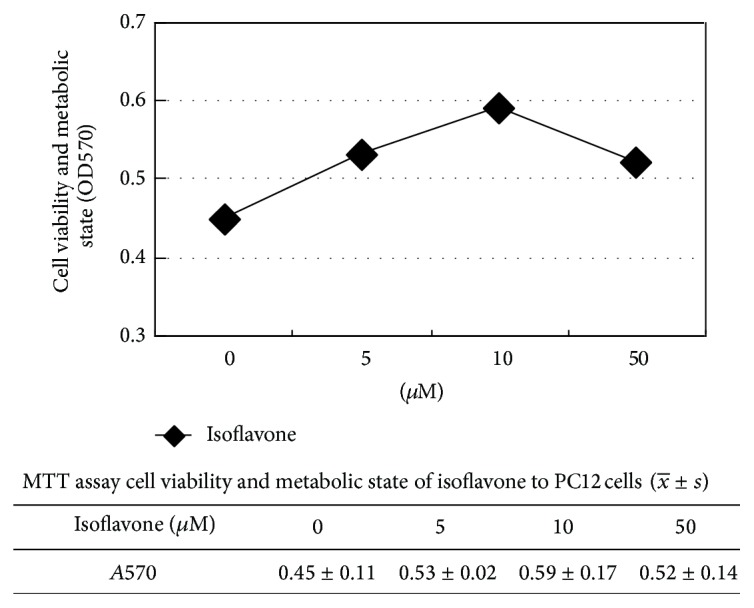
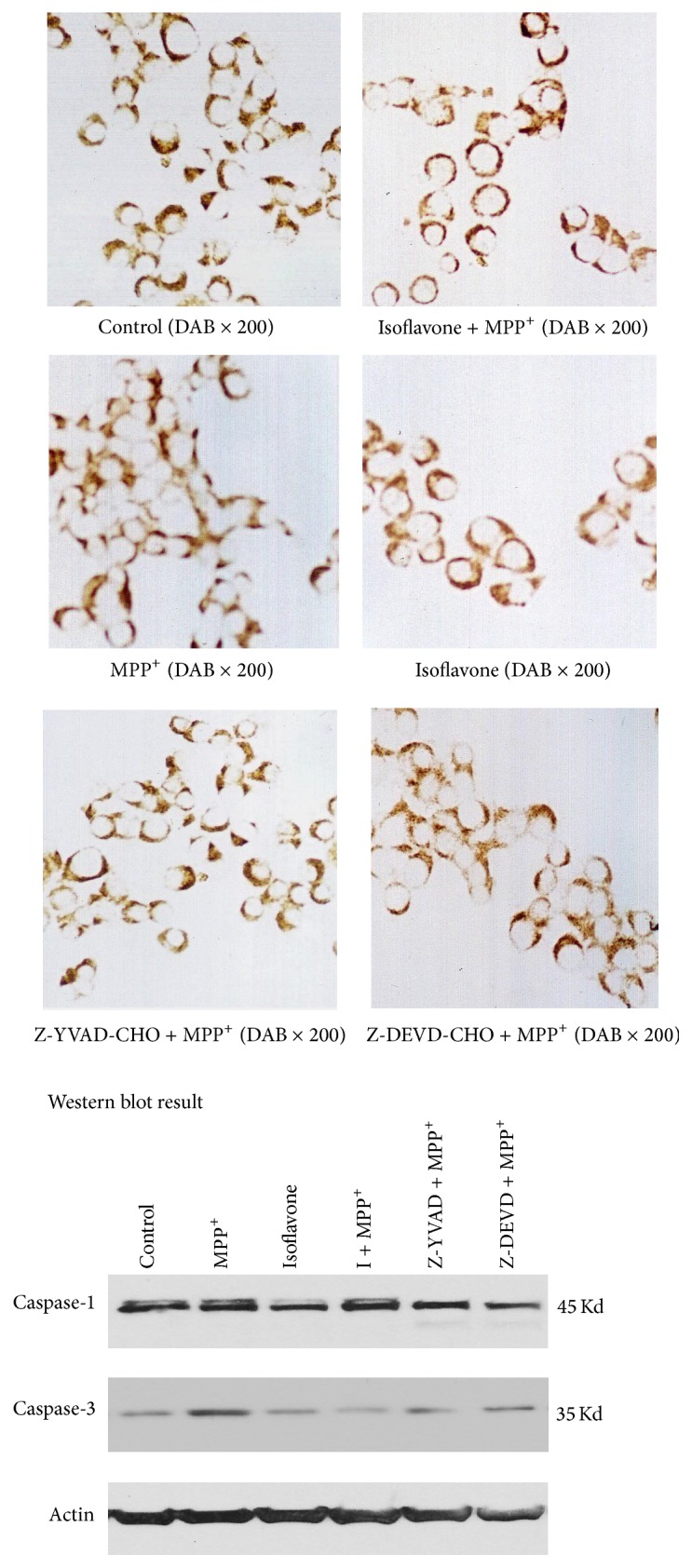
The study has investigated the effect of isoflavone attenuates the caspase-1 and caspase-3 level in cell model of Parkinsonism. The subjects were PC12 cells. They were randomly divided into six groups: control, MPP(+) (250 μmol/L), isoflavone (10 μM), isoflavone (10 μM) + MPP(+) (250 μmol/L), Z-YVAD-CHO (10 nM) + MPP(+) group, and Z-DEVD-CHO (10 nM) + MPP(+) group. Cell viability was measured by MTT methods; the content of tyrosine hydroxylase was measured by immunocytochemistry method of avidinbiotin peroxidase complex; apoptosis ratio was measured by flow cytometry. The results showed that cell viability in the MPP(+) group was lower than in all other five groups. There was no difference in cell viability between isoflavone + MPP(+) and control group. Optical density of TH positive cells in isoflavone group was higher than in control, isoflavone + MPP(+), and MPP(+) only groups. The apoptosis ratio in the isoflavone + MPP(+) group and control group and the Z-YVAD-CHO + MPP(+) and Z-DEVD-CHO + MPP(+) group was similar, which was lower than in the MPP(+) group. The lowest apoptosis ratio was found in the isoflavone only group.
References
-
- Li X.-L., Cheng W.-D., Li J., et al. Protective effect of estrogen on apoptosis in a cell culture model of Parkinson's disease. Clinical and Investigative Medicine. 2008;31(5):E258–E264. - PubMed
Publication types
MeSH terms
Substances
LinkOut - more resources
Full Text Sources
Other Literature Sources
Research Materials
