. 2015:2015:210120.
doi: 10.1155/2015/210120. Epub 2015 Jun 16.

Brain Network Response to Acupuncture Stimuli in Experimental Acute Low Back Pain: An fMRI Study

Affiliations

Brain Network Response to Acupuncture Stimuli in Experimental Acute Low Back Pain: An fMRI Study

Yu Shi et al. Evid Based Complement Alternat Med. 2015.

Abstract

Most neuroimaging studies have demonstrated that acupuncture can significantly modulate brain activation patterns in healthy subjects, while only a few studies have examined clinical pain. In the current study, we combined an experimental acute low back pain (ALBP) model and functional magnetic resonance imaging (fMRI) to explore the neural mechanisms of acupuncture analgesia. All ALBP subjects first underwent two resting state fMRI scans at baseline and during a painful episode and then underwent two additional fMRI scans, once during acupuncture stimulation (ACUP) and once during tactile stimulation (SHAM) pseudorandomly, at the BL40 acupoint. Our results showed that, compared with the baseline, the pain state had higher regional homogeneity (ReHo) values in the pain matrix, limbic system, and default mode network (DMN) and lower ReHo values in frontal gyrus and temporal gyrus; compared with the OFF status, ACUP yielded broad deactivation in subjects, including nearly all of the limbic system, pain status, and DMN, and also evoked numerous activations in the attentional and somatosensory systems; compared with SHAM, we found that ACUP induced more deactivations and fewer activations in the subjects. Multiple brain networks play crucial roles in acupuncture analgesia, suggesting that ACUP exceeds a somatosensory-guided mind-body therapy for ALBP.


Figures
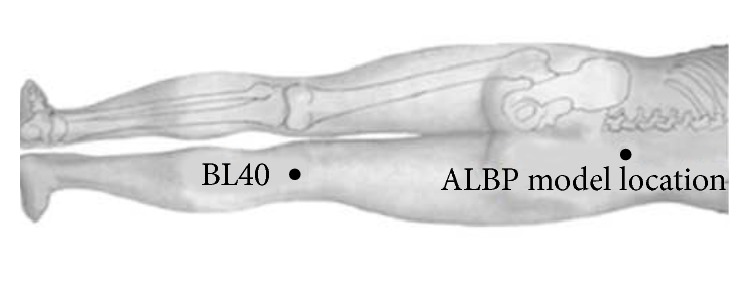
Figure 1
Figure 1
The location of the BL40 and ALBP model.
Figure 2
Figure 2
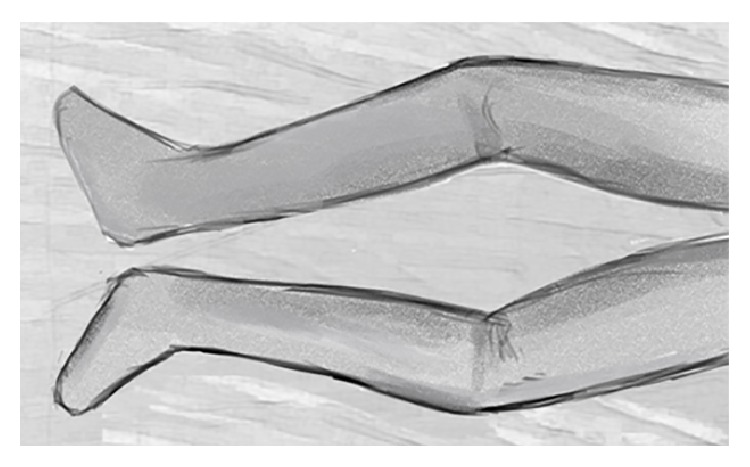
The posture of the subjects when inserting the needle at the point.
Figure 3
Figure 3
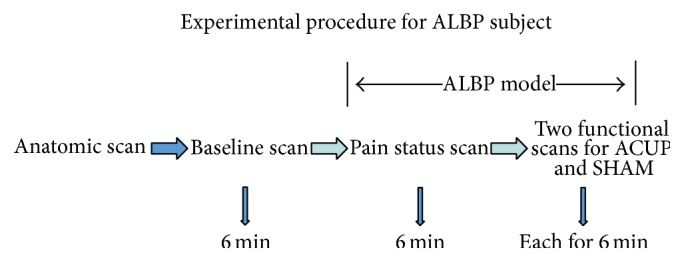
The experimental paradigm for the ALBP subjects included five steps.
Figure 4
Figure 4
Each functional scan lasted for 6 min, including six OFF-ON blocks; the time interval between the two functional scans was 20 min. During the six ON blocks of each functional scan, ACUP or SHAM was applied at BL40.
Figure 5
Figure 5
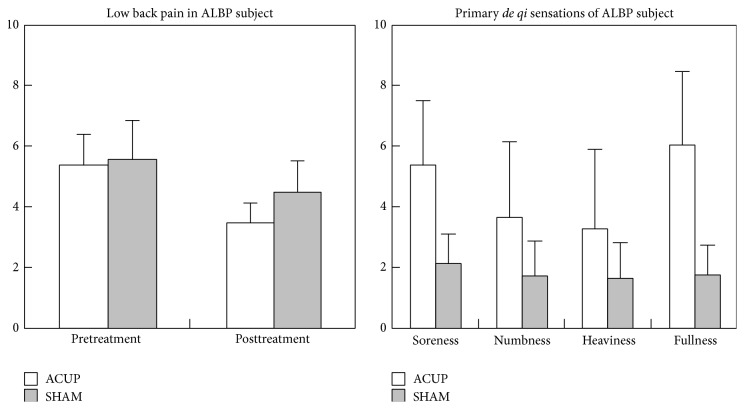
Results of psychophysical analysis in ACUP and SHAM. For ALBP subjects, there were significant differences between the ACUP and SHAM in the mean value of posttreatment pain (P = 0.043), soreness (P = 0.014), and fullness (P = 0.001).
Figure 6
Figure 6
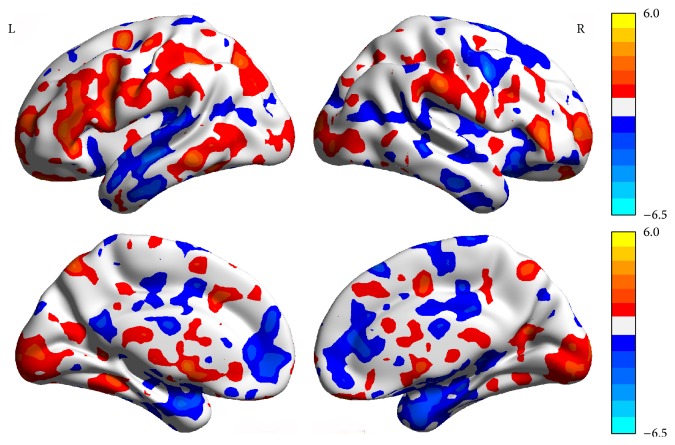
The brain network change in the pain status (pain status and baseline paired t-test).
Figure 7
Figure 7
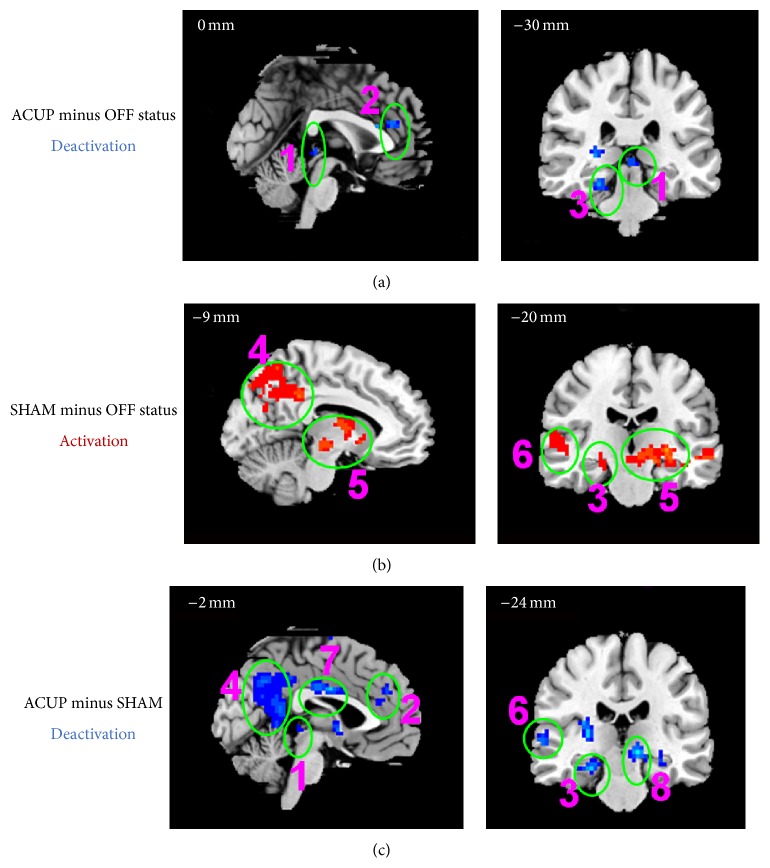
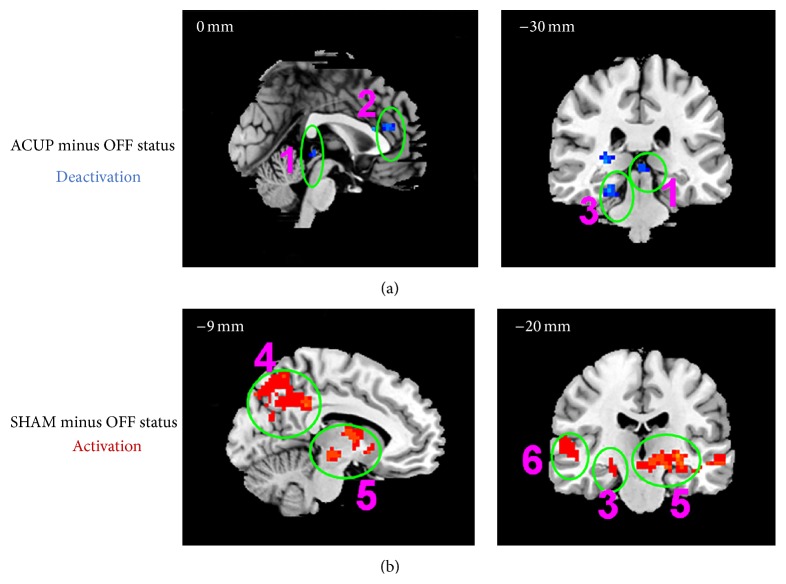
The fMRI signal increases and decreases in cortical and subcortical brain structures, (1) PAG; (2) pACC, aMCC, and anterior dmPFC; (3) PHP and HP; (4) PCN, PCC, and RSC; (5) striatum, thalamus, red nucleus, and substantia nigra; (6) lateral temporal cortex; (7) pMCC; (8) mammillary body.
Figure 8
Figure 8
The fMRI signal increases evoked by ACUP and SHAM, (1) right insula and frontal operculum cortex; (2) dlPFC; (3) supramarginal gyrus/angular gyrus; (4) orbitofrontal cortex; (5) lateral temporal cortex and temporal pole.

References

    1. Hoy D., March L., Brooks P., et al. Measuring the global burden of low back pain. Best Practice and Research: Clinical Rheumatology. 2010;24(2):155–165. doi: 10.1016/j.berh.2009.11.002. - DOI - PubMed
    1. Gaskin D. J., Richard P. The economic costs of pain in the United States. The Journal of Pain. 2012;13(8):715–724. doi: 10.1016/j.jpain.2012.03.009. - DOI - PubMed
    1. Han J.-S., Ho Y.-S. Global trends and performances of acupuncture research. Neuroscience and Biobehavioral Reviews. 2011;35(3):680–687. doi: 10.1016/j.neubiorev.2010.08.006. - DOI - PubMed
    1. Zhao Z. Q. Neural mechanism underlying acupuncture analgesia. Progress in Neurobiology. 2008;85(4):355–375. doi: 10.1016/j.pneurobio.2008.05.004. - DOI - PubMed
    1. Buckner R. L. The serendipitous discovery of the brain's default network. NeuroImage. 2012;62(2):1137–1145. doi: 10.1016/j.neuroimage.2011.10.035. - DOI - PubMed

LinkOut - more resources