


TLR4 antagonist attenuates atherogenesis in LDL receptor-deficient mice with diet-induced type 2 diabetes
- PMID: 26162692
- PMCID: PMC4558266
- DOI: 10.1016/j.imbio.2015.06.016
TLR4 antagonist attenuates atherogenesis in LDL receptor-deficient mice with diet-induced type 2 diabetes
Abstract
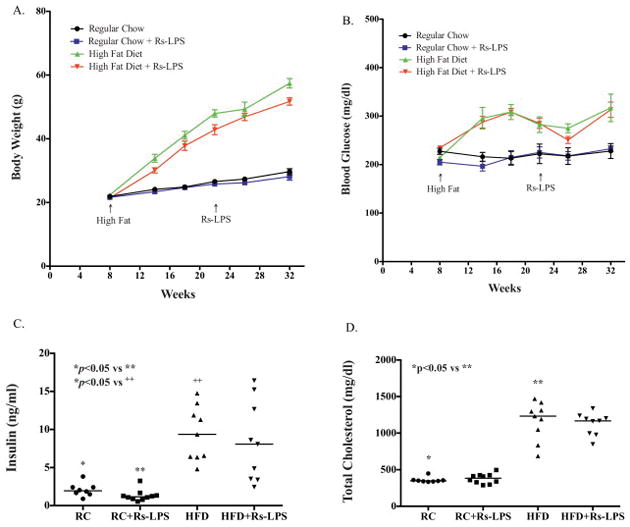
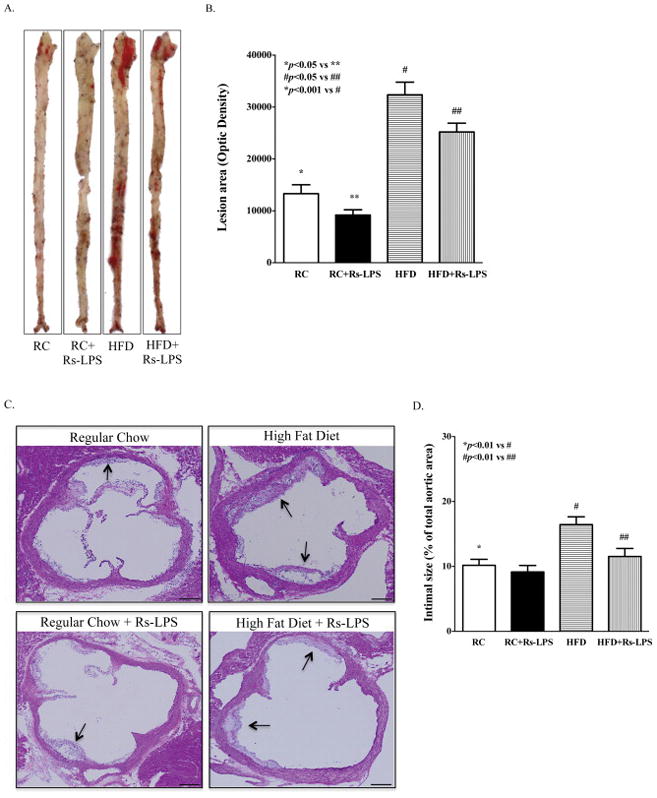
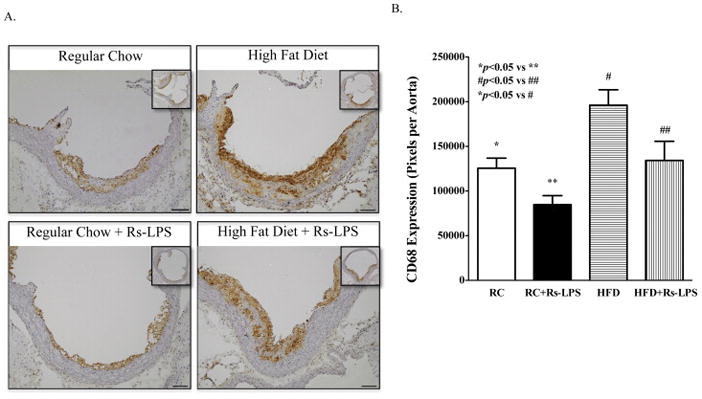
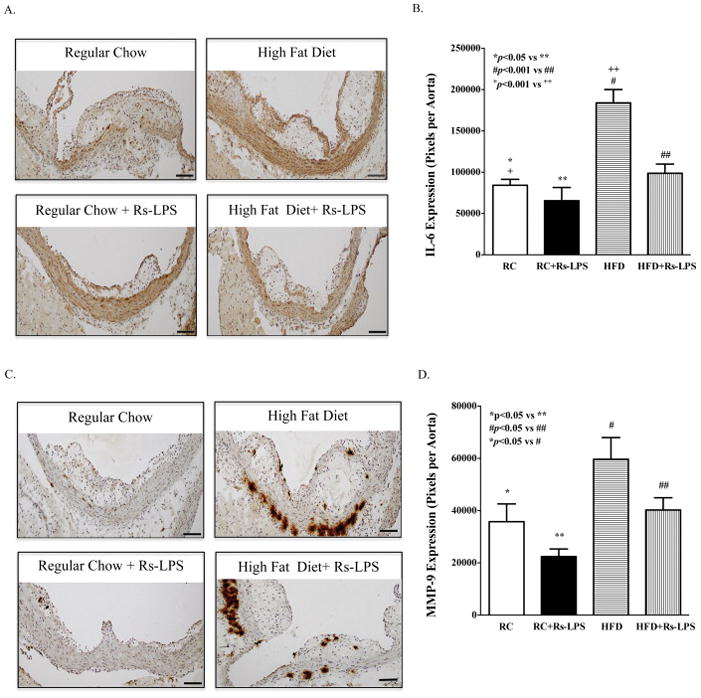
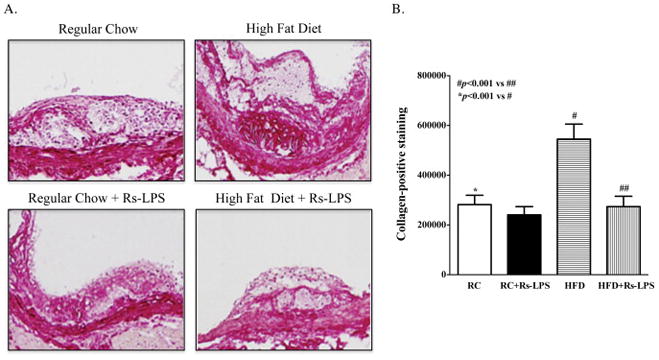
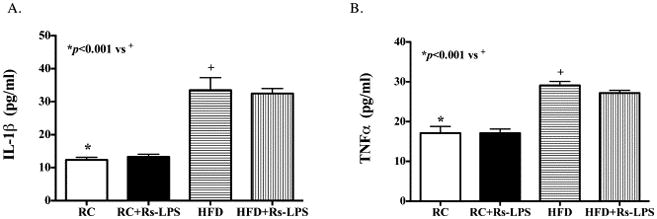
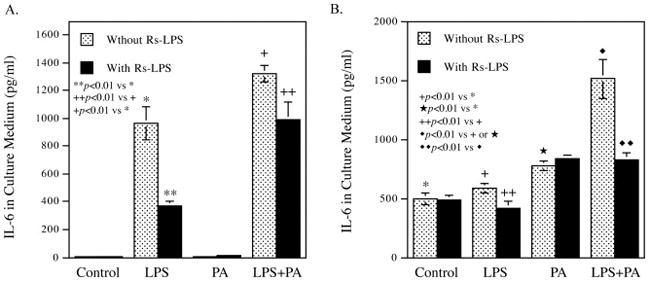
Although a large number of studies have well documented a key role of toll-like receptor (TLR)4 in atherosclerosis, it remains undetermined if TLR4 antagonist attenuates atherogenesis in mouse model for type 2 diabetes. In this study, we induced type 2 diabetes in low-density lipoprotein receptor-deficient (LDLR(-/-)) mice by high-fat diet (HFD). At 8 weeks old, 20 mice were fed HFD and 20 mice fed regular chow (RC) for 24 weeks. In the last 10 weeks, half HFD-fed mice and half RC-fed mice were treated with Rhodobacter sphaeroides lipopolysaccharide (Rs-LPS), an established TLR4 antagonist. After the treatment, atherosclerotic lesions in aortas were analyzed. Results showed that the HFD significantly increased bodyweight, glucose, lipids including total cholesterol, triglycerides and free fatty acids, and insulin resistance, indicating that the HFD induced type 2 diabetes in LDLR(-/-) mice. Results also showed that Rs-LPS had no effect on HFD-increased metabolic parameters in both nondiabetic and diabetic mice. Lipid staining of aortas and histological analysis of cross-sections of aortic roots showed that diabetes increased atherosclerotic lesions, but Rs-LPS attenuated atherogenesis in diabetic mice. Furthermore, immunohistochemical studies showed that Rs-LPS reduced infiltration of monocytes/macrophages and expression of interleukin (IL)-6 and matrix metalloproteinase-9 in atherosclerotic lesions of diabetic mice. Finally, the antagonistic effect of Rs-LPS on TLR4 was demonstrated by our in vitro studies showing that Rs-LPS inhibited IL-6 secretion from macrophages and endothelial cells stimulated by LPS or LPS plus saturated fatty acid palmitate. Taken together, our study demonstrated that TLR4 antagonist was capable of attenuating vascular inflammation and atherogenesis in mice with HFD-induced type 2 diabetes.
Keywords: Atherosclerosis; Diabetes; Inflammation; Toll-like receptor 4.
Published by Elsevier GmbH.
Conflict of interest statement
There is no conflict of interests for all authors.
Figures
References
-
- Dalpke A, Heeg K. Signal integration following Toll-like receptor triggering. Crit Rev Immunol. 2002;22:217–250. - PubMed
-
- Curtiss LK, Tobias PS. The toll of Toll-like receptors, especially toll-like receptor 2, on murine atherosclerosis. Curr Drug Targets. 2007;8:1230–1238. - PubMed
-
- den Dekker WK, Cheng C, Pasterkamp G, Duckers HJ. Toll like receptor 4 in atherosclerosis and plaque destabilization. Atherosclerosis. 2010;209:314–320. - PubMed
-
- Michelsen KS, Wong MH, Shah PK, Zhang W, Yano J, Doherty TM, Akira S, Rajavashisth TB, Arditi M. Lack of Toll-like receptor 4 or myeloid differentiation factor 88 reduces atherosclerosis and alters plaque phenotype in mice deficient in apolipoprotein E. Proc Natl Acad Sci U S A. 2004;101:10679–10684. - PMC - PubMed
Publication types
MeSH terms
Substances
Grants and funding
LinkOut - more resources
Full Text Sources
Other Literature Sources
Medical
