


MicroRNA expression profiles differentiate chronic pain condition subtypes
- PMID: 26166255
- PMCID: PMC4656098
- DOI: 10.1016/j.trsl.2015.06.008
MicroRNA expression profiles differentiate chronic pain condition subtypes
Abstract
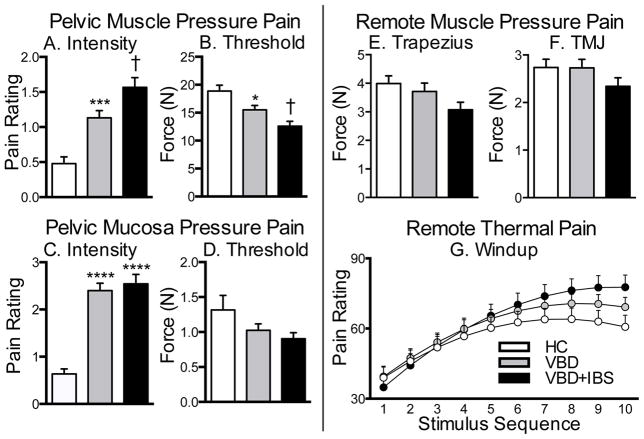
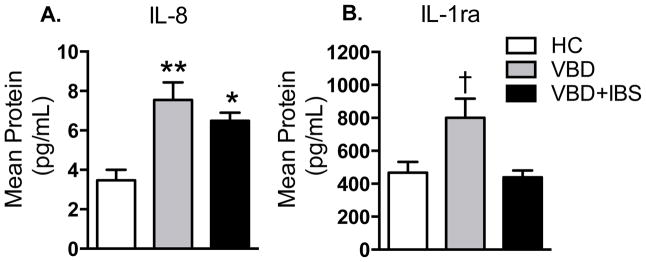
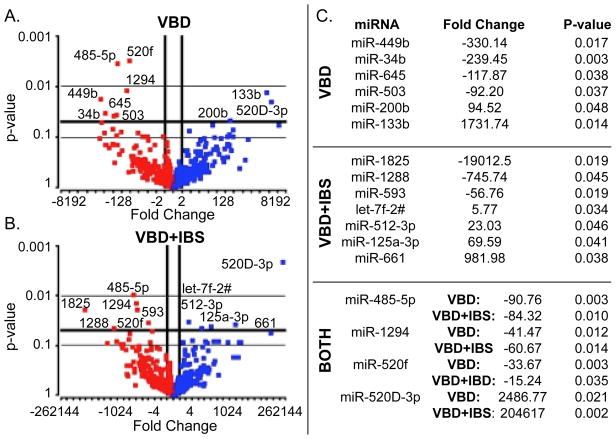
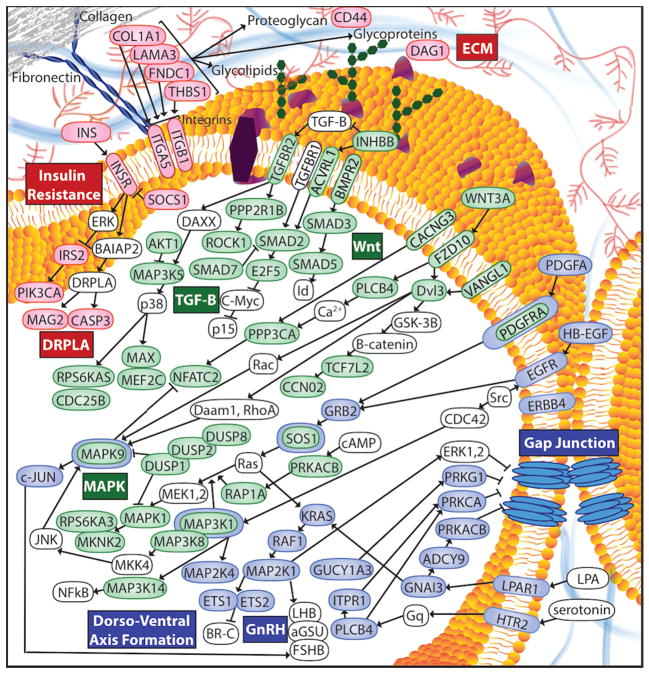
Chronic pain is a significant health care problem, ineffectively treated because of its unclear etiology and heterogeneous clinical presentation. Emerging evidence demonstrates that microRNAs (miRNAs) regulate the expression of pain-relevant genes, yet little is known about their role in chronic pain. Here, we evaluate the relationship among pain, psychological characteristics, plasma cytokines, and whole blood miRNAs in 22 healthy controls (HCs); 33 subjects with chronic pelvic pain (vestibulodynia, VBD); and 23 subjects with VBD and irritable bowel syndrome (VBD + IBS). VBD subjects were similar to HCs in self-reported pain, psychological profiles, and remote bodily pain. VBD + IBS subjects reported decreased health and function; and an increase in headaches, somatization, and remote bodily pain. Furthermore, VBD subjects exhibited a balance in proinflammatory and anti-inflammatory cytokines, whereas VBD + IBS subjects failed to exhibit a compensatory increase in anti-inflammatory cytokines. VBD subjects differed from controls in expression of 10 miRNAs of predicted importance for pain and estrogen signaling. VBD + IBS subjects differed from controls in expression of 11 miRNAs of predicted importance for pain, cell physiology, and insulin signaling. miRNA expression was correlated with pain-relevant phenotypes and cytokine levels. These results suggest that miRNAs represent a valuable tool for differentiating VBD subtypes (localized pain with apparent peripheral neurosensory disruption vs widespread pain with a central sensory contribution) that may require different treatment approaches.
Copyright © 2015 Elsevier Inc. All rights reserved.
Conflict of interest statement
All authors have read the journal’s authorship agreement and policy on disclosure of potential conflicts of interest. Authors have no financial disclosures to make and no conflicts of interest to disclose.
Figures
References
-
- Williams RE, Hartmann KE, Sandler RS, Miller WC, Steege JF. Prevalence and characteristics of irritable bowel syndrome among women with chronic pelvic pain. Obstetrics and gynecology. 2004;104(3):452–8. - PubMed
-
- Brennan F, Carr DB, Cousins M. Pain management: a fundamental human right. Anesth Analg. 2007;105(1):205–21. - PubMed
-
- Diatchenko L, Nackley AG, Slade GD, Fillingim RB, Maixner W. Idiopathic pain disorders--pathways of vulnerability. Pain. 2006;123(3):226–30. - PubMed
Publication types
MeSH terms
Substances
Grants and funding
LinkOut - more resources
Full Text Sources
Other Literature Sources
Medical
