Effect of Taekwondo Training on Physical Fitness and Growth Index According to IGF-1 Gene Polymorphism in Children
- PMID: 26170738
- PMCID: PMC4499646
- DOI: 10.4196/kjpp.2015.19.4.341
Effect of Taekwondo Training on Physical Fitness and Growth Index According to IGF-1 Gene Polymorphism in Children
Abstract
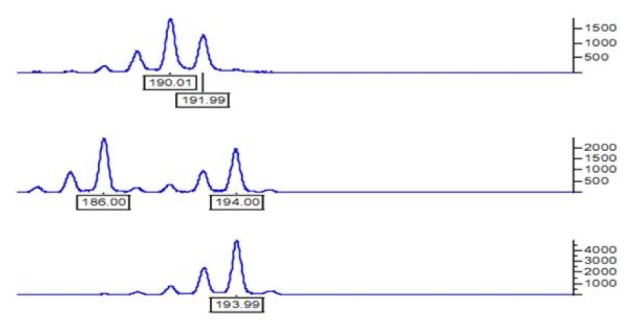
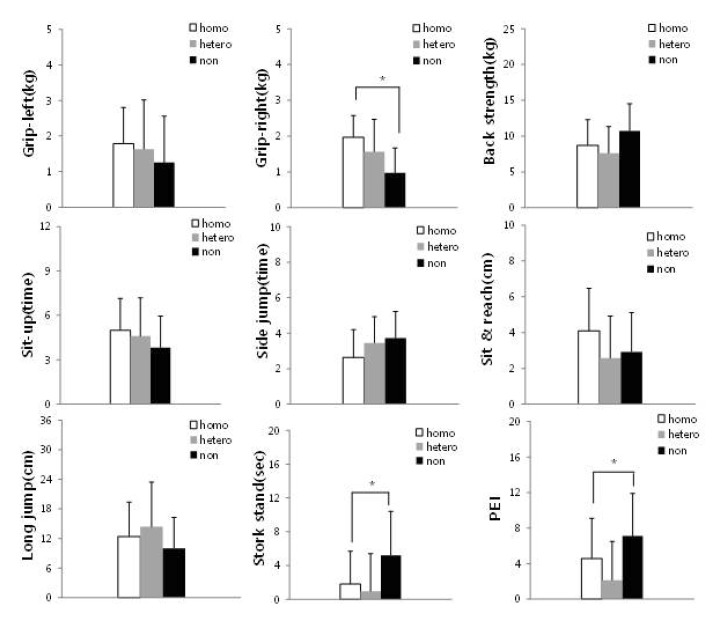
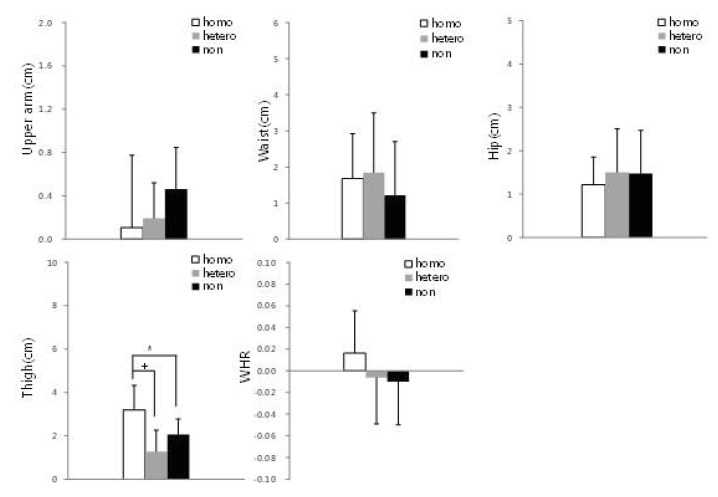
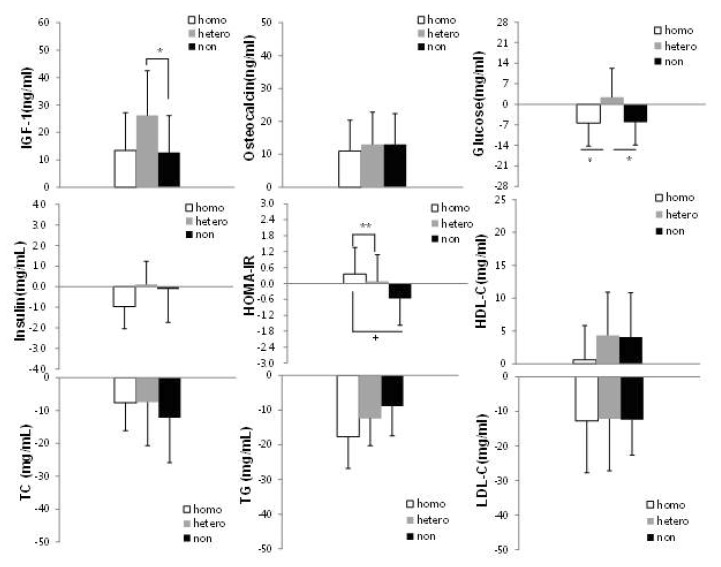
This study analyzed the effect of regular Taekwondo training for 16 weeks on physical fitness and growth index depending on different IGF-1 gene polymorphisms. The subjects of the study were 44 male students who were 8 year years old. The IGF-1 gene showed the highest frequency of 18 CA repeat (190 bp) in 50% of subjects, and was found in the homozygote (n=11), heterozygote (n=22) and non-carriers (n=11). The results of the physical fitness and growth index among the gene polymorphism groups indicated no significant differences but the expected height of the non-carrier group was significantly high (p<0.05). After Taekwondo training, the homozygote group and the non-carrier groups demonstrated significant (p<0.05) increase in grip strength and in time in the standing with one leg while closing eyes test, respectively. Only the homozygote group had a significant (p< 0.05) increase in thigh circumference. IGF-1 concentration significantly (p<0.05) increased in the heterozygote group, while HOMA-IR significantly (p<0.05) decreased in the homozygote group. Furthermore, there was a significant (p<0.05) decrease in glucose in both the homozygote and the non-carriers groups. The difference between physical fitness and growth index depending on the IGF-1 gene polymorphism after Taekwondo training did not show consistent impact.
Keywords: Elementary school students; Growth index; IGF-1 gene polymorphism; Physical fitness; Taekwondo training.
Conflict of interest statement
Figures
References
-
- WTF. World Taekwondo Federation member status. 2013. www.wtf.org.
-
- Daughaday WH, Rotwein P. Insulin-like growth factors I and II. Peptide, messenger ribonucleic acid and gene structures, serum, and tissue concentrations. Endocr Rev. 1989;10:68–91. - PubMed
-
- Florini JR, Ewton DZ, Coolican SA. Growth hormone and the insulin-like growth factor system in myogenesis. Endocr Rev. 1996;17:481–517. - PubMed
-
- Barton-Davis ER, Shoturma DI, Sweeney HL. Contribution of satellite cells to IGF-I induced hypertrophy of skeletal muscle. Acta Physiol Scand. 1999;167:301–305. - PubMed
-
- Eliakim A, Scheett TP, Newcomb R, Mohan S, Cooper DM. Fitness, training, and the growth hormone-->insulin-like growth factor I axis in prepubertal girls. J Clin Endocrinol Metab. 2001;86:2797–2802. - PubMed
LinkOut - more resources
Full Text Sources
Other Literature Sources
Miscellaneous