Review
. 2015 Nov;7(11):1388-402.
doi: 10.15252/emmm.201505301.

Lost in translation: pluripotent stem cell-derived hematopoiesis

Affiliations
Review

Lost in translation: pluripotent stem cell-derived hematopoiesis

Mania Ackermann et al. EMBO Mol Med. 2015 Nov.

Abstract

Pluripotent stem cells (PSCs) such as embryonic stem cells or induced pluripotent stem cells represent a promising cell type to gain novel insights into human biology. Understanding the differentiation process of PSCs in vitro may allow for the identification of cell extrinsic/intrinsic factors, driving the specification process toward all cell types of the three germ layers, which may be similar to the human in vivo scenario. This would not only lay the ground for an improved understanding of human embryonic development but would also contribute toward the generation of novel cell types used in cell replacement therapies. In this line, especially the developmental process of mesodermal cells toward the hematopoietic lineage is of great interest. Therefore, this review highlights recent progress in the field of hematopoietic specification of pluripotent stem cell sources. In addition, we would like to shed light on emerging factors controlling primitive and definitive hematopoietic development and to highlight recent approaches to improve the differentiation potential of PSC sources toward hematopoietic stem/progenitor cells. While the generation of fully defined hematopoietic stem cells from PSCs remains challenging in vitro, we here underline the instructive role of cell extrinsic factors such as cytokines for the generation of PSC-derived mature hematopoietic cells. Thus, we have comprehensively examined the role of cytokines for the derivation of mature hematopoietic cell types such as macrophages, granulocytes, megakaryocytes, erythrocytes, dendritic cells, and cells of the B- and T-cell lineage.

Keywords: granulocytes; hematopoiesis; hematopoietic stem cells; iPSC; macrophages.


Figures

Figure 1
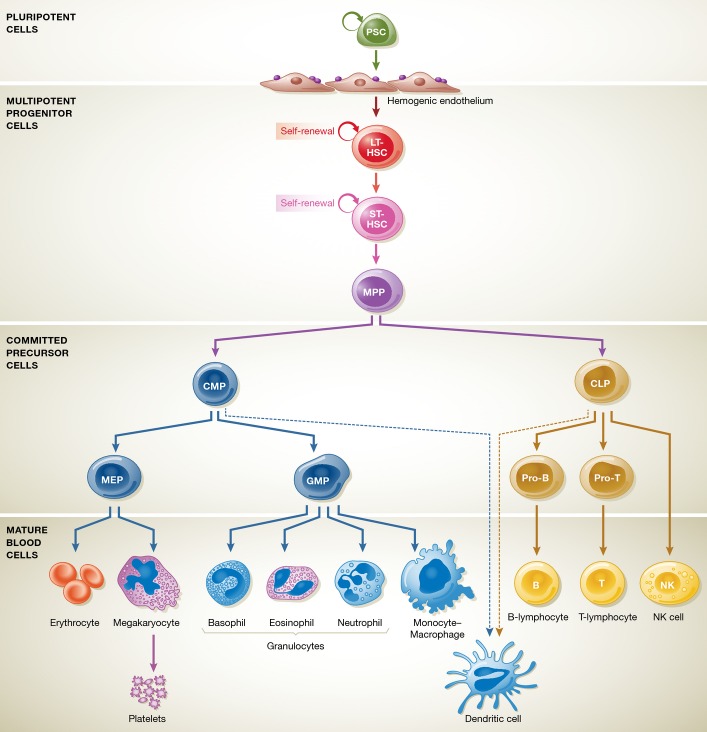
Figure 1. Classical scheme of murine adult hematopoietic development
Multipotent LT-HSCs, with their ability for long-term reconstitution potential, can further differentiate toward ST-HSCs and also MPPs in the bone marrow. Upon subsequent differentiation, MPPs give rise to either CMPs, which have the ability to differentiate into the myeloid lineage, or CLPs, able to generate the lymphoid lineage. Following these committed progenitors, both MEPs and GMPs are able to form all differentiated cells of the myeloid lineage in the bone marrow, whereas CLPs further differentiate into pro-T cells and T cells by positive–negative selection in the thymus. Generation of B cells is ensured also by CLPs in the bone marrow following B-cell transition. Abbreviations: LT, long term; ST, short term; MPP, multipotent progenitor; HSC, hematopoietic stem cell; CMP, common myeloid progenitor; CLP, common lymphoid progenitor; MEP, megakaryocyte erythroid progenitor; GMP, granulocyte macrophage progenitor.
Figure 2
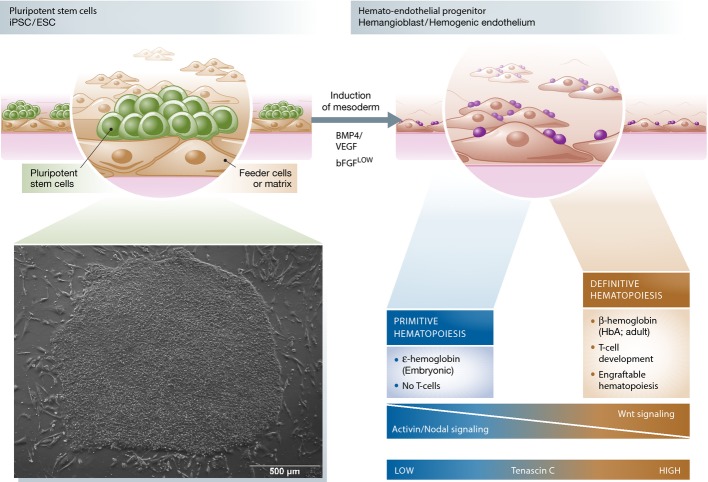
Figure 2. Primitive and definitive hematopoietic development in vitro
Hematopoietic specification from pluripotent stem cells in vitro is primarily driven by the formation of mesodermal cells, which later gives rise to different hematopoietic cells by a hemato-endothelial progenitor. At this stage, hematopoietic differentiation in vitro can in principle generate cells of primitive or definitive hematopoiesis, which can be differentiated using specific experimental setups. Hematopoietic progenitor cells, which emerge during the differentiation process and are able to (i) give rise to erythroid cells that express adult hemoglobin (HbA or β-hemoglobin), (ii) give rise to T-lymphoid cells when cultured on NOTCH-delta ligand 1/4 (DL1 or DL4)-expressing OP9 cells, or (iii) multilineage reconstitute immunocompromised mice, are defined as cells derived from a definitive hematopoietic program. In contrast, hematopoietic progenitor cells that are not capable of fulfilling these criteria are defined as cells derived from primitive hematopoiesis. Although both programs can occur in vitro, defined signaling pathways such as Wnt, Activin/Nodal, or extracellular stimuli such as tenascin C have been proven to direct the hematopoietic program toward definitive or primitive hematopoiesis.
Figure 3
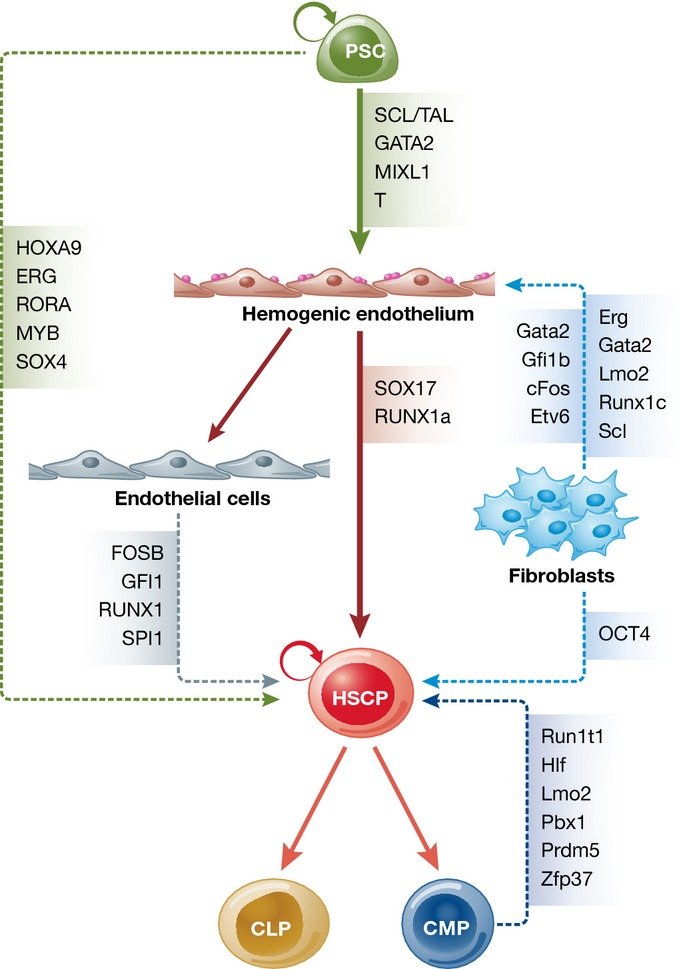
Figure 3. Early hematopoietic development and transprogramming strategies
During hematopoietic differentiation in vitro, PSCs differentiate through mesodermal cells into cells of hemogenic endothelium capable to form either HSPCs or endothelial cells. This process is regulated by defined transcription factors, such as SCL/TAL, GATA2, MIXL1, T, SOX17, and RUNX1a. Further differentiation of HSPCs gives rise to CLPs or CMPs, respectively. Overexpression of Erg, Gata2, Lmo2, Runx1c, and Scl or Gata2, Gfi1b, cFos, or Etv in murine fibroblasts allows for the direct reprogramming of fibroblasts into HSPCs by a hemogenic endothelium intermediate. Alternatively, murine CMPs can be directly reprogrammed toward HSPCs by overexpression of Run1t1, Hlf, Lmo2, Pbx1, Prdm5, or Zfp37. Moreover, also endothelial cells can be directed toward HSPCs by the expression of FOSB, GFI1, RUNX1, or SPI1, whereas direct induction of HSPCs from PSCs was shown by overexpression of HOXA9, ERG, RORA, MYB, and SOX4. Abbreviations: PSC, pluripotent stem cell; HSPC, hematopoietic stem/progenitor cell; CLP, common lymphoid progenitor; CMP, common myeloid progenitor.

References

    1. Aasen T, Raya A, Barrero MJ, Garreta E, Consiglio A, Gonzalez F, Vassena R, Bilic J, Pekarik V, Tiscornia G, et al. Efficient and rapid generation of induced pluripotent stem cells from human keratinocytes. Nat Biotechnol. 2008;26:1276–1284. - PubMed
    1. Amabile G, Welner RS, Nombela-Arrieta C, D’Alise AM, Di Ruscio A, Ebralidze AK, Kraytsberg Y, Ye M, Kocher O, Neuberg DS, et al. In vivo generation of transplantable human hematopoietic cells from induced pluripotent stem cells. Blood. 2013;121:1255–1264. - PMC - PubMed
    1. Amaya E. The hemangioblast: a state of competence. Blood. 2013;122:3853–3854. - PubMed
    1. Antonchuk J, Sauvageau G, Humphries RK. HOXB4 overexpression mediates very rapid stem cell regeneration and competitive hematopoietic repopulation. Exp Hematol. 2001;29:1125–1134. - PubMed
    1. Antonchuk J, Sauvageau G, Humphries RK. HOXB4-induced expansion of adult hematopoietic stem cells ex vivo. Cell. 2002;109:39–45. - PubMed

Publication types