Treatment of drug-induced seizures
- PMID: 26174744
- PMCID: PMC4767205
- DOI: 10.1111/bcp.12720
Treatment of drug-induced seizures
Abstract
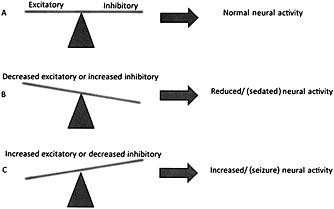
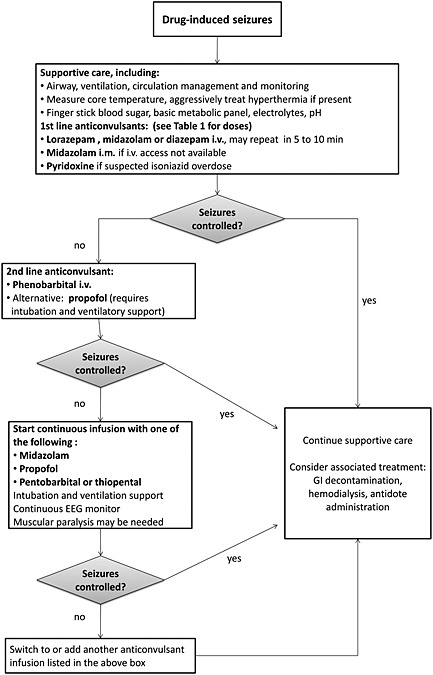
Seizures are a common complication of drug intoxication, and up to 9% of status epilepticus cases are caused by a drug or poison. While the specific drugs associated with drug-induced seizures may vary by geography and change over time, common reported causes include antidepressants, stimulants and antihistamines. Seizures occur generally as a result of inadequate inhibitory influences (e.g., gamma aminobutyric acid, GABA) or excessive excitatory stimulation (e.g. glutamate) although many other neurotransmitters play a role. Most drug-induced seizures are self-limited. However, status epilepticus occurs in up to 10% of cases. Prolonged or recurrent seizures can lead to serious complications and require vigorous supportive care and anticonvulsant drugs. Benzodiazepines are generally accepted as the first line anticonvulsant therapy for drug-induced seizures. If benzodiazepines fail to halt seizures promptly, second line drugs include barbiturates and propofol. If isoniazid poisoning is a possibility, pyridoxine is given. Continuous infusion of one or more anticonvulsants may be required in refractory status epilepticus. There is no role for phenytoin in the treatment of drug-induced seizures. The potential role of ketamine and levetiracetam is promising but not established.
Keywords: anticonvulsants; poisoning; seizures.
© 2015 The British Pharmacological Society.
Figures
References
-
- Lowenstein DH, Alldredge BK. Status epilepticus at an urban public hospital in the 1980s. Neurology 1993; 43: 483–8. - PubMed
-
- Pesola GR, Avasarala J. Bupropion seizure proportion among new‐onset generalized seizures and drug related seizures presenting to an emergency department. J Emerg Med 2002; 22: 235–9. - PubMed
-
- Alldredge BK, Lowenstein DH, Simon RP. Seizures associated with recreational drug abuse. Neurology 1989; 39: 1037–9. - PubMed
-
- Delanty N, Vaughan CJ, French JA. Medical causes of seizures. Lancet 1998; 352: 383–90. - PubMed
-
- Finkelstein Y, Hutson JR, Freedman SB, Wax P, Brent J, Toxicology Investigators Consortium Case Registry . Drug‐induced seizures in children and adolescents presenting for emergency care: current and emerging trends. Clin Toxicol 2013; 51: 761–6. - PubMed
Publication types
MeSH terms
Substances
LinkOut - more resources
Full Text Sources
Other Literature Sources
Medical