. 2015 Jun 30:6:105.
doi: 10.3389/fendo.2015.00105. eCollection 2015.

Rapid Knockout and Reporter Mouse Line Generation and Breeding Colony Establishment Using EUCOMM Conditional-Ready Embryonic Stem Cells: A Case Study

Affiliations

Rapid Knockout and Reporter Mouse Line Generation and Breeding Colony Establishment Using EUCOMM Conditional-Ready Embryonic Stem Cells: A Case Study

James L J Coleman et al. Front Endocrinol (Lausanne). .

Abstract

As little as a decade ago, generation of a single knockout mouse line was an expensive and time-consuming undertaking available to relatively few researchers. The International Knockout Mouse Consortium, established in 2007, has revolutionized the use of such models by creating an open-access repository of embryonic stem (ES) cells that, through sequential breeding with first FLP1 recombinase and then Cre recombinase transgenic mice, facilitates germline global or conditional deletion of almost every gene in the mouse genome. In this Case Study, we describe our experience using the repository to create mouse lines for a variety of experimental purposes. Specifically, we discuss the process of obtaining germline transmission of two European Conditional Mouse Mutagenesis Program (EUCOMM) "knockout-first" gene targeted constructs and the advantages and pitfalls of using this system. We then outline our breeding strategy and the outcomes of our efforts to generate global and conditional knockouts and reporter mice for the genes of interest. Line maintenance, removal of recombinase transgenes, and cryopreservation are also considered. Our approach led to the generation of heterozygous knockout mice within 6 months of commencing breeding to the founder mice. By describing our experiences with the EUCOMM ES cells and subsequent breeding steps, we hope to assist other researchers with the application of this valuable approach to generating versatile knockout mouse lines.

Keywords: C57BL/6; Cre recombinase; EUCOMM; Flp recombinase; conditional knockout; inducible knockout; mouse model.


Figures
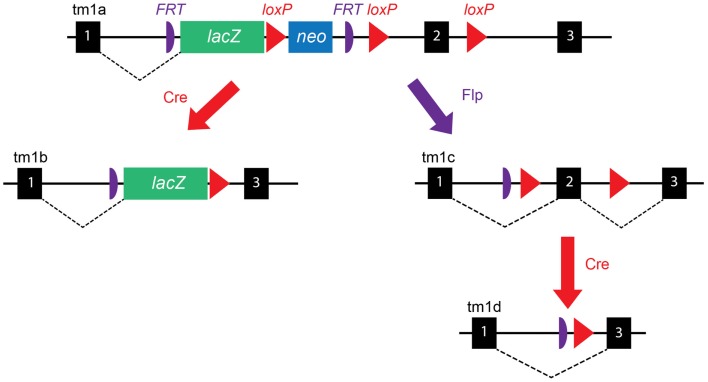
Figure 1
Figure 1
EUCOMM targeting vector construction. Schematic of the EUCOMM vector design illustrating the targeting and recombination process for a prototypical gene with three exons (black boxes). See text for description. Figure adapted from Skarnes et al. (5).
Figure 2
Figure 2
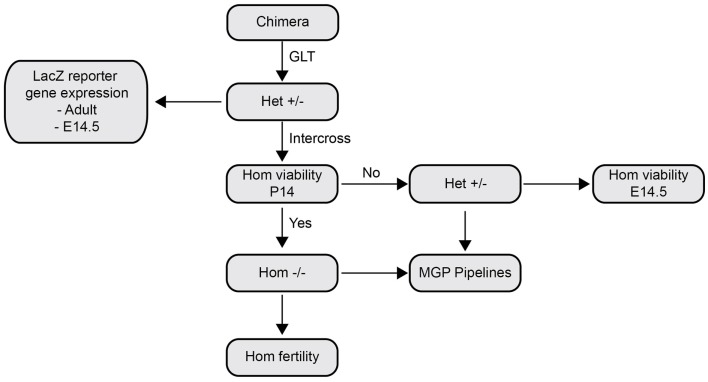
Outline of phenotyping protocol for EUCOMM mice used by the Sanger Institute Mouse Genetics Project. The Sanger Institute Mouse Genetics Project describes a standardized series of tests applied to novel EUCOMM lines. Chimeric mice are outcrossed with C57BL/6 to determine germline transmission (GLT) and heterozygous tm1a mice intercrossed to assess viability at 14 days after birth. If viable, homozygous tm1a mice enter the Mouse Genetics Project (MGP) standardized phenotyping pipeline or are tested for fertility. In the case of embryonic lethality or poor survival, heterozygous mice are used for the MGP pipeline and homozygous embryos examined at E14.5 to determine the cause of sub-viability. In parallel to the intercross protocol, a subset of heterozygous tm1a mice are crossed to Cre recombinase mice to generate lacZ reporters. Figure adapted from White et al. (22).
Figure 3
Figure 3
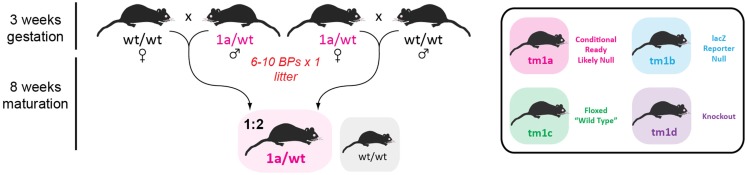
Initial colony expansion of founder mice. Both male and female tm1a heterozygotes were outcrossed with C57BL/6J partners to increase our breeding colony for subsequent line generation. Listed on the left is the time taken from establishing a new breeding pair (BP; numbers indicated in red) to the time when offspring are sexually mature (7–8 weeks of age). Mice genotypes enclosed in gray boxes are those surplus to requirements, while the colored box indicates the desired genotype and the expected Mendelian ratio. Inset: key used for remaining figures.
Figure 4
Figure 4
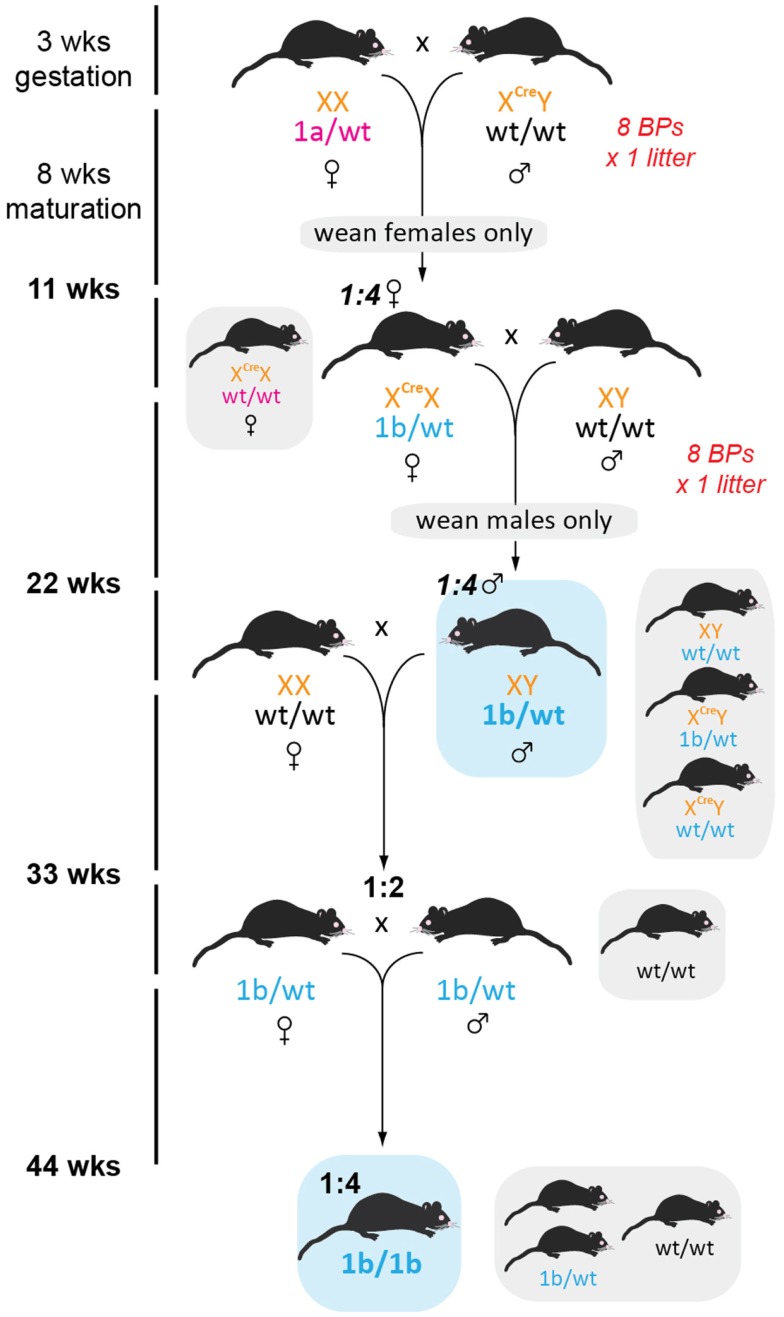
Generation and maintenance of lacZ reporter mice. Male CMV-Cre mice were crossed with female tm1a heterozygotes and all female offspring genotyped for conversion to tm1b (all females must be heterozygous for Cre). The recombinase was then removed by crossing tm1b convertants to C57BL/6J males and all females culled prior to weaning because they potentially carry Cre. Recombinase negative males were then used for experiments or used in further breeding before heterozygous × heterozygous breeding pairs could be established. Homozygous lacZ mice can then be used for timed matings and embryo harvest. Note that tm1b mice are themselves knockout mice, so should be monitored accordingly for adverse phenotypic effects. Mice in gray boxes are surplus to requirements.
Figure 5
Figure 5
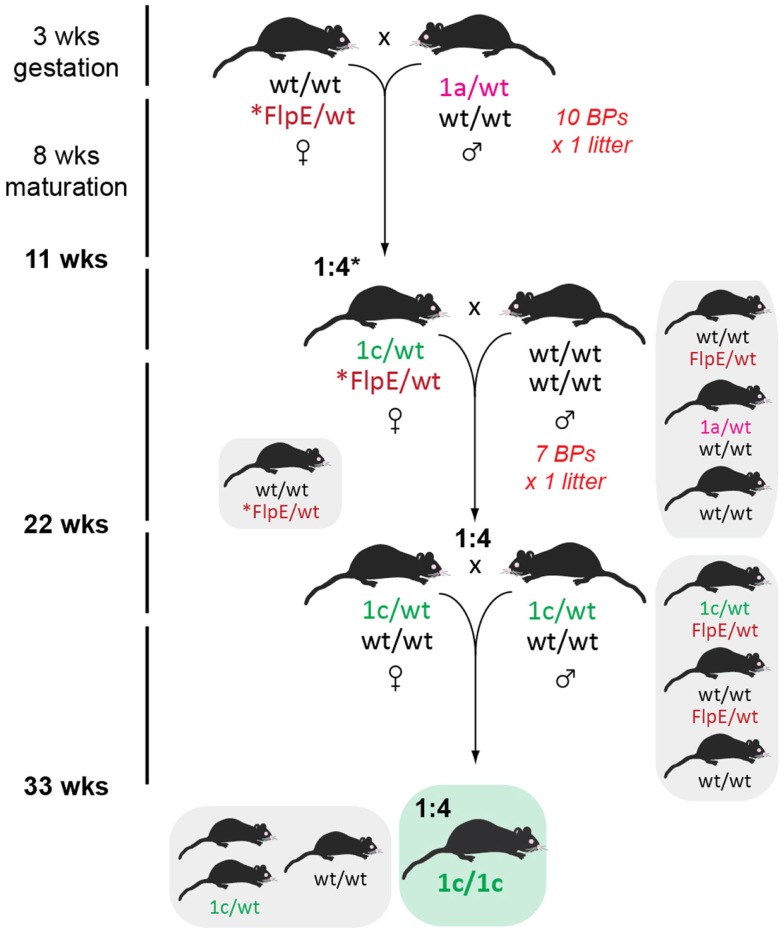
Floxed mice generation. Female FlpE recombinase heterozygotes (or homozygotes in the case of GOI-2, indicated by an asterix) were crossed with male tm1a heterozygotes and resultant tm1c-converted mice identified by genotyping (*1:2 conversion for GOI-2). The floxed mice were subsequently outcrossed and tm1c heterozygotes free of contaminating FlpE recombinase were chosen for brother × sister matings and subsequent line maintenance.
Figure 6
Figure 6
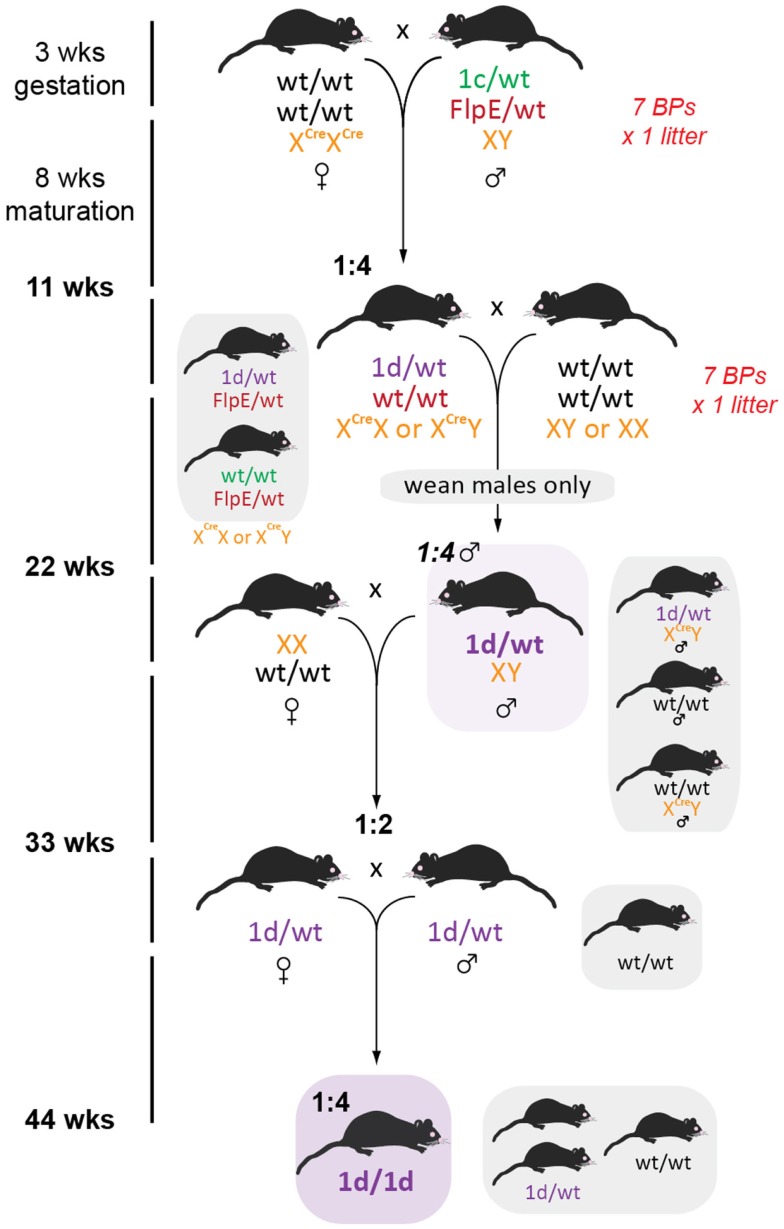
Generation of global knockout mice. Female homozygous CMV-Cre mice were crossed with tm1c males such that all offspring bearing both tm1c and Cre alleles will convert to tm1d. To hasten removal of the FlpE recombinase, only FlpE negative offspring were retained and then crossed to wild type C57BL/6J partners. Because CMV-Cre is X-linked, all female pups were culled, resulting in a 1:4 ratio of desired recombinase-negative tm1d males. Subsequent outcrossing to wild type C57BL/6J females generated 50% tm1d heterozygotes, which were then intercrossed to generate the homozygous knockout line.
Figure 7
Figure 7
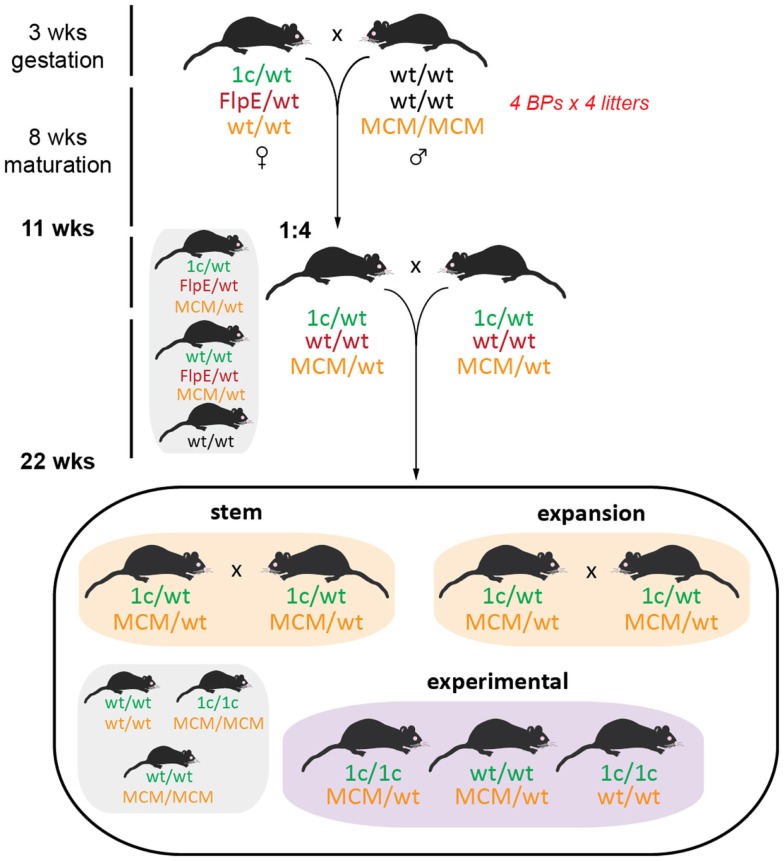
Initial breeding scheme for generation of MerCreMer inducible knockout mice. At the same time as generating the tm1d knockout mice, we also established an inducible cardiomyocyte-specific deletion line. Female tm1c mice were bred to homozygous α-MHC MerCreMer (MCM) C57BL/6J males; the tm1c allele was selected for by PCR and remains unconverted (requires tamoxifen administration for Cre induction), while all FlpE positive offspring were culled at this step. Brother × sister matings were established as the stem breeding scheme for future generations, while expansion breeding pairs comprised tm1c heterozygotes that were either wild type or homozygous for MCM – the expansion pairs will yield all necessary experimental mice as well as feed back to the stem colony. Stem and expansion breeding is discussed in Ref. (16).
Figure 8
Figure 8
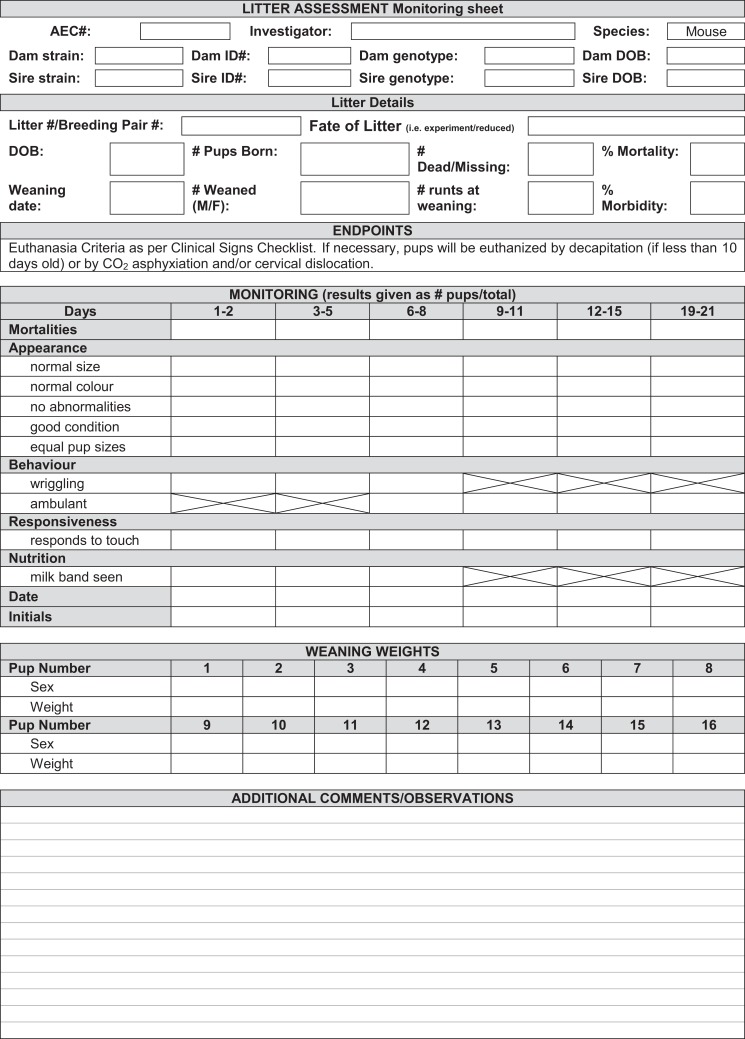
Sample sheet for animal welfare monitoring of EUCOMM mice. An example of the kind of litter monitoring sheet that should be used to assess the welfare of new lines, accounting for mortality, abnormalities or differences in appearance, behavior, responsiveness, and nutrition. Boxes with a strike-through are not applicable to that particular age.

References

    1. Suckow MA, Danneman P, Brayton C. First ed In: Suckow MA, editor. The Laboratory Mouse. CRC Press; (2001). p. 1–5.
    1. Capecchi MR. Gene targeting in mice: functional analysis of the mammalian genome for the twenty-first century. Nat Rev Genetics (2005) 6(6):507–12.10.1038/nrg1619 - DOI - PubMed
    1. International Mouse Knockout Consortium. Collins FS, Rossant J, Wurst W. A mouse for all reasons. Cell (2007) 128(1):9–13.10.1016/j.cell.2006.12.018 - DOI - PubMed
    1. Bradley A, Anastassiadis K, Ayadi A, Battey JF, Bell C, Birling MC, et al. The mammalian gene function resource: the international knockout mouse consortium. Mamm Genome (2012) 23(9–10):580–6.10.1007/s00335-012-9422-2 - DOI - PMC - PubMed
    1. Skarnes WC, Rosen B, West AP, Koutsourakis M, Bushell W, Iyer V, et al. A conditional knockout resource for the genome-wide study of mouse gene function. Nature (2011) 474(7351):337–42.10.1038/nature10163 - DOI - PMC - PubMed