


Climate and Pest-Driven Geographic Shifts in Global Coffee Production: Implications for Forest Cover, Biodiversity and Carbon Storage
- PMID: 26177201
- PMCID: PMC4503344
- DOI: 10.1371/journal.pone.0133071
Climate and Pest-Driven Geographic Shifts in Global Coffee Production: Implications for Forest Cover, Biodiversity and Carbon Storage
Abstract
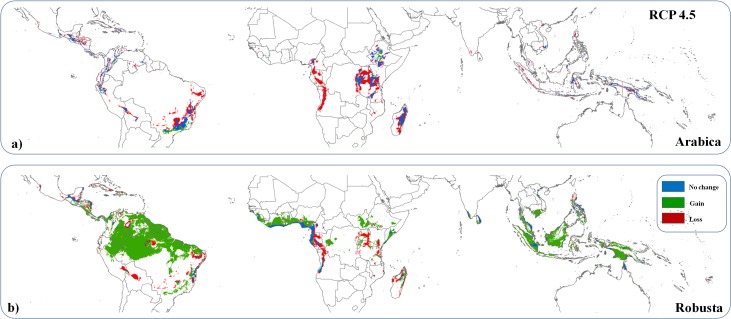
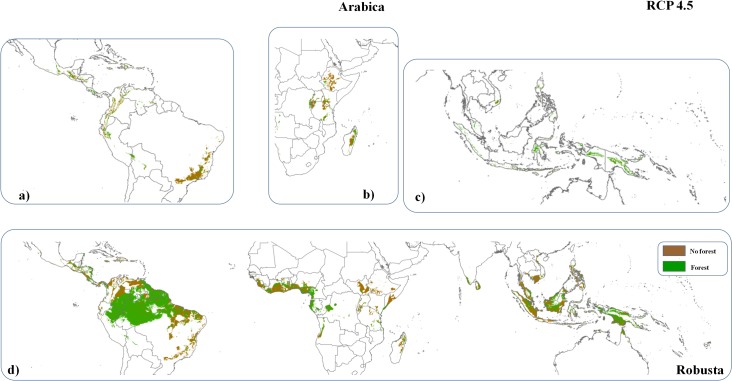
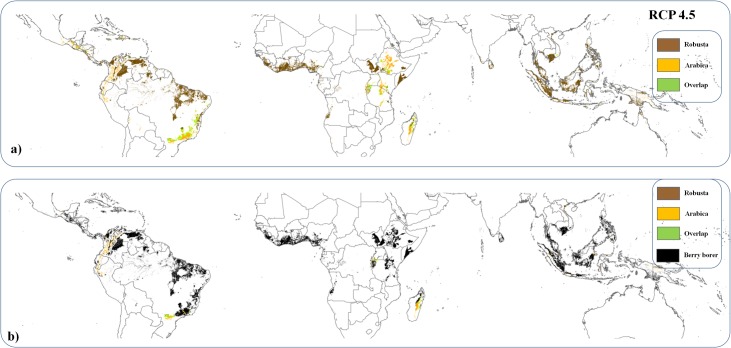
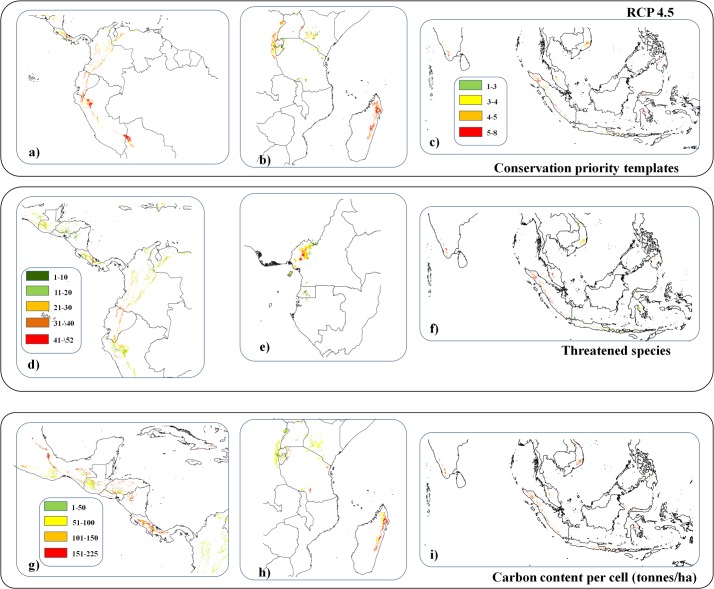
Coffee is highly sensitive to temperature and rainfall, making its cultivation vulnerable to geographic shifts in response to a changing climate. This could lead to the establishment of coffee plantations in new areas and potential conflicts with other land covers including natural forest, with consequent implications for biodiversity and ecosystem services. We project areas suitable for future coffee cultivation based on several climate scenarios and expected responses of the coffee berry borer, a principle pest of coffee crops. We show that the global climatically-suitable area will suffer marked shifts from some current major centres of cultivation. Most areas will be suited to Robusta coffee, demand for which could be met without incurring forest encroachment. The cultivation of Arabica, which represents 70% of consumed coffee, can also be accommodated in the future, but only by incurring some natural forest loss. This has corresponding implications for carbon storage, and is likely to affect areas currently designated as priority areas for biodiversity. Where Arabica coffee does encroach on natural forests, we project average local losses of 35% of threatened vertebrate species. The interaction of climate and coffee berry borer greatly influences projected outcomes.
Conflict of interest statement
Figures
References
-
- Laderach P, Lundy M, Jarvis A, Ramirez J, Perez Portilla E, Schepp K, et al. Predicted impact of climate change on coffee supply chains In: Filho WL, editor. Economic, Social and Political Elements of Climate Change. Climate Change Management; 2011. p. 703–23.
-
- Mayer A. Climate change already challenging agriculture. Bioscience. 2013;63(10):781–7. 10.1525/bio.2013.63.10.2 . - DOI
Publication types
MeSH terms
Substances
LinkOut - more resources
Full Text Sources
Other Literature Sources
Miscellaneous
