


Genistein and cancer: current status, challenges, and future directions
- PMID: 26178025
- PMCID: PMC4496735
- DOI: 10.3945/an.114.008052
Genistein and cancer: current status, challenges, and future directions
Abstract
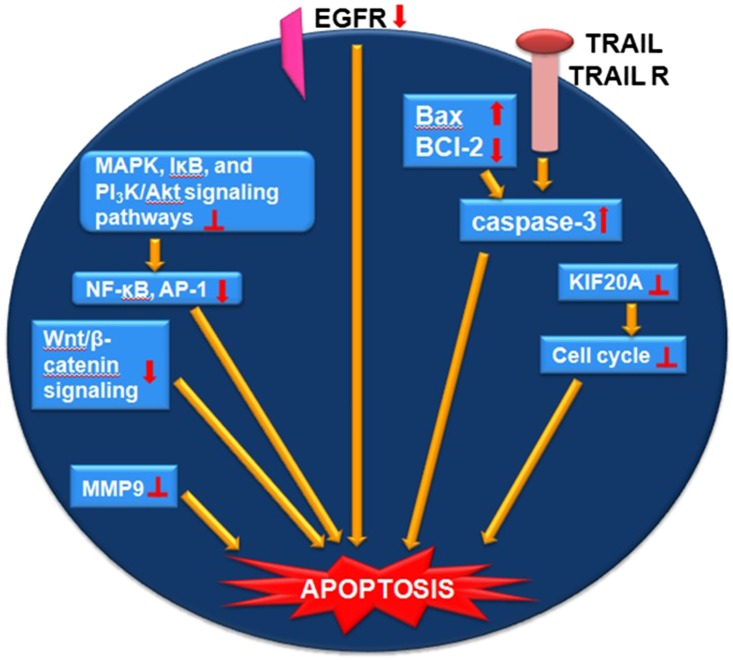
Primary prevention through lifestyle interventions is a cost-effective alternative for preventing a large burden of chronic and degenerative diseases, including cancer, which is one of the leading causes of morbidity and mortality worldwide. In the past decade, epidemiologic and preclinical evidence suggested that polyphenolic phytochemicals present in many plant foods possess chemopreventive properties against several cancer forms. Thus, there has been increasing interest in the potential cancer chemopreventive agents obtained from natural sources, such as polyphenols, that may represent a new, affordable approach to curb the increasing burden of cancer throughout the world. Several epidemiologic studies showed a relation between a soy-rich diet and cancer prevention, which was attributed to the presence of a phenolic compound, genistein, present in soy-based foods. Genistein acts as a chemotherapeutic agent against different types of cancer, mainly by altering apoptosis, the cell cycle, and angiogenesis and inhibiting metastasis. Targeting caspases, B cell lymphoma 2 (Bcl-2)-associated X protein (Bax), Bcl-2, kinesin-like protein 20A (KIF20A), extracellular signal-regulated kinase 1/2 (ERK1/2), nuclear transcription factor κB (NF-κB), mitogen-activated protein kinase (MAPK), inhibitor of NF-κB (IκB), Wingless and integration 1 β-catenin (Wnt/β-catenin), and phosphoinositide 3 kinase/Akt (PI3K/Akt) signaling pathways may act as the molecular mechanisms of the anticancer, therapeutic effects of genistein. Genistein also shows synergistic behavior with well-known anticancer drugs, such as adriamycin, docetaxel, and tamoxifen, suggesting a potential role in combination therapy. This review critically analyzes the available literature on the therapeutic role of genistein on different types of cancer, focusing on its chemical features, plant food sources, bioavailability, and safety.
Keywords: bioavailability; cancer; genistein; safety; source.
© 2015 American Society for Nutrition.
Conflict of interest statement
Author disclosures: C Spagnuolo, GL Russo, IE Orhan, S Habtemariam, M Daglia, A Sureda, SF Nabavi, KP Devi, MR Loizzo, R Tundis, and SM Nabavi, no conflicts of interest.
Figures
References
-
- Ferlay J, Soerjomataram I, Ervik M, Dikshit R, Eser S, Mathers C, Rebelo M, Parkin D, Forman D, Bray F. GLOBOCAN 2012 version 1. 0: cancer incidence and mortality worldwide. IARC CancerBase Vol. 11. Lyon (France): International Agency for Research on Cancer; 2013. [cited 2014 Nov 13]. Available from: http://globocan.iarc.fr.
-
- Bray F, Ren JS, Masuyer E, Ferlay J. Global estimates of cancer prevalence for 27 sites in the adult population in 2008. Int J Cancer 2013;132:1133–45. - PubMed
-
- Jemal A, Bray F, Center MM, Ferlay J, Ward E, Forman D. Global cancer statistics. CA Cancer J Clin 2011;61:69–90. - PubMed
-
- World Health Organization. The World Health Organizationaposs fight against cancer: strategies that prevent, cure and care. Geneva (Switzerland): WHO Press; 2007.
-
- Kris-Etherton PM, Hecker KD, Bonanome A, Coval SM, Binkoski AE, Hilpert KF, Griel AE, Etherton TD. Bioactive compounds in foods: their role in the prevention of cardiovascular disease and cancer. Am J Med 2002;113:71S–88S. - PubMed
Publication types
MeSH terms
Substances
LinkOut - more resources
Full Text Sources
Other Literature Sources
Research Materials
Miscellaneous
