


Mineralocorticoid receptors are present in skeletal muscle and represent a potential therapeutic target
- PMID: 26178166
- PMCID: PMC4608910
- DOI: 10.1096/fj.15-276782
Mineralocorticoid receptors are present in skeletal muscle and represent a potential therapeutic target
Abstract
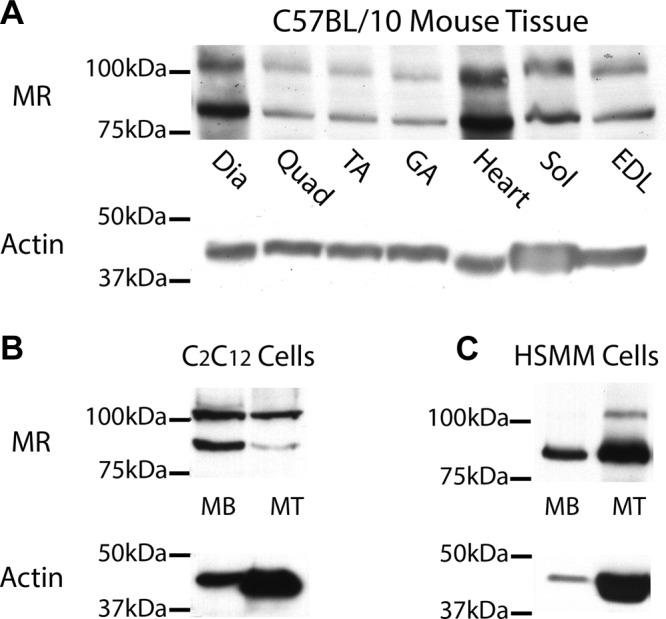
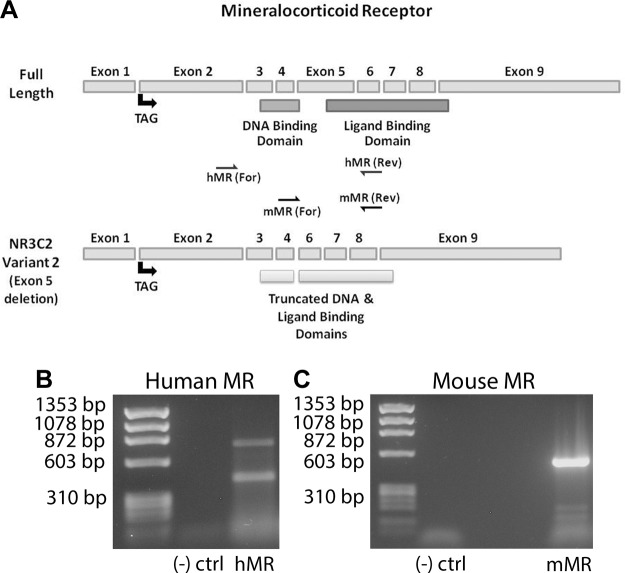
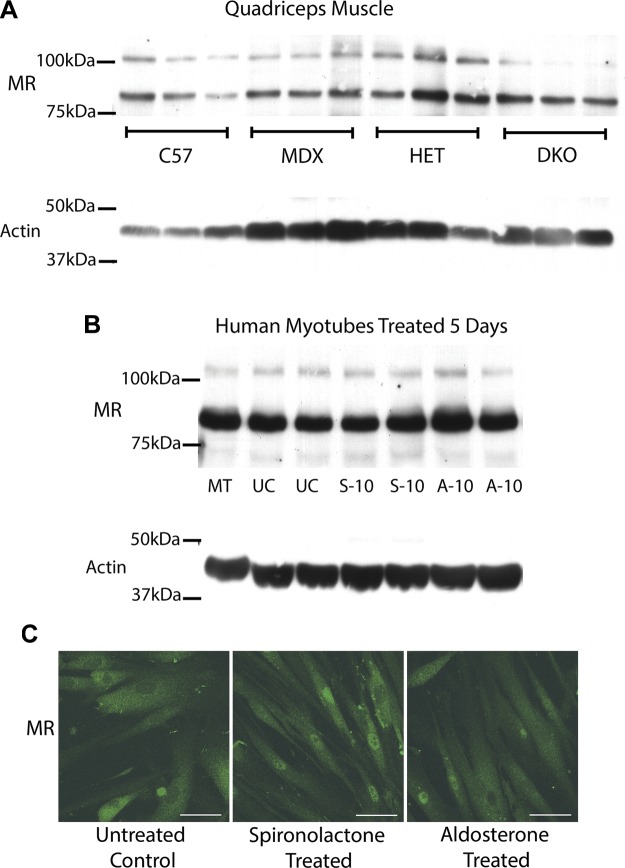
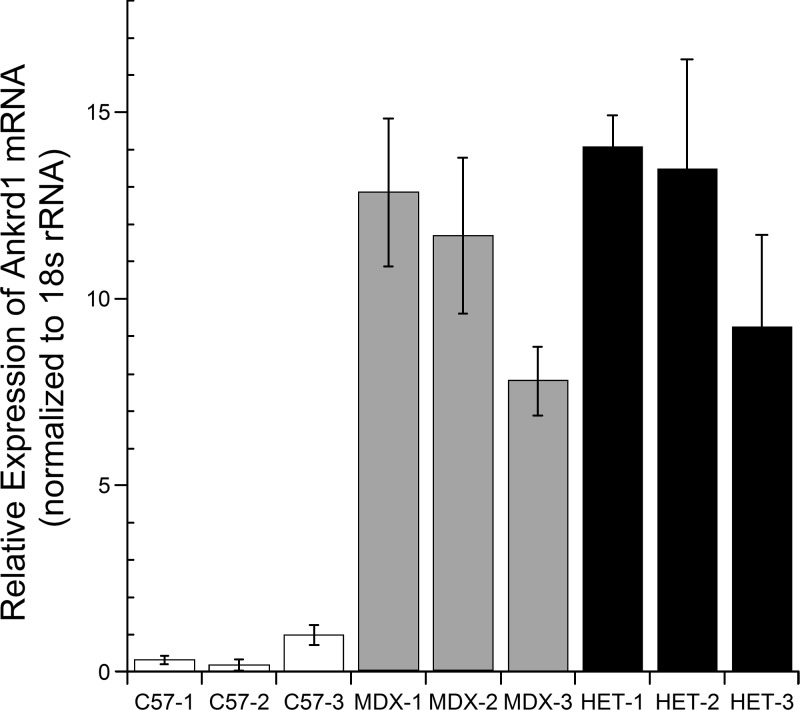
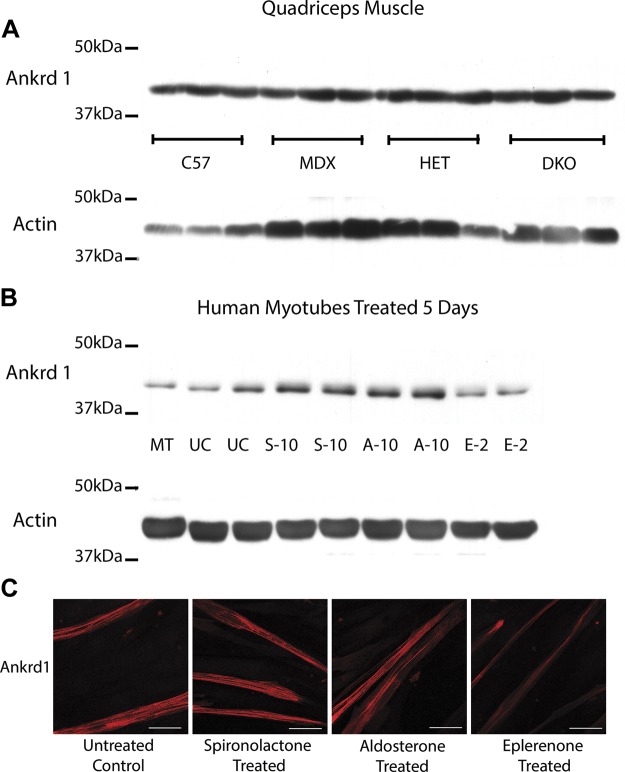
Early treatment with heart failure drugs lisinopril and spironolactone improves skeletal muscle pathology in Duchenne muscular dystrophy (DMD) mouse models. The angiotensin converting enzyme inhibitor lisinopril and mineralocorticoid receptor (MR) antagonist spironolactone indirectly and directly target MR. The presence and function of MR in skeletal muscle have not been explored. MR mRNA and protein are present in all tested skeletal muscles from both wild-type mice and DMD mouse models. MR expression is cell autonomous in both undifferentiated myoblasts and differentiated myotubes from mouse and human skeletal muscle cultures. To test for MR function in skeletal muscle, global gene expression analysis was conducted on human myotubes treated with MR agonist (aldosterone; EC50 1.3 nM) or antagonist (spironolactone; IC50 1.6 nM), and 53 gene expression differences were identified. Five differences were conserved in quadriceps muscles from dystrophic mice treated with spironolactone plus lisinopril (IC50 0.1 nM) compared with untreated controls. Genes down-regulated more than 2-fold by MR antagonism included FOS, ANKRD1, and GADD45B, with known roles in skeletal muscle, in addition to NPR3 and SERPINA3, bona fide targets of MR in other tissues. MR is a novel drug target in skeletal muscle and use of clinically safe antagonists may be beneficial for muscle diseases.
Keywords: aldosterone; gene expression microarray; muscular dystrophy; spironolactone; steroid hormone receptors.
© FASEB.
Figures
References
-
- Mendell J. R., Shilling C., Leslie N. D., Flanigan K. M., al-Dahhak R., Gastier-Foster J., Kneile K., Dunn D. M., Duval B., Aoyagi A., Hamil C., Mahmoud M., Roush K., Bird L., Rankin C., Lilly H., Street N., Chandrasekar R., Weiss R. B. (2012) Evidence-based path to newborn screening for Duchenne muscular dystrophy. Ann. Neurol. 71, 304–313 - PubMed
-
- Emery A. E. (2002) The muscular dystrophies. Lancet 359, 687–695 - PubMed
-
- DeSilva S., Drachman D. B., Mellits D., Kuncl R. W. (1987) Prednisone treatment in Duchenne muscular dystrophy. Long-term benefit. Arch. Neurol. 44, 818–822 - PubMed
-
- Bauer R., Straub V., Blain A., Bushby K., MacGowan G. A. (2009) Contrasting effects of steroids and angiotensin-converting-enzyme inhibitors in a mouse model of dystrophin-deficient cardiomyopathy. Eur. J. Heart Fail. 11, 463–471 - PubMed
-
- Lo Cascio V., Kanis J. A., Beneton M. N., Bertoldo F., Adami S., Poggi G., Zanolin M. E. (1995) Acute effects of deflazacort and prednisone on rates of mineralization and bone formation. Calcif. Tissue Int. 56, 109–112 - PubMed
Publication types
MeSH terms
Substances
Grants and funding
LinkOut - more resources
Full Text Sources
Other Literature Sources
Medical
Molecular Biology Databases
Miscellaneous
