Multiple pathologies are common and related to dementia in the oldest-old: The 90+ Study
- PMID: 26180144
- PMCID: PMC4540246
- DOI: 10.1212/WNL.0000000000001831
Multiple pathologies are common and related to dementia in the oldest-old: The 90+ Study
Abstract
Objective: The purpose of this study was to examine the role of multiple pathologies in the expression of dementia in the oldest-old.
Methods: A total of 183 participants of The 90+ Study with longitudinal follow-up and autopsy were included in this clinical-pathologic investigation. Eight pathologic diagnoses (Alzheimer disease [AD], microinfarcts, hippocampal sclerosis, macroinfarcts, Lewy body disease, cerebral amyloid angiopathy, white matter disease, and others) were dichotomized. We estimated the odds of dementia in relation to each individual pathologic diagnosis and to the total number of diagnoses. We also examined dementia severity in relation to number of pathologic diagnoses.
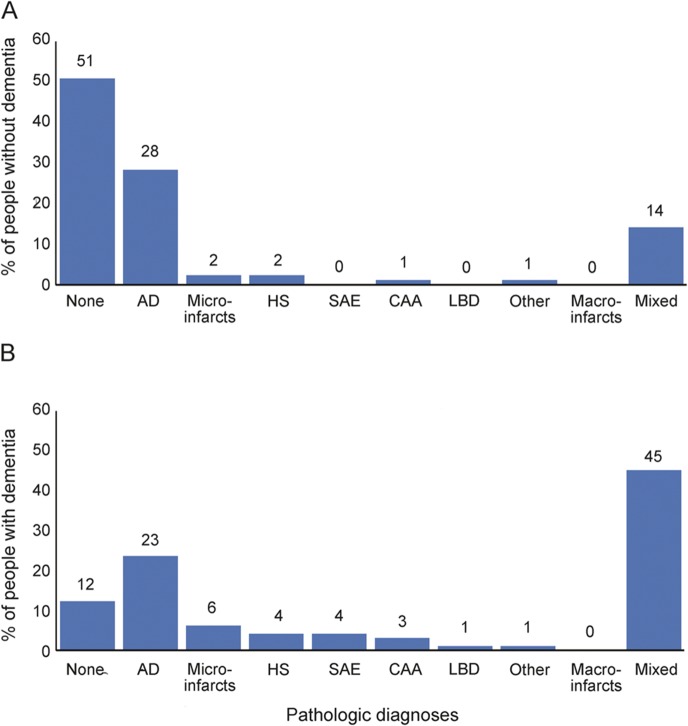
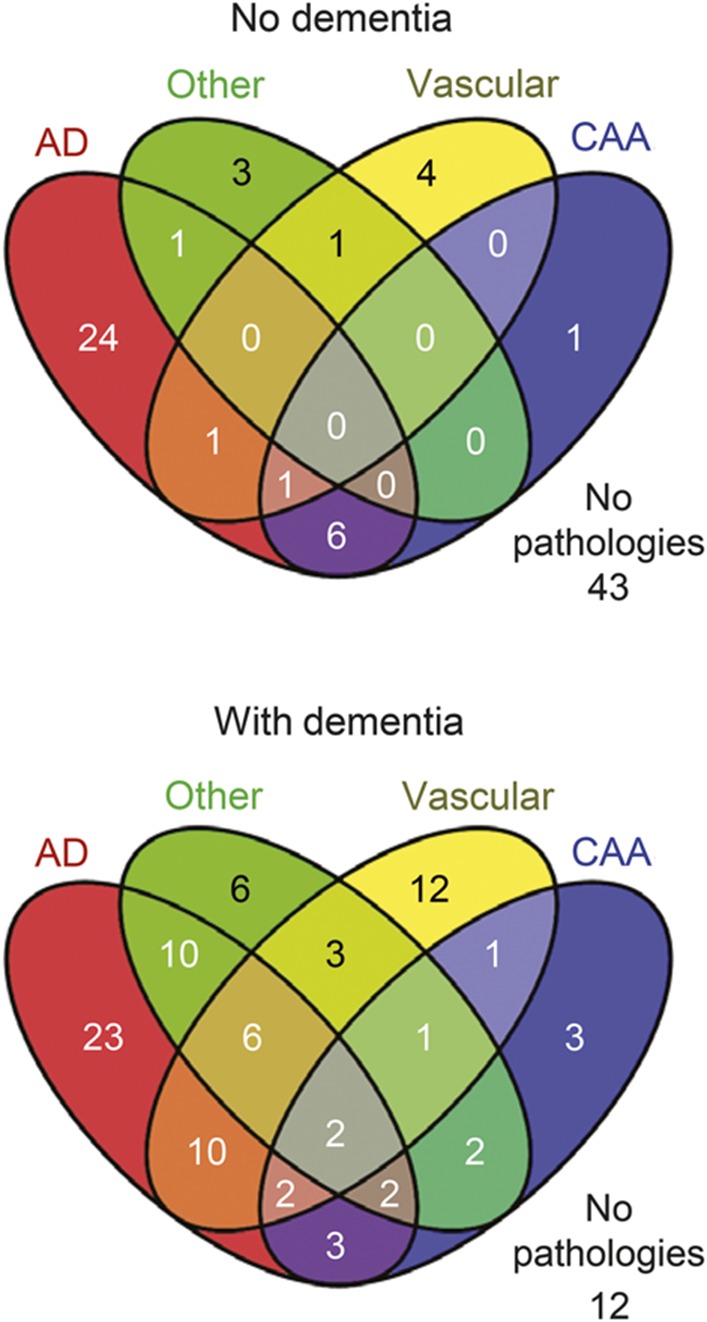
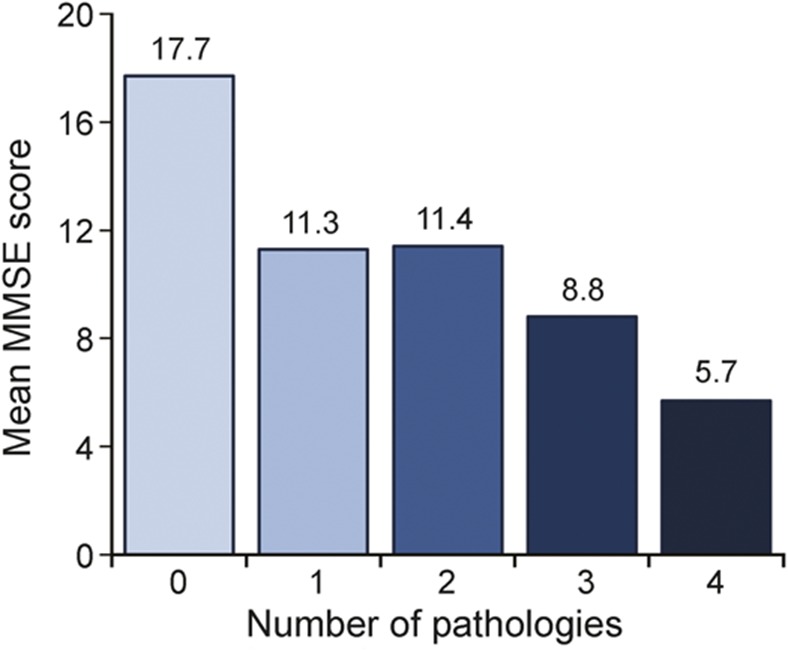
Results: The presence of multiple pathologic diagnoses was common and occurred more frequently in those with dementia compared with those without dementia (45% vs 14%). Higher numbers of pathologic diagnoses were also associated with greater dementia severity. Participants with intermediate/high AD pathology alone were 3 times more likely to have dementia (odds ratio = 3.5), but those with single non-AD pathologies were 12 times more likely to have dementia (odds ratio = 12.4). When a second pathology was present, the likelihood of dementia increased 4-fold in those with intermediate/high AD pathology but did not change in those with non-AD pathologies, suggesting that pathologies may interrelate in different ways.
Conclusions: In the oldest-old, the presence of multiple pathologies is associated with increased likelihood and severity of dementia. The effect of the individual pathologies may be additive or perhaps synergistic and requires further research. Multiple pathologies will need to be targeted to reduce the burden of dementia in the population.
© 2015 American Academy of Neurology.
Figures
References
-
- Corrada MM, Brookmeyer R, Berlau D, Paganini-Hill A, Kawas CH. Prevalence of dementia after age 90: results from The 90+ Study. Neurology 2008;71:337–343. - PubMed
-
- Jellinger KA, Attems J. Prevalence of dementia disorders in the oldest-old: an autopsy study. Acta Neuropathol 2010;119:421–433. - PubMed
-
- Savva GM, Wharton SB, Ince PG, Forster G, Matthews FE, Brayne C. Age, neuropathology, and dementia. N Engl J Med 2009;360:2302–2309. - PubMed
Publication types
MeSH terms
Grants and funding
LinkOut - more resources
Full Text Sources
Other Literature Sources
Medical