


Baseline subjective memory complaints associate with increased risk of incident dementia: the PREADVISE trial
- PMID: 26180776
- PMCID: PMC4500536
- DOI: 10.14283/jpad.2015.37
Baseline subjective memory complaints associate with increased risk of incident dementia: the PREADVISE trial
Abstract
Background: Subjective memory complaints reflect patient-identified deficits in memory and have been linked to increased risk of future dementia in nondemented (including cognitively intact) older adults.
Objectives: To assess the risk of incident dementia during follow-up for participants in the Prevention of Alzheimer's Disease with Vitamin E and Selenium (PREADVISE) study who reported memory complaints at baseline.
Design: Double-blind, placebo controlled 2×2 randomized controlled trial that transformed into an observational cohort following discontinuation of supplementation in the SELECT parent trial.
Setting: PREADVISE participants were assessed at 130 local clinical study sites in the United States, Canada, and Puerto Rico during the controlled trial phase and were later followed by telephone from a centralized location during the observational phase.
Participants: PREADVISE enrolled a total of 7,547 nondemented men over the age of 60; 4,271 consented to participation in the observational study.
Measurements: Participants were interviewed at baseline for memory complaints. The Memory Impairment Screen (MIS) was administered to each participant at the annual memory screening. Participants who failed the MIS also received a more detailed neurocognitive assessment: an expanded Consortium to Establish a Registry in Alzheimer's Disease (CERADe) neuropsychological battery was used during the RCT, and the modified Telephone Interview for Cognitive Status (TICS-m) was used during the observational study. Participants who failed the second screen were asked to have a memory work-up with a local physician and to share their medical records with PREADVISE. Subgroups of men who did not fail the MIS were also asked to complete the CERADe battery and TICS-m for validation purposes. Additional measures collected include self-reported medical history, medication use, and the AD8 Dementia Screening Test.
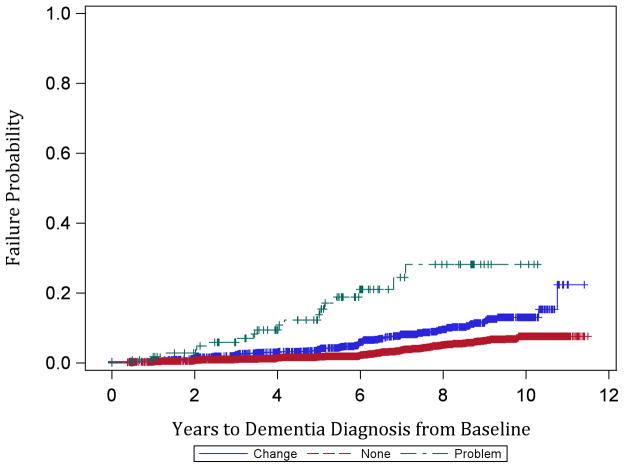
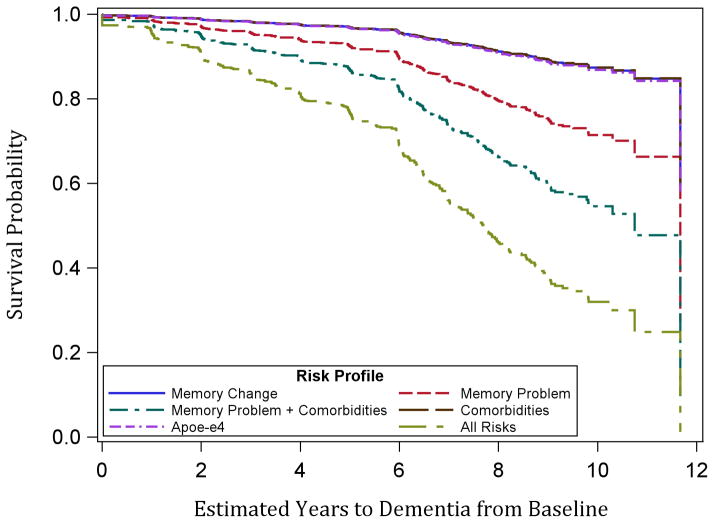
Results: After controlling for important risk factors for dementia, Cox proportional hazards regression revealed that men who reported memory changes at baseline had an 80% increase in the hazard of incident dementia compared to men who reported no SMC. Men who reported memory problems at baseline had almost a 6-fold increase in the hazard of incident dementia compared to men who reported no memory complaint.
Conclusions: Memory complaints in nondemented older men predicted future dementia. Men who reported that the changes in their memory were a problem were especially at risk, and the presence of common comorbidities like diabetes, sleep apnea, and history of head injury further exacerbated this risk.
Keywords: dementia; longitudinal cohort; subjective memory complaints.
Figures
References
Grants and funding
LinkOut - more resources
Full Text Sources
Medical