


Neurological Manifestations in Parry-Romberg Syndrome: 2 Case Reports
- PMID: 26181554
- PMCID: PMC4617071
- DOI: 10.1097/MD.0000000000001147
Neurological Manifestations in Parry-Romberg Syndrome: 2 Case Reports
Abstract
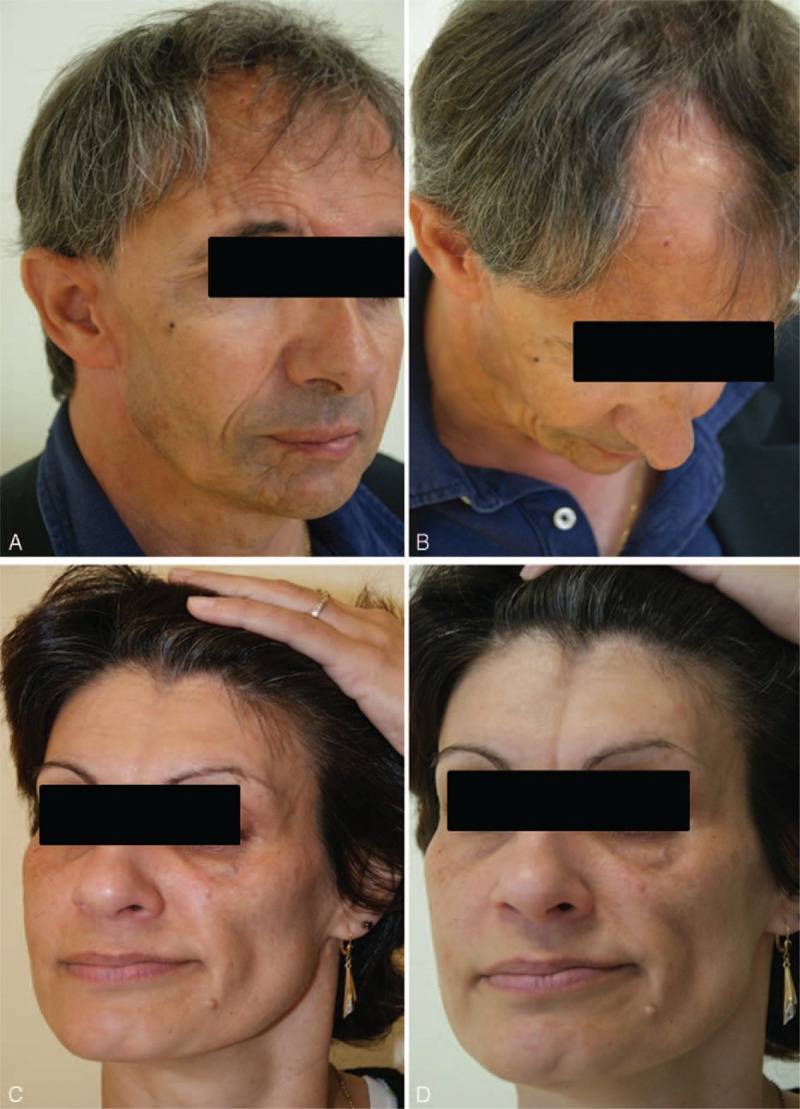
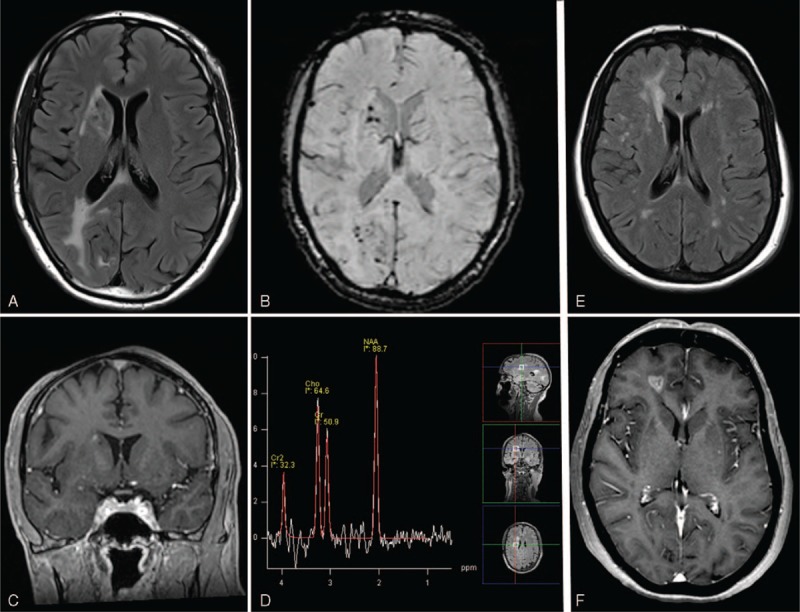
Parry-Romberg syndrome (PRS) is a variant of morphea usually characterized by a slowly progressive course. Clinical and radiological involvement of the central nervous system may be observed in PRS. We describe 2 patients with PRS and neurological symptoms (one with trigeminal neuralgia associated with deafness, and the second with hemifacial pain associated with migraine without aura) in conjunction with abnormal cerebral MRI including white matter T2 hyperintensities and enhancement with gadolinium. Despite the absence of specific immunosuppressive treatments, both patients have presented stable imaging during follow-up without any clinical neurologic progression. We have performed a large review of the medical literature on patients with PRS and neurological involvement (total of 129 patients). Central nervous system involvement is frequent among PRS patients and is inconsistently associated with clinical abnormalities. These various neurological manifestations include seizures, headaches, movement disorders, neuropsychological symptoms, and focal symptoms. Cerebral MRI may reveal frequent abnormalities, which can be bilateral or more often homolateral to the skin lesions, localized or so widespread so as to involve the whole hemisphere: T2 hyperintensities, mostly in the subcortical white matter, gadolinium enhancement, brain atrophy, and calcifications. These radiological lesions do not usually progress over time. Steroids or immunosuppressive treatments are controversial since it remains unclear to what extent they are beneficial and there is often no neurological progression.
Conflict of interest statement
The authors have no conflicts of interest to disclose.
Figures
References
-
- Kister I, Inglese M, Laxer RM, et al. Neurologic manifestations of localized scleroderma: a case report and literature review. Neurology 2008; 71:1538–1545. - PubMed
-
- Doolittle DA, Lehman VT, Schwartz KM, et al. CNS imaging findings associated with Parry–Romberg syndrome and en coup de sabre: correlation to dermatologic and neurologic abnormalities. Neuroradiology 2014; 57:21–34. - PubMed
-
- El-Kehdy J, Abbas O, Rubeiz N. A review of Parry–Romberg syndrome. J Am Acad Dermatol 2012; 67:769–784. - PubMed
-
- Stone J. Parry-Romberg syndrome: a global survey of 205 patients using the Internet. Neurology 2003; 61:674–676. - PubMed
-
- Bielsa Marsol I. Update on the classification and treatment of localized scleroderma. Actas Dermosifiliogr 2013; 104:654–666. - PubMed
Publication types
MeSH terms
LinkOut - more resources
Full Text Sources
Miscellaneous
