


Analysis of Body Composition and Food Habits of Spanish Celiac Women
- PMID: 26184289
- PMCID: PMC4517011
- DOI: 10.3390/nu7075234
Analysis of Body Composition and Food Habits of Spanish Celiac Women
Abstract
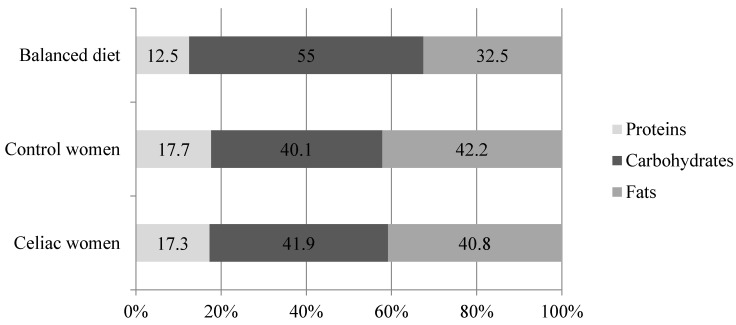
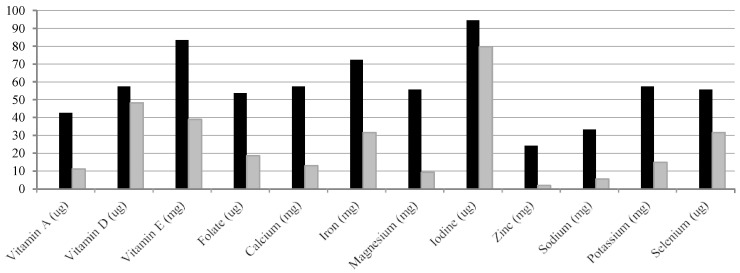
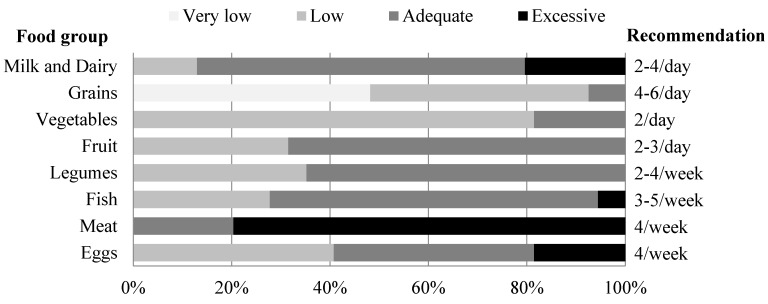
The purpose of the present work was both to analyze composition of Spanish celiac women and to study the food habits and gluten-free diet of these celiac patients, in order to determine whether they achieve a balanced and healthy diet as well as to highlight nutritional qualitative and/or quantitative differences. 54 adult celiac women (34 ± 13 years) took part in the six-month study. Height, weight and body composition were measured. An analysis of energy consumption and of the macronutrient distribution of their diet was carried out. Their fulfillment of micronutrient intake recommendations was verified. Participants showed a Body Mass Index of 21.6 ± 2.4 kg/m2. Energy Intake was slightly lower than the Dietary Reference Intakes. Excessive protein apart from over-consumption of fat was observed. More than three quarters of participants consumed meat in excess. Carbohydrate consumption along with that of fiber was below recommended levels. Vitamin D, iron, and iodine had a low percentage of recommendation compliance. In general, participants followed the recommendations of dairy products and fruit intake whereas vegetable consumption was not enough for the vast majority. We conclude that although the diet of celiac women does not differ much from the diet of general population, some considerations, such as reducing fat and protein consumption and increasing fiber intake, must be taken into account.
Keywords: body composition; celiac disease; diary recommended intake; food habit; gluten-free diet.
Figures
References
-
- Catassi C., Fabiani E., Iacono G., D’Agate C., Francavilla R., Biagi F., Volta U., Accomando S., Picarelli A., de Vitis I., et al. A prospective, double-blind, placebo-controlled trial to establish a safe gluten threshold for patients with celiac disease. Am. J. Clin. Nutr. 2007;85:160–166. - PubMed
-
- Gibert A., Kruizinga A.G., Neuhold S., Houben G.F., Canela M.A., Fasano A., Catassi C. Might gluten traces in wheat substitutes pose a risk in patients with celiac disease? A population-based probabilistic approach to risk estimation. Am. J. Clin. Nutr. 2013;97:109–116. doi: 10.3945/ajcn.112.047985. - DOI - PubMed
Publication types
MeSH terms
Substances
LinkOut - more resources
Full Text Sources
Other Literature Sources
Medical
