. 2015 Aug 7;349(6248):643-6.
doi: 10.1126/science.aac4919. Epub 2015 Jul 16.

HUMORAL IMMUNITY. T cell help controls the speed of the cell cycle in germinal center B cells

Affiliations

HUMORAL IMMUNITY. T cell help controls the speed of the cell cycle in germinal center B cells

Alexander D Gitlin et al. Science. .

Abstract

The germinal center (GC) is a microanatomical compartment wherein high-affinity antibody-producing B cells are selectively expanded. B cells proliferate and mutate their antibody genes in the dark zone (DZ) of the GC and are then selected by T cells in the light zone (LZ) on the basis of affinity. Here, we show that T cell help regulates the speed of cell cycle phase transitions and DNA replication of GC B cells. Genome sequencing and single-molecule analyses revealed that T cell help shortens S phase by regulating replication fork progression, while preserving the relative order of replication origin activation. Thus, high-affinity GC B cells are selected by a mechanism that involves prolonged dwell time in the DZ where selected cells undergo accelerated cell cycles.


Figures

Figure 1
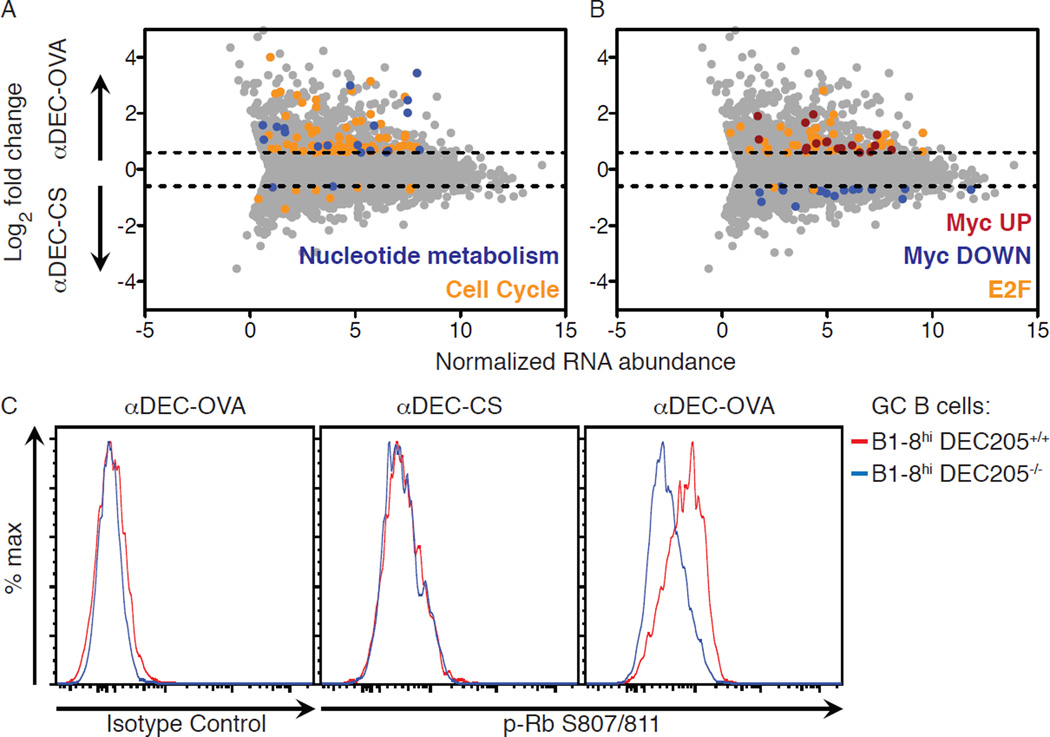
Figure 1. T cell help regulates cell cycle and metabolic gene expression programs in selected GC B cells
(A, B) RNA sequencing analysis showing genes up- or down-regulated by a fold-change of at least 0.6 (log2) upon treatment with αDEC-OVA or αDEC-CS. For clarity, enriched gene sets according to curated reactome gene sets (A) and transcription factor target genes (B) are shown separately. (C) Histograms showing intracellular levels of Rb phosphorylation in B1–8hi DEC205+/+ and B1–8hi DEC205−/− GC B cells from mice treated 2 days earlier with αDEC-OVA or αDEC-CS. Results represent two (A, B) or three (C) independent experiments with 4–5 mice per condition for each experiment.
Figure 2
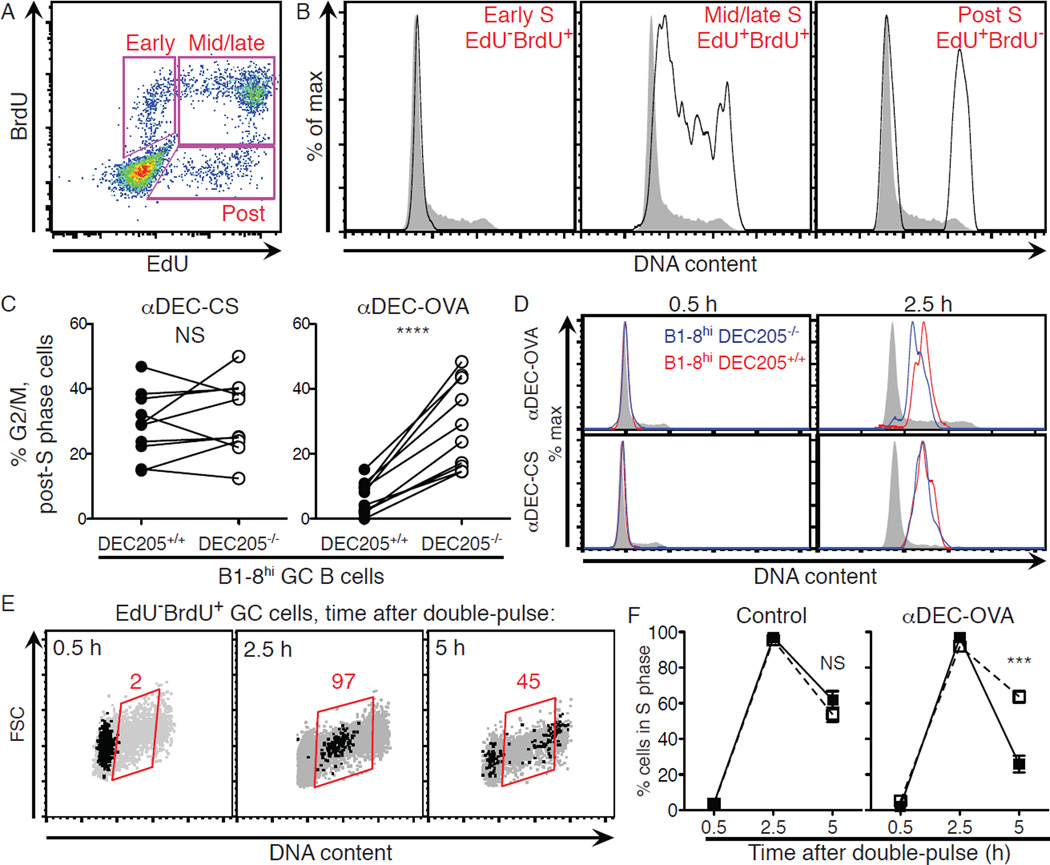
Figure 2. T cell help regulates progression through S and G2/M phases during selection
(A) Mice were injected with EdU intravenously followed 1 hour later by BrdU and then analyzed by flow cytometry 0.5 hours later. (B) Representative histograms displaying DNA content among all GC B cells (grey) and gated populations (black) shown in (A). (C) Mean fraction of cells in G2/M as determined by DNA content among EdU+BrdU (post-S phase) B1–8hi DEC205+/+ and B1–8hi DEC205−/− GC B cells treated with αDEC-OVA or αDEC-CS (control) 2 days earlier. Lines connect indicated cell populations from the same animal. (D) Histograms showing progressive accumulation of DNA content among EdUBrdU+ GC B cells from 0.5 to 2.5 hours after EdU/BrdU double-pulse. (E) Flow cytometry plots showing time course of cell cycle progression of EdUBrdU+ cells (black dots) at 0.5, 2.5, and 5 hours following double-pulse labeling. Grey dots represent all GC B cells in the same mice. Red values represent fraction in S phase gate. (F) Mean fraction of GC B cells in S phase among EdUBrdU+ B1–8hi DEC205+/+ (black squares) and B1–8hi DEC205−/− (white squares) cells as determined by DNA content at 0.5, 2.5 and 5 hours after double-pulse labeling in mice treated 2 days earlier with αDEC-OVA or either PBS or αDEC-CS (control). Error bars = SEM. Two-tailed paired t-test was used in (C) and two-tailed Mann-Whitney test in (F). **** p < 0.0001. *** p = 0.0002. Experiments represent 2–3 independent experiments with 7–10 mice total for each time point and condition.
Figure 3
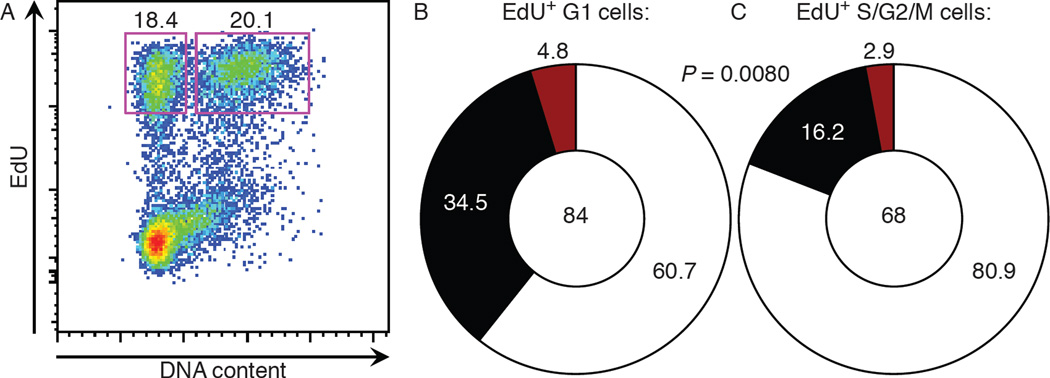
Figure 3. Affinity-enhancing mutations in polyclonal GCs are associated with accelerated S/G2/M progression
(A) WT mice were immunized with NP-OVA and 14 days later were administered EdU for 0.5 hours before BrdU. At 3.25 hours after BrdU administration, EdU+ G1 cells and EdU+ S/G2/M GC B cells were sorted and analyzed for affinity-enhancing mutation in VH186.2 genes. (B, C) Pie charts show frequency of W33L+ (black) and K59R+ (red) clones among VH186.2 sequences within EdU+ G1 (B) and EdU+ S/G2/M (C) GC B cells. One sequence was doubly positive for the W33L and K59R mutations and was counted within the black slice in (C). Total number of clones analyzed is shown in center. P value was determined using Fisher’s exact test. Results are pooled from 2 independent experiments with 10 mice each.
Figure 4
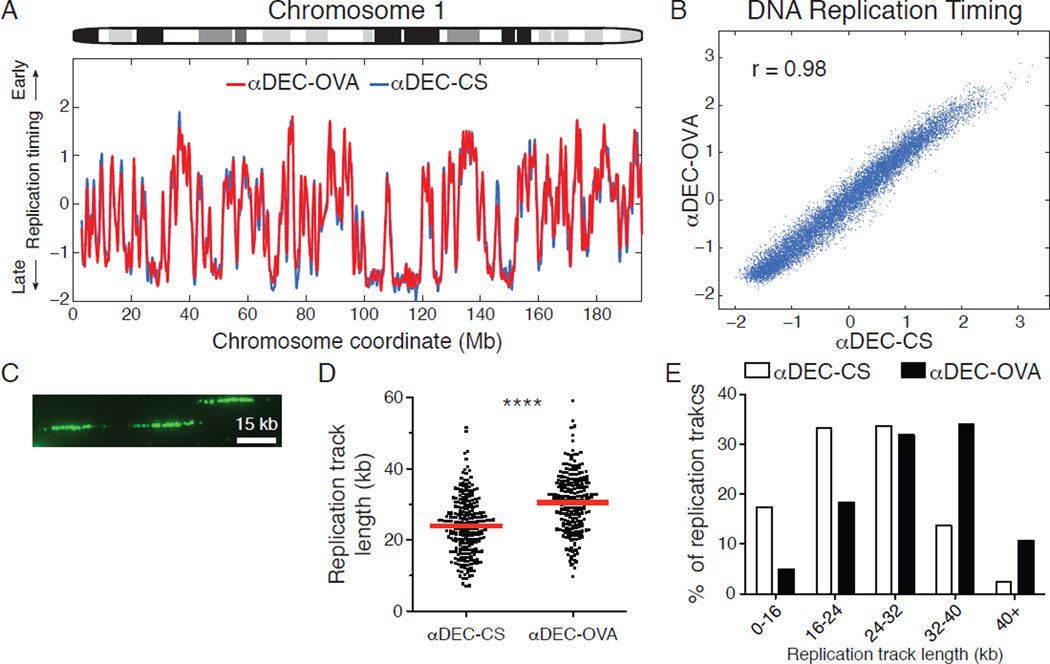
Figure 4. T cell help accelerates S phase by regulating the speed of DNA replication elongation
(A) Replication timing profile of chromosome 1 was determined by analyzing the ratio of DNA copy number between sorted S and G1 phase B1–8hi DEC205+/+ GC B cells treated with αDEC-CS or αDEC-OVA 2 days earlier. (B) Genome-wide correlation between replication timing in the two conditions. (C) Representative IdU-labeled DNA fibers are shown. (D) Replication track lengths from αDEC-CS or αDEC-OVA treated B1–8hi DEC205+/+ GC B cells. Each data point represents an IdU-labeled track, and red lines represent mean values. Results are pooled from 2 independent experiments and involve over 220 measured fibers in total for each condition. (E) Distribution of replication track lengths. **** p < 0.0001, Two-tailed Mann-Whitney test.

References

    1. Eisen HN, Siskind GW. Variations in Affinities of Antibodies during the Immune Response. Biochemistry. 1964 Jul;3:996. - PubMed
    1. Muramatsu M, et al. Class switch recombination and hypermutation require activation-induced cytidine deaminase (AID), a potential RNA editing enzyme. Cell. 2000 Sep 1;102:553. - PubMed
    1. Berek C, Berger A, Apel M. Maturation of the immune response in germinal centers. Cell. 1991 Dec 20;67:1121. - PubMed
    1. Jacob J, Kelsoe G, Rajewsky K, Weiss U. Intraclonal generation of antibody mutants in germinal centres. Nature. 1991 Dec 5;354:389. - PubMed
    1. Kocks C, Rajewsky K. Stepwise intraclonal maturation of antibody affinity through somatic hypermutation. Proceedings of the National Academy of Sciences of the United States of America. 1988 Nov;85:8206. - PMC - PubMed

Publication types

Associated data