Bacterial Extracellular Polysaccharides in Biofilm Formation and Function
- PMID: 26185074
- PMCID: PMC4657554
- DOI: 10.1128/microbiolspec.MB-0011-2014
Bacterial Extracellular Polysaccharides in Biofilm Formation and Function
Abstract
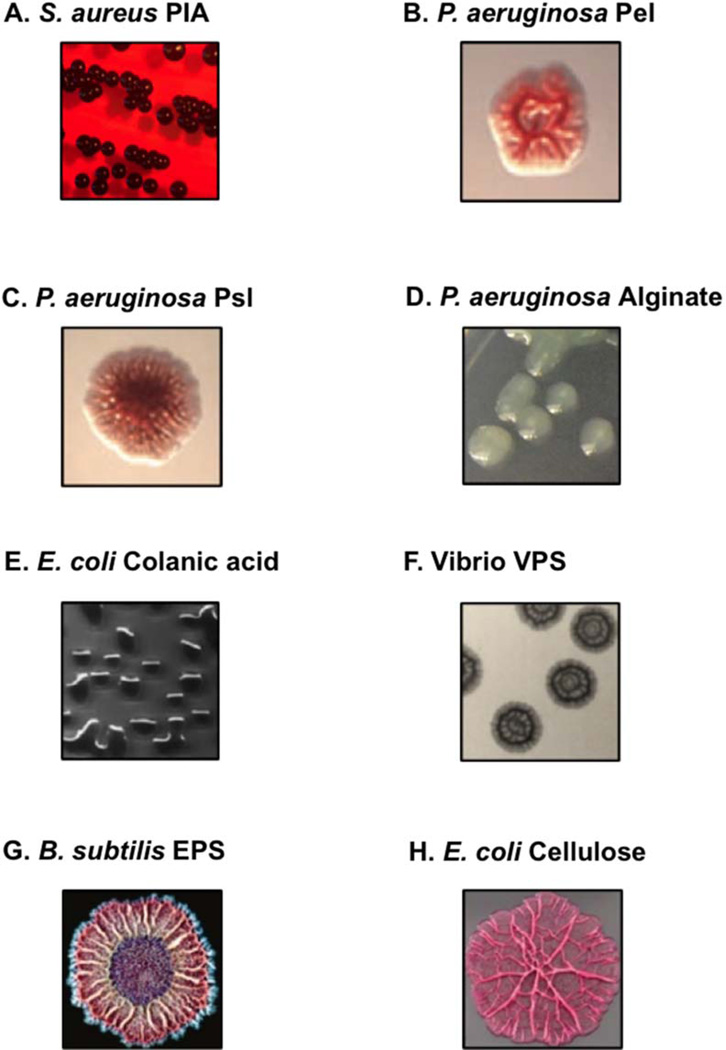
Microbes produce a biofilm matrix consisting of proteins, extracellular DNA, and polysaccharides that is integral in the formation of bacterial communities. Historical studies of polysaccharides revealed that their overproduction often alters the colony morphology and can be diagnostic in identifying certain species. The polysaccharide component of the matrix can provide many diverse benefits to the cells in the biofilm, including adhesion, protection, and structure. Aggregative polysaccharides act as molecular glue, allowing the bacterial cells to adhere to each other as well as surfaces. Adhesion facilitates the colonization of both biotic and abiotic surfaces by allowing the bacteria to resist physical stresses imposed by fluid movement that could separate the cells from a nutrient source. Polysaccharides can also provide protection from a wide range of stresses, such as desiccation, immune effectors, and predators such as phagocytic cells and amoebae. Finally, polysaccharides can provide structure to biofilms, allowing stratification of the bacterial community and establishing gradients of nutrients and waste products. This can be advantageous for the bacteria by establishing a heterogeneous population that is prepared to endure stresses created by the rapidly changing environments that many bacteria encounter. The diverse range of polysaccharide structures, properties, and roles highlight the importance of this matrix constituent to the successful adaptation of bacteria to nearly every niche. Here, we present an overview of the current knowledge regarding the diversity and benefits that polysaccharide production provides to bacterial communities within biofilms.
Conflict of interest statement
Conflicts of interest: We disclose no conflicts.
Figures
References
-
- Branda SS, Vik Å, Friedman L, Kolter R. Biofilms: the matrix revisited. Trends Microbiol. 2005;13:20–26. - PubMed
-
- Sutherland IW. The biofilm matrix: an immobilized but dynamic microbial environment. Trends Microbiol. 2001;9:222–227. - PubMed
-
- Jenkinson HF, Lamont R. Streptococcal adhesion and colonization. Crit Rev Oral Biol Med. 1997;8:175–200. - PubMed
Publication types
MeSH terms
Substances
Grants and funding
LinkOut - more resources
Full Text Sources
Other Literature Sources