. 2015 Jun;3(3):10.1128/microbiolspec.MBP-0016-2015.
doi: 10.1128/microbiolspec.MBP-0016-2015.

Metabolism and Fitness of Urinary Tract Pathogens

Affiliations

Metabolism and Fitness of Urinary Tract Pathogens

Christopher J Alteri et al. Microbiol Spectr. 2015 Jun.

Abstract

Among common infections, urinary tract infections (UTI) are the most frequently diagnosed urologic disease. The majority of UTIs are caused by uropathogenic Escherichia coli. The primary niche occupied by E. coli is the lower intestinal tract of mammals, where it resides as a beneficial component of the commensal microbiota. Although it is well-known that E. coli resides in the human intestine as a harmless commensal, specific strains or pathotypes have the potential to cause a wide spectrum of intestinal and diarrheal diseases. In contrast, extraintestinal E. coli pathotypes reside harmlessly in the human intestinal microenvironment but, upon access to sites outside of the intestine, become a major cause of human morbidity and mortality as a consequence of invasive UTI (pyelonephritis, bacteremia, or septicemia). Thus, extraintestinal pathotypes like uropathogenic E. coli (UPEC) possess an enhanced ability to cause infection outside of the intestinal tract and colonize the urinary tract, the bloodstream, or cerebrospinal fluid of human hosts. Due to the requirement for these E. coli to replicate in and colonize both the intestine and extraintestinal environments, we posit that physiology and metabolism of UPEC strains is paramount. Here we discuss that the ability to survive in the urinary tract depends as much on bacterial physiology and metabolism as it does on the well-considered virulence determinants.


Figures
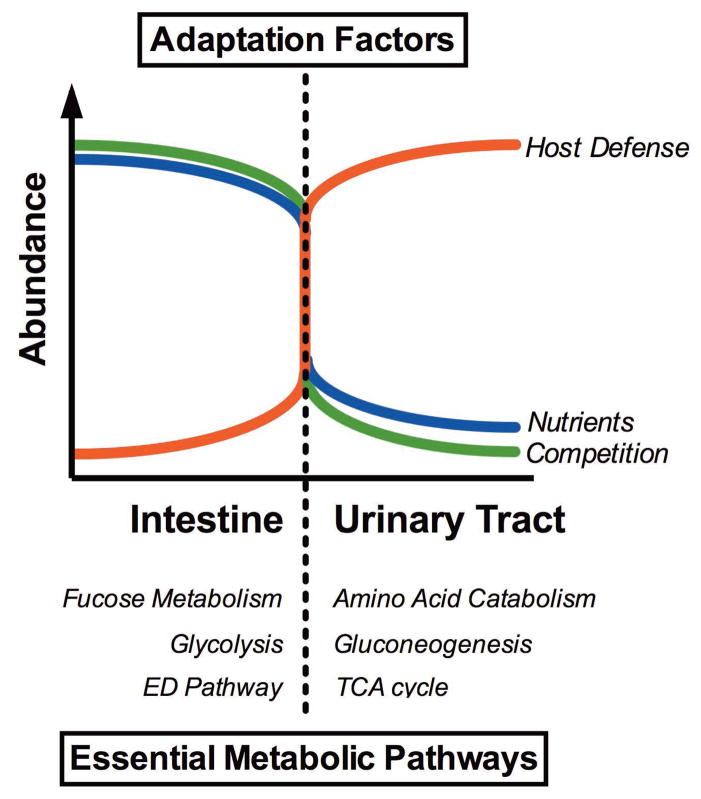
Figure 1
Figure 1. Adaptation of metabolism and basic physiology allows E. coli to replicate in diverse host microenvironments
Extraintestinal pathogenic E. coli that cause urinary tract infection, bacteremia, sepsis, and meningitis, have adapted to grow as a harmless commensal in the nutrient-replete, carbon-rich human intestine but rapidly transition to pathogenic lifestyle in the nutritionally poor, nitrogen-rich urinary tract. In order to establish a commensal association within the human intestine, adaptive factors such as metabolic flexibility allow E. coli to successfully compete for carbon and energy sources with a large and diverse bacterial population. E. coli acquires nutrients from the intestinal mucus, including N-acetylglucosamine, sialic acid, glucosamine, gluconate, arabinose, fucose and simple sugars released upon breakdown of complex polysaccharides by anaerobic gut residents. When UPEC transition to the urinary tract, the bacteria encounter a drastic reduction in the abundance of nutrients and bacterial competition. Consequently, to replicate in a new host microenvironment, UPEC utilization of metabolic pathways required for growth in the dilute mixture of amino acids and peptides in the bladder signals the bacterium to elaborate virulence properties to successfully cause invasive disease and survive the onslaught of bactericidal host defenses. These adaptations are a unique and essential characteristic of ExPEC that enable a successful transition between disparate microenvironments within the same individual. (From Alteri, CJ and HL Mobley. 2012. Escherichia coli physiology and metabolism dictates adaptation to diverse host microenvironments. Curr Opin Microbiol. 15:3–9)
Figure 2
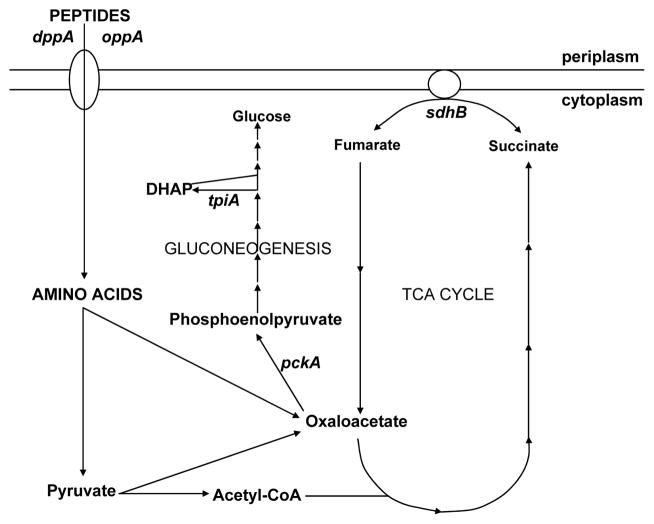
Figure 2. UPEC acquires amino acids and requires gluconeogenesis and the TCA cycle for fitness in vivo
Peptide substrate-binding protein genes dppA and oppA are required to import di- and oligopeptides into the cytoplasm from the periplasm. Short peptides are degraded into amino acids in the cytoplasm and converted into pyruvate and oxaloacetate. Pyruvate is converted into acetyl-CoA and enters the TCA cycle to replenish intermediates and generate oxaloacetate. Oxaloacetate is converted to phosphoenolpyruvate by the pckA gene product during gluconeogenesis. Mutations in the indicated genes dppA, oppA, pckA, sdhB, and tpiA demonstrated fitness defects in vivo. (From, Alteri, C., S. Smith, and Harry L.T. Mobley. 2009. Fitness of Escherichia coli during Urinary Tract Infection Requires Gluconeogenesis and the TCA Cycle PLoS Pathogens. May 5:e1000448)
Figure 3
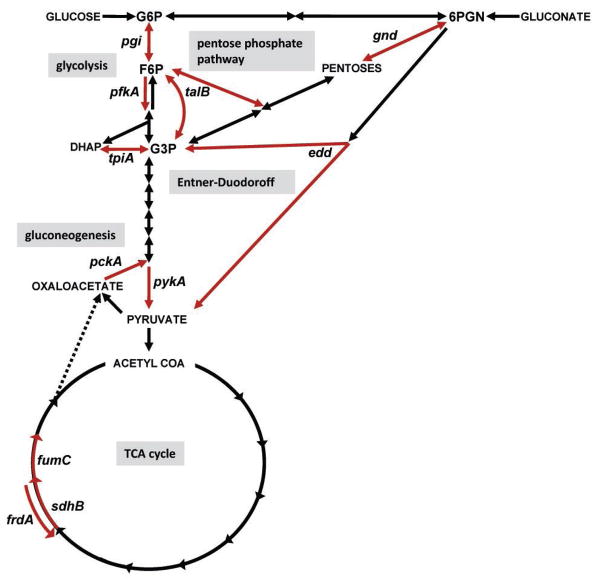
Figure 3. Diagram of central metabolism and map of the specific pathways disrupted by targeted mutations in uropathogenic E. coli
Carbon sources or biochemical intermediates shared between pathways are indicated in capital letters or abbreviated: G6P, glucose-6-phosphate; F6P, fructose-6-phosphate; G3P, glyceraldehyde-3-phosphate; 6PGN, 6-phosphogluconate. Reactions are denoted with arrows. Specific reactions (red arrows) were targeted by deletion or insertion in E. coli CFT073. In glycolysis: pgi, glucose-6-phosphate isomerase; pfkA, 6-phosphofructokinase transferase; tpiA, triosephosphate isomerase; pykA, pyruvate kinase; in pentose phosphate pathway: gnd, 6-phosphogluconate dehydrogenase; talB, transaldolase; in Entner-Duodoroff pathway: edd, 6-phosphogluconate dehydratase; in gluconeogenesis: pckA, phosphoenolpyruvate carboxykinase; and in the TCA cycle: sdhB, succinate dehydrogenase; fumC, fumarate hydratase; frdA, fumarate reductase. (From, Alteri, Christopher J., Stephanie Himpsl, and Harry L.T. Mobley. 2015. Preferential Use of Central Metabolism in vivo Reveals a Nutritional Basis for Polymicrobial Infection. PLoS Pathogens 11:e1004601.)
Figure 4
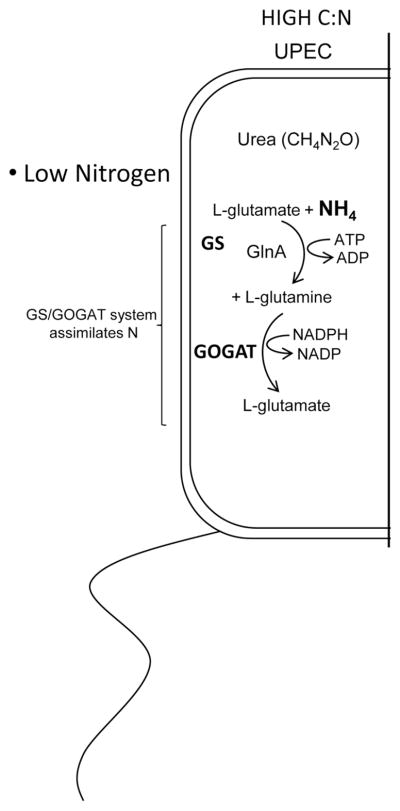
Figure 4. Model describing the C/N ratio within the urinary tract for E. coli
The urinary tract environment has a low C/N ratio due to the dilute mixture of amino acids and peptides as the primary carbon source and the abundance of urea in urine providing a substantial nitrogen contribution. E. coli is unable to utilize or sense the nitrogen sequestered in urea because it lacks urease, which liberates ammonia from urea. This results in E. coli activation of the glutamine synthetase and glutamate oxo-glutarate aminotransferase system (GS/GOGAT) to assimilate nitrogen. (From, Alteri, Christoper J., Stephanie Himpsl, and Harry L.T. Mobley. 2015. Preferential Use of Central Metabolism in vivo Reveals a Nutritional Basis for Polymicrobial Infection. PLoS Pathogens 11:e1004601)

References

    1. Foxman B, Barlow R, D’Arcy H, Gillespie B, Sobel JD. Urinary tract infection: self-reported incidence and associated costs. Ann Epidemiol. 2000;10:509–515. - PubMed
    1. Litwin MS, Saigal CS, Yano EM, Avila C, Geschwind SA, Hanley JM, Joyce GF, Madison R, Pace J, Polich SM, Wang M. Urologic diseases in America Project: analytical methods and principal findings. J Urol. 2005;173:933–937. - PubMed
    1. Kaper JB, Nataro JP, Mobley HL. Pathogenic Escherichia coli. Nat Rev Microbiol. 2004;2:123–140. - PubMed
    1. Touchon M, Hoede C, Tenaillon O, Barbe V, Baeriswyl S, Bidet P, Bingen E, Bonacorsi S, Bouchier C, Bouvet O, Calteau A, Chiapello H, Clermont O, Cruveiller S, Danchin A, Diard M, Dossat C, Karoui ME, Frapy E, Garry L, Ghigo JM, Gilles AM, Johnson J, Le Bouguenec C, Lescat M, Mangenot S, Martinez-Jehanne V, Matic I, Nassif X, Oztas S, Petit MA, Pichon C, Rouy Z, Ruf CS, Schneider D, Tourret J, Vacherie B, Vallenet D, Medigue C, Rocha EP, Denamur E. Organised genome dynamics in the Escherichia coli species results in highly diverse adaptive paths. PLoS Genet. 2009;5:e1000344. - PMC - PubMed
    1. Land M, Hauser L, Jun SR, Nookaew I, Leuze MR, Ahn TH, Karpinets T, Lund O, Kora G, Wassenaar T, Poudel S, Ussery DW. Insights from 20 years of bacterial genome sequencing. Funct Integr Genomics. 2015;15:141–161. - PMC - PubMed

MeSH terms