


Presence of Selected Methanogens, Fibrolytic Bacteria, and Proteobacteria in the Gastrointestinal Tract of Neonatal Dairy Calves from Birth to 72 Hours
- PMID: 26186002
- PMCID: PMC4505879
- DOI: 10.1371/journal.pone.0133048
Presence of Selected Methanogens, Fibrolytic Bacteria, and Proteobacteria in the Gastrointestinal Tract of Neonatal Dairy Calves from Birth to 72 Hours
Abstract
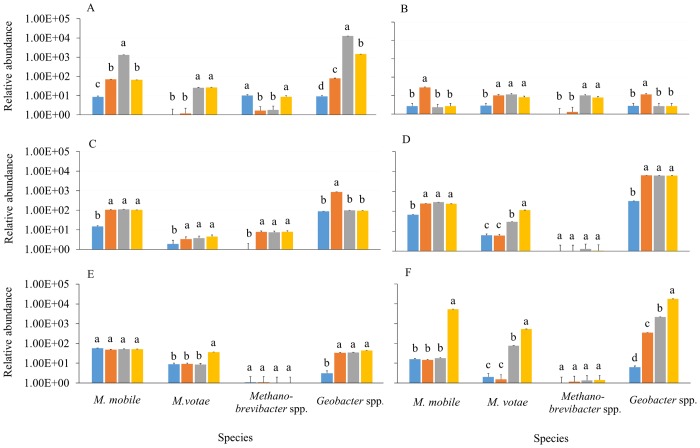
The microbial communities in the gastrointestinal tract of a young calf are essential for the anatomical and physiological development that permits a transition from milk to solid feed. Selected methanogens, fibrolytic bacteria, and proteobacteria were quantified in the rumen fluid and tissue, abomasum fluid, cecum fluid and tissue, and feces of Holstein bull calves on day 0 (0-20 mins after birth), day 1 (24 ± 1 h after birth), day 2 (48 ± 1 h after birth), and day 3 (72 ± 1 h after birth). Methanogens, fibrolytic bacteria, and Geobacter spp. were found to be already present from birth, indicating that microbial colonization of the gastrointestinal tract occurred before or during delivery. The abundance of methanogens and Geobacter spp. differed between the days tested and between compartments of the digestive tract and feces, but such difference was not observed for fibrolytic bacteria. Our findings suggests that methanogens might have an alternative hydrogen provider such as Geobacter spp. during these early stages of postnatal development. In addition, fibrolytic bacteria were present in the rumen well before the availability of fibrous substrates, suggesting that they might use nutrients other than cellulose and hemicellose.
Conflict of interest statement
Figures
References
-
- Baldwin V, McLeod K, Klotz J, Heitmann R (2004) Rumen development, intestinal growth and hepatic metabolism in the pre-and post-weaning ruminant. J Dairy Sci 87: E55–E65.
-
- Nilusha M, Meiju L, Laksiri AG, Masahito O, Guan LL (2013) Effect of calf starter feeding on gut microbial diversity and expression of genes involved in host immune responses and tight junctions in dairy calves during weaning transition. J Dairy Sci 96: 3189–3200. 10.3168/jds.2012-6200 - DOI - PubMed
Publication types
MeSH terms
LinkOut - more resources
Full Text Sources
Other Literature Sources
Miscellaneous
