


A phase II evaluation of cediranib in the treatment of recurrent or persistent endometrial cancer: An NRG Oncology/Gynecologic Oncology Group study
- PMID: 26186911
- PMCID: PMC4642817
- DOI: 10.1016/j.ygyno.2015.07.018
A phase II evaluation of cediranib in the treatment of recurrent or persistent endometrial cancer: An NRG Oncology/Gynecologic Oncology Group study
Abstract
Purpose: Cediranib is a multi-tyrosine kinase inhibitor targeting vascular endothelial growth factor (VEGF), platelet-derived growth factor (PDGF), and fibroblast growth factor (FGF) receptors. This phase II study was conducted to assess activity and tolerability of single-agent cediranib in recurrent/persistent endometrial cancer.
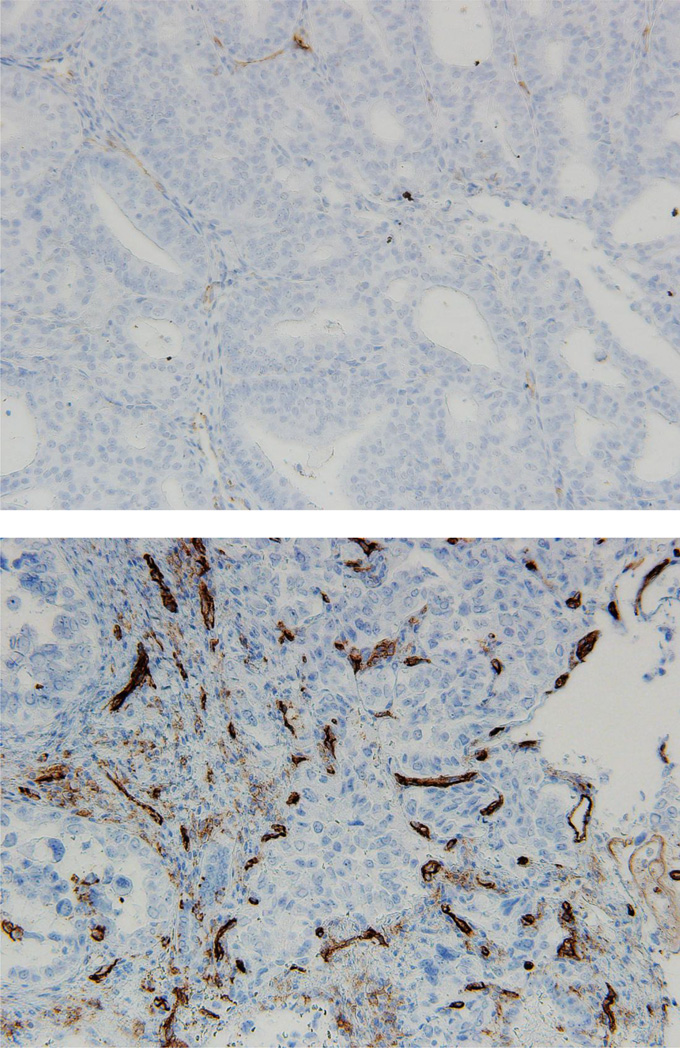
Patients and methods: Eligible patients had recurrent or persistent endometrial cancer after receiving one or two prior cytotoxic regimens, measurable disease, and Gynecologic Oncology Group (GOG) performance status of ≤2 (≤1 if two prior cytotoxic regimens given). Cediranib 30mg orally daily for a 28daycycle was administered until disease progression or prohibitive toxicity. Microvessel density (MVD) was measured in tumor tissue from initial hysterectomy specimens and correlated with clinical outcome. Primary endpoints were tumor response and surviving progression-free for six months without subsequent therapy (6-month event-free survival [EFS]).
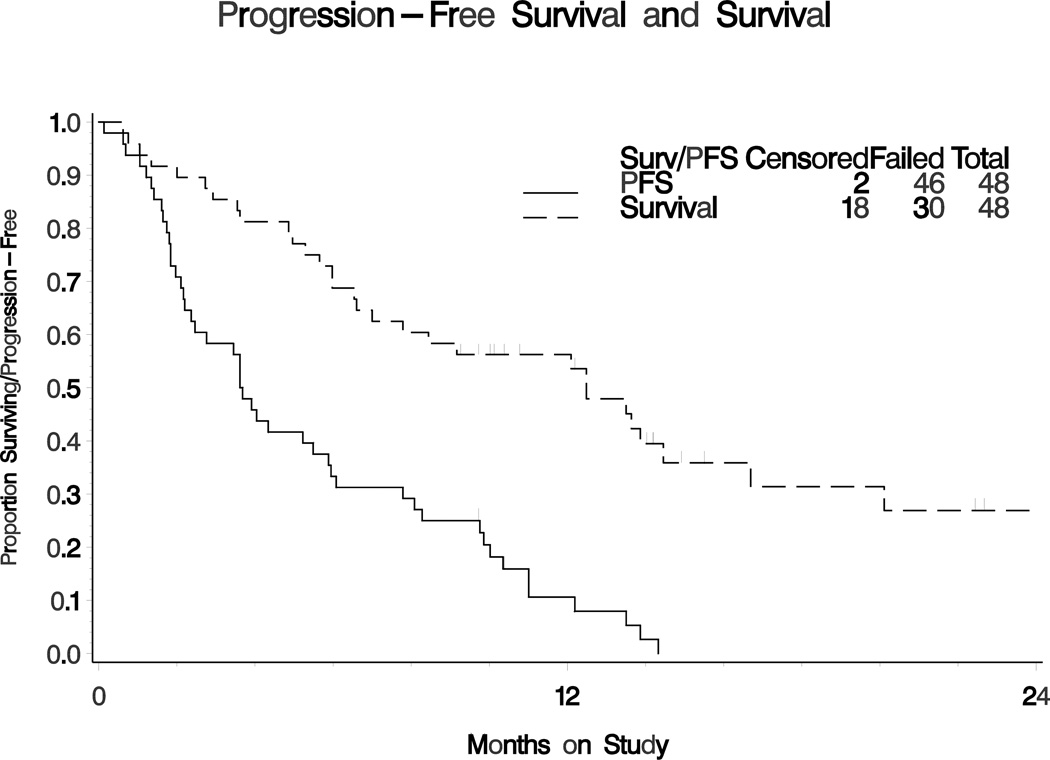
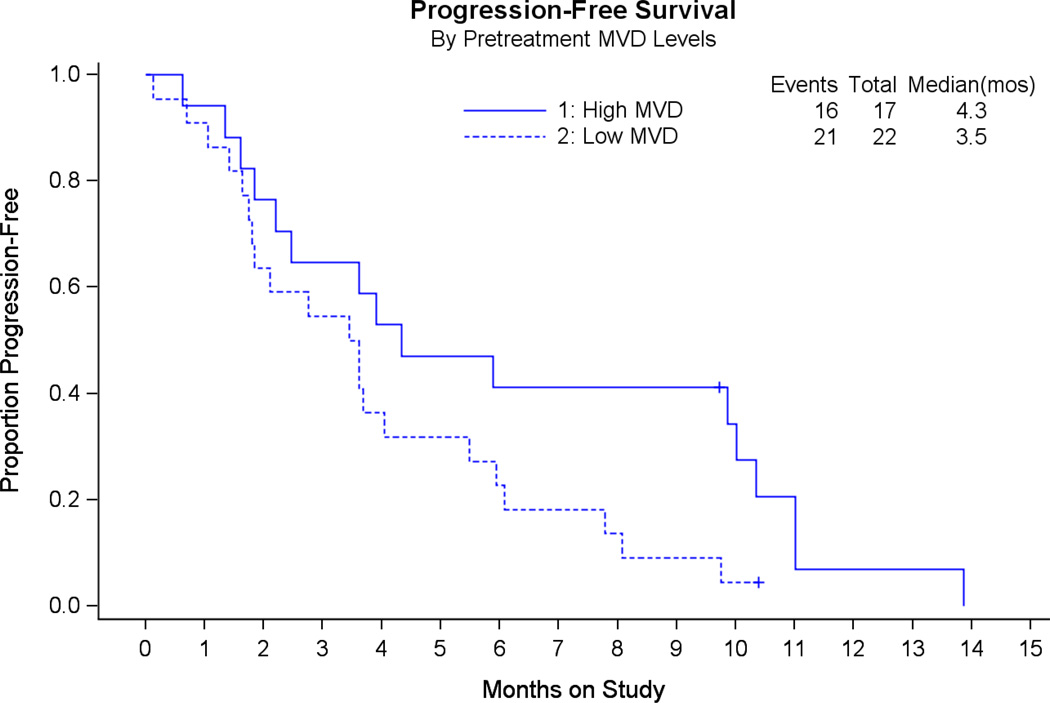
Results: Of 53 patients enrolled, 48 were evaluable for cediranib efficacy and toxicity. Median age was 65.5 years, 52% of patients had received prior radiation, and 73% of patients received only one prior chemotherapy regimen. A partial response was observed in 12.5%. Fourteen patients (29%) had six-month EFS. Median progression-free survival (PFS) was 3.65 months and median overall survival (OS) 12.5 months. No grade 4 or 5 toxicities were observed. A trend towards improved PFS was found in patients whose tumors expressed high MVD.
Conclusion: Cediranib as a monotherapy treatment for recurrent or persistent endometrial cancer is well tolerated and met protocol set objectives for sufficient activity to warrant further investigation. MVD may be a useful biomarker for activity.
Keywords: Angiogenesis; Fibroblast growth factor receptor; Platelet derived growth factor receptor; Targeted therapy; Tyrosine kinase inhibitor; Vascular endothelial growth factor receptor.
Published by Elsevier Inc.
Conflict of interest statement
All other co-authors have no conflicts of interest to declare.
Figures
References
-
- Siegel R, Naishadham D, Jemal A. Cancer statistics, 2013. CA Cancer J Clin. 2013;63:11–30. - PubMed
-
- Cancer Facts and Figures American Cancer Society, 2011
-
- Howlader N, Noone AM, Krapcho M, et al. SEER Cancer Statistics Review, 2013. 1975–2010
-
- Miller DS, Filiaci V, Fleming G, Mannel R, Cohn D, Matsumoto T, et al. Abstract: Randomized phase III noninferiority trial of first line chemotherapy for metastatic or recurrent endometrial carcinoma: A Gynecologic Oncology Group study. Gynecol Oncol. 2012;125:771–773.
Publication types
MeSH terms
Substances
Grants and funding
- U10 CA180868/CA/NCI NIH HHS/United States
- UG1 CA189867/CA/NCI NIH HHS/United States
- UL1 TR001108/TR/NCATS NIH HHS/United States
- U10 CA180798/CA/NCI NIH HHS/United States
- U24 CA196067/CA/NCI NIH HHS/United States
- CA 37517/CA/NCI NIH HHS/United States
- U10 CA180833/CA/NCI NIH HHS/United States
- U10CA180868/CA/NCI NIH HHS/United States
- R01 CA099908/CA/NCI NIH HHS/United States
- U10 CA180822/CA/NCI NIH HHS/United States
- R01-CA099908/CA/NCI NIH HHS/United States
- 1 U10 CA180822/CA/NCI NIH HHS/United States
- U24 CA114793/CA/NCI NIH HHS/United States
- CA 27469/CA/NCI NIH HHS/United States
- U10 CA027469/CA/NCI NIH HHS/United States
- K12 HD063117/HD/NICHD NIH HHS/United States
- U10 CA037517/CA/NCI NIH HHS/United States
LinkOut - more resources
Full Text Sources
Other Literature Sources
Medical
Miscellaneous
