


Mobile technology boosts the effectiveness of psychotherapy and behavioral interventions: a meta-analysis
- PMID: 26187164
- PMCID: PMC4633319
- DOI: 10.1177/0145445515595198
Mobile technology boosts the effectiveness of psychotherapy and behavioral interventions: a meta-analysis
Abstract
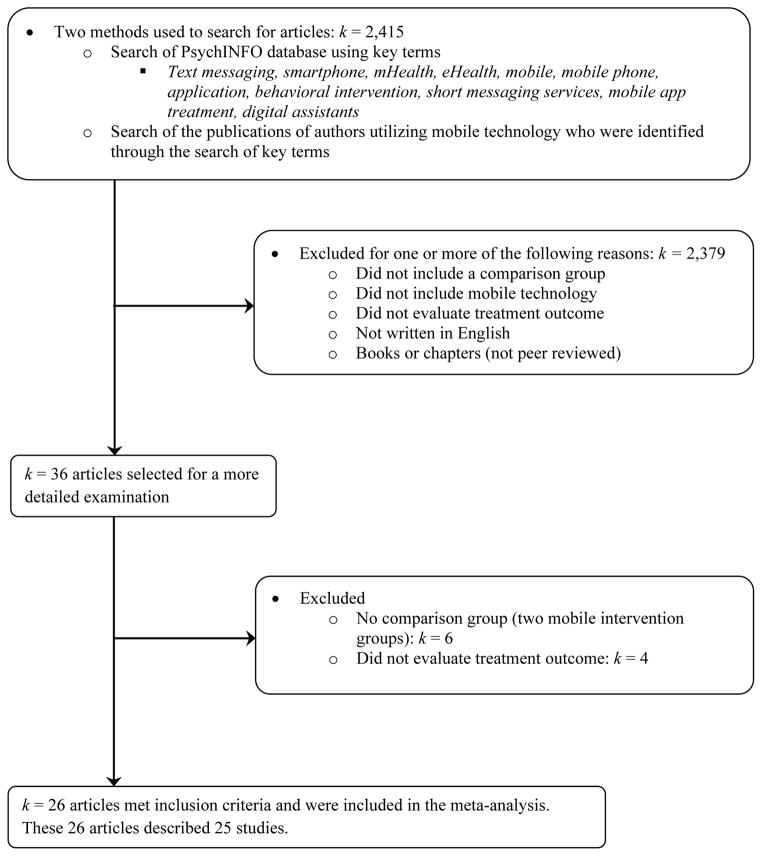
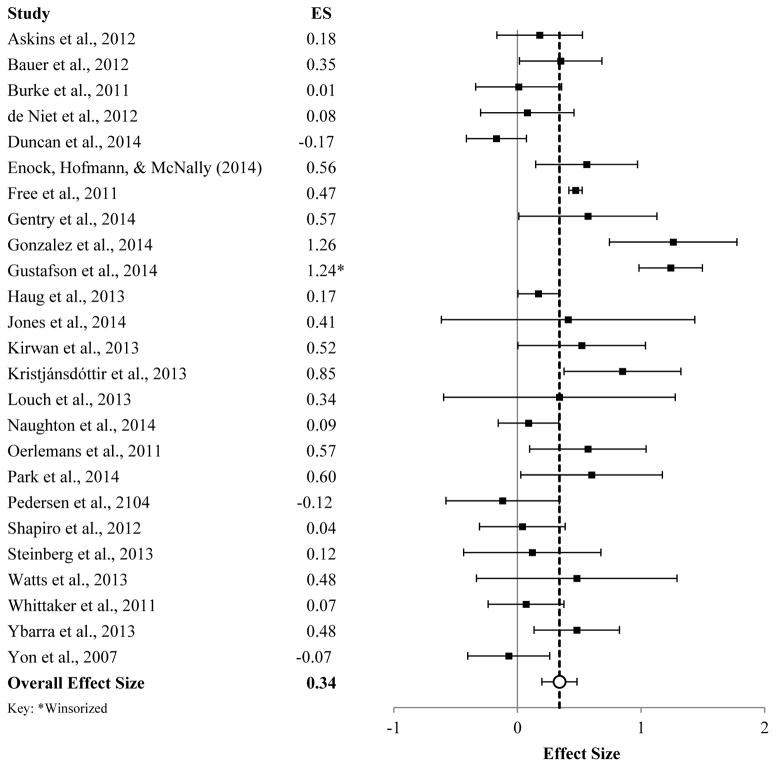
We conducted a meta-analysis on the effects of mobile technology on treatment outcome for psychotherapy and other behavioral interventions. Our search of the literature resulted in 26 empirical articles describing 25 clinical trials testing the benefits of smartphone applications, personal digital assistants (PDAs), or text messaging systems either to supplement treatment or substitute for direct contact with a clinician. Overall, mobile technology use was associated with superior treatment outcome across all study designs and control conditions, effect size (ES) = .34, p < .0001. For the subset of 10 studies that looked specifically at the added benefit of mobile technology using a rigorous "Treatment" versus "Treatment + Mobile" design, effect sizes were only slightly more modest (ES = .27) and still significant (p < .05). Overall, the results support the role of mobile technology for the delivery of psychotherapy and other behavioral interventions.
Keywords: meta-analysis; mobile technology; psychotherapy; treatment outcome.
© The Author(s) 2015.
Figures
References
-
- Askins MA, Sahler OJZ, Sherman SA, Fairclough DL, Butler RW, Katz ER, Phipps S. Report from a multi-institutional randomized clinical trial examining computer-assisted problem-solving skills training for English- and Spanish-speaking mothers of children with newly diagnosed cancer. Journal of Pediatric Psychology. 2009;34:551–563. doi: 10.1093/jpepsy/jsn124. - DOI - PMC - PubMed
-
- Boschen MJ. Mobile telephones and psychotherapy: II. A review of empirical research. The Behavior Therapist. 2009;32(8):175–181.
Publication types
MeSH terms
Grants and funding
LinkOut - more resources
Full Text Sources
Other Literature Sources
