


Quality of life in patients with locked-in syndrome: Evolution over a 6-year period
- PMID: 26187655
- PMCID: PMC4506615
- DOI: 10.1186/s13023-015-0304-z
Quality of life in patients with locked-in syndrome: Evolution over a 6-year period
Abstract
Background: Improved knowledge of the quality of life (QoL) of locked-in syndrome (LIS) patients have implications for managing their care, and assists clinicians in choosing the most appropriate interventions. We performed a survey of a population of LIS patients to describe the course of the QoL of LIS patients over a 6-year period and to determine the potential predictive factors of QoL changes over time.
Method: This is a study performed over a 6-year period in patients with a LIS diagnosis. Questionnaires were sent in 2007 and 2013. The following data were recorded: i) sociodemographic data; ii) clinical data related to LIS, physical/handicap status, psychological status; iii) self-reported QoL: Anamnestic Comparative Self-Assessment (ACSA); iv) Integration in life: French Reintegration to Normal Living Index (RNLI).
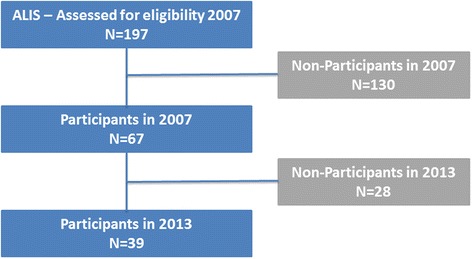
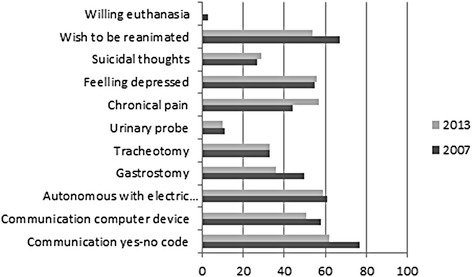
Results: Among the 67 patients included in 2007, 39 (58 %) patients returned their questionnaire in 2013. The LIS etiology was stroke in 51 individuals. The QoL of the patients was relatively satisfactory compared to populations in other severe conditions. Twenty-one (70 %) individuals reported a stable/improved QoL between 2007 and 2013. The physical/handicap statuses in 2007 and 2013 were not related to the QoL 6 years later, with the exception of one communication parameter: the individuals who used yes-no code reported significantly lower QoL levels than those who did not in 2013.
Discussion: In opposition to a widespread opinion, LIS persons report a relatively satisfactory QoL level that stays stable over time, suggesting that life with LIS is worth living. Preservation of autonomy and communication may help them to live as normal life as possible.
Figures
References
-
- Doble JE, Haig AJ, Anderson C, Katz R. Impairment, activity, participation, life satisfaction, and survival in persons with locked-in syndrome for over a decade: follow-up on a previously reported cohort. J Head Trauma Rehabil. 2003;18(5):435–44. doi: 10.1097/00001199-200309000-00005. - DOI - PubMed
MeSH terms
LinkOut - more resources
Full Text Sources
Other Literature Sources
