Review
. 2015 Sep:31:123-31.
doi: 10.1016/j.ymben.2015.06.011. Epub 2015 Jul 17.

Precision metabolic engineering: The design of responsive, selective, and controllable metabolic systems

Affiliations
Review

Precision metabolic engineering: The design of responsive, selective, and controllable metabolic systems

Monica P McNerney et al. Metab Eng. 2015 Sep.

Abstract

Metabolic engineering is generally focused on static optimization of cells to maximize production of a desired product, though recently dynamic metabolic engineering has explored how metabolic programs can be varied over time to improve titer. However, these are not the only types of applications where metabolic engineering could make a significant impact. Here, we discuss a new conceptual framework, termed "precision metabolic engineering," involving the design and engineering of systems that make different products in response to different signals. Rather than focusing on maximizing titer, these types of applications typically have three hallmarks: sensing signals that determine the desired metabolic target, completely directing metabolic flux in response to those signals, and producing sharp responses at specific signal thresholds. In this review, we will first discuss and provide examples of precision metabolic engineering. We will then discuss each of these hallmarks and identify which existing metabolic engineering methods can be applied to accomplish those tasks, as well as some of their shortcomings. Ultimately, precise control of metabolic systems has the potential to enable a host of new metabolic engineering and synthetic biology applications for any problem where flexibility of response to an external signal could be useful.

Keywords: Metabolic control; Pathway regulation; Precision metabolic engineering; Product selectivity; Sensory systems; Synthetic biology.


Figures

Figure 1
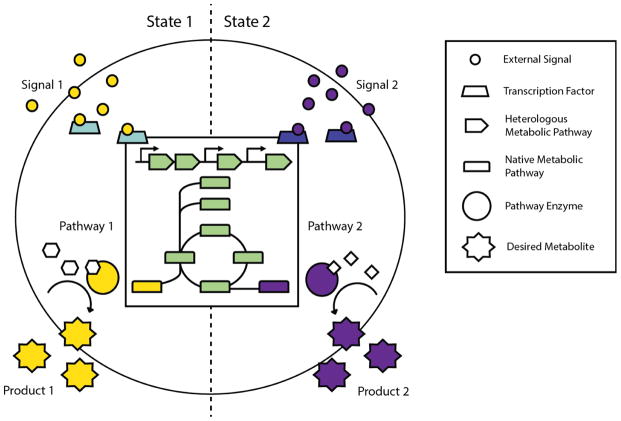
Figure 1. Schematic of precision metabolic engineering
For precision metabolic engineering, cells must be capable of sensing different signals and, through robust cell regulation of native and heterologous metabolic pathways, ensure that only the desired products are made. In this example, external signals (small circles) enter the cell and bind transcription factors (trapezoids). The activated transcription factors control cell metabolism (central schematic in box) by affecting transcription from either native or heterologous metabolic pathways. Pathway enzymes (large circles) produce the desired metabolites (starburst shapes), and control mechanisms ensure high product selectivity over metabolites of competing pathways.
Figure 2
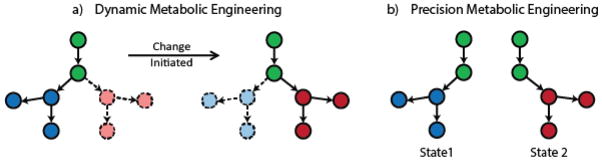
Figure 2. Direction of flux in dynamic and precision metabolic engineering
A) Dynamic control redirects flux based on a change in the system. The pathway flux distribution changes, but flux may still be permitted through competing pathways. Initially, the majority of the metabolic flux is through the left branch of the pathway, with some flux permitted through the right branch. Upon initiation of a change, the flux shifts so that the majority is through the right branch. Circles represent metabolites in the pathway, with solid circles indicating significant production of a metabolite and dotted circles indicating partial repression of its production. B) Rather than emphasizing the ability to dynamically switch between metabolic states, precision metabolic engineering emphasizes the completeness of the switch in metabolic state. Competing pathways are completely repressed so that only the desired metabolic pathway is active.
Figure 3
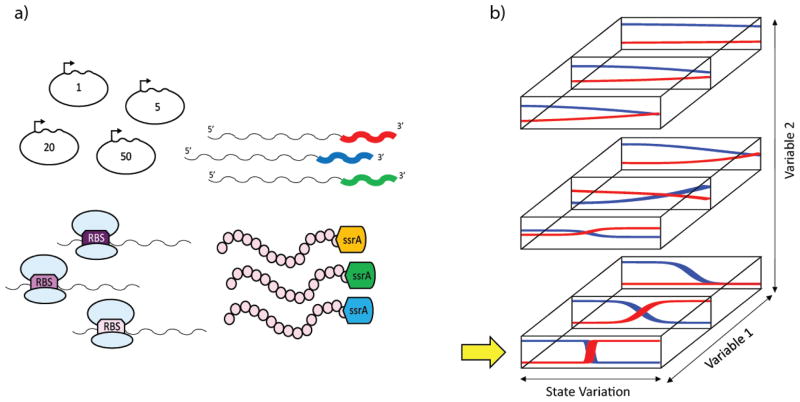
Figure 3. Multivariate optimization for precision metabolic engineering
Adapted from Yadav et al. (Yadav et al., 2012) A) Variables in precision metabolic engineering could include plasmid copy number, mRNA stabilizing regions, RBS strength, and protein degradation tags of the modules to be tuned B) A two-variable optimization scheme. Variables 1 and 2 are changed to optimize the state-based selectivity and sharpness of the system response. The optimum combination, indicated by the yellow arrow, sharply responds to a change in state and has a switch point in an appropriate region.

References

    1. Ajikumar PK, Xiao WH, Tyo KEJ, Wang Y, Simeon F, Leonard E, Mucha O, Phon TH, Pfeifer B, Stephanopoulos G. Isoprenoid Pathway Optimization for Taxol Precursor Overproduction in Escherichia coli. Science. 2010;330:70–74. - PMC - PubMed
    1. Alonso-Gutierrez J, Chan R, Batth TS, Adams PD, Keasling JD, Petzold CJ, Lee TS. Metabolic engineering of Escherichia coli for limonene and perillyl alcohol production. Metab Eng. 2013;19:33–41. - PubMed
    1. Alper H, Miyaoku K, Stephanopoulos G. Construction of lycopene-overproducing E. coli strains by combining systematic and combinatorial gene knockout targets. Nat Biotechnol. 2005a;23:612–616. - PubMed
    1. Alper H, Fischer C, Nevoigt E, Stephanopoulos G. Tuning genetic control through promoter engineering. Proc Natl Acad Sci U S A. 2005b;102:12678–12683. - PMC - PubMed
    1. Anesiadis N, Cluett WR, Mahadevan R. Dynamic metabolic engineering for increasing bioprocess productivity. Metab Eng. 2008;10:255–266. - PubMed

Publication types

LinkOut - more resources