Suboptimal foraging behavior: a new perspective on gambling
- PMID: 26191945
- PMCID: PMC4586367
- DOI: 10.1037/bne0000082
Suboptimal foraging behavior: a new perspective on gambling
Abstract
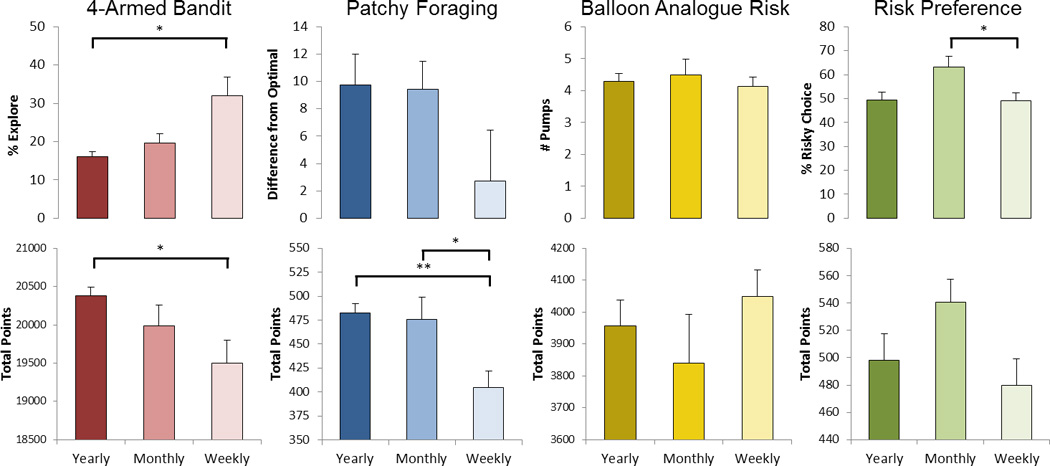
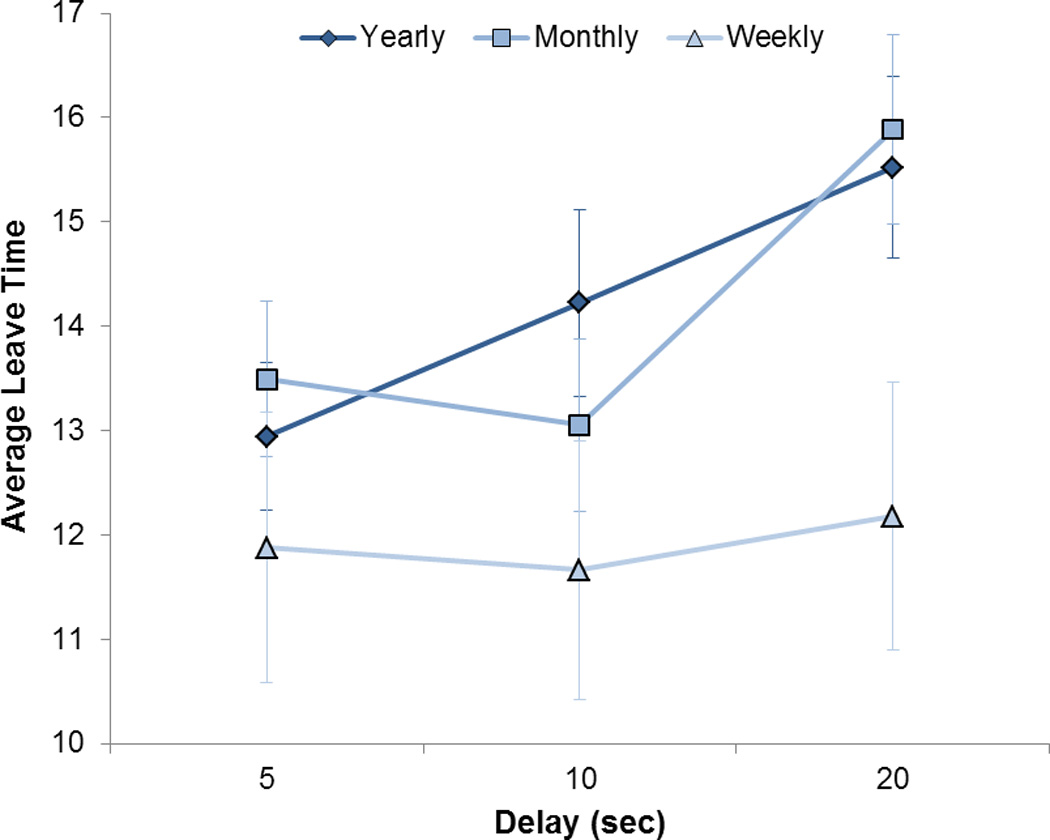
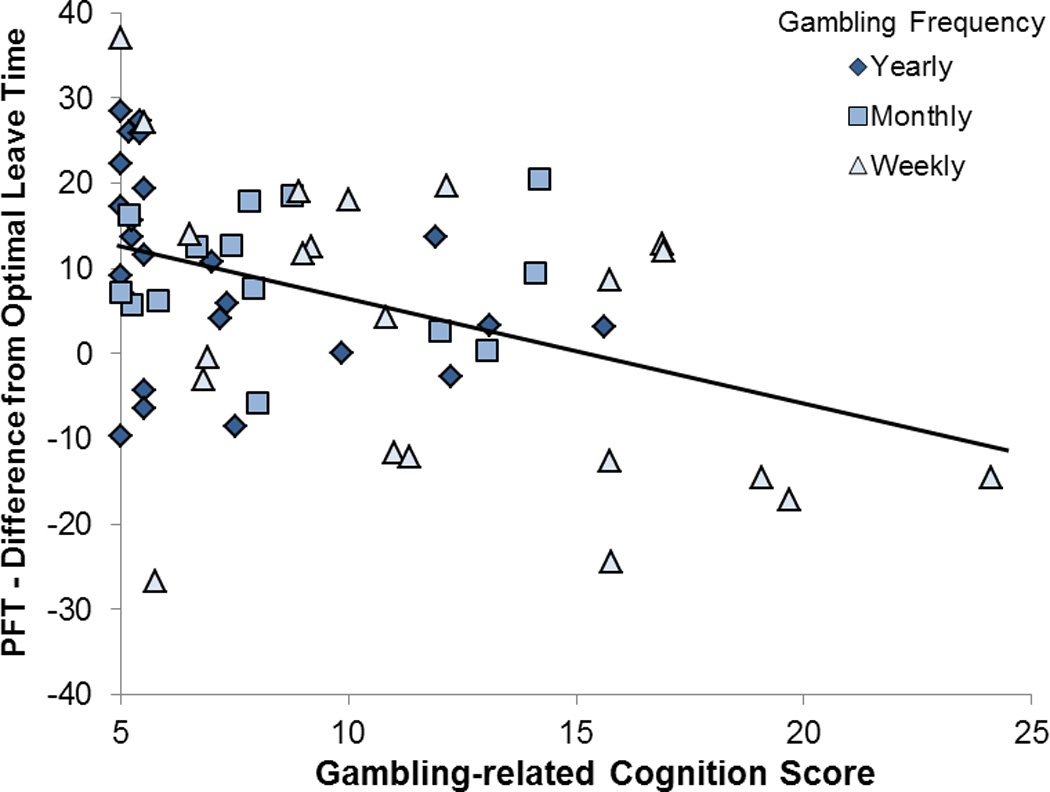
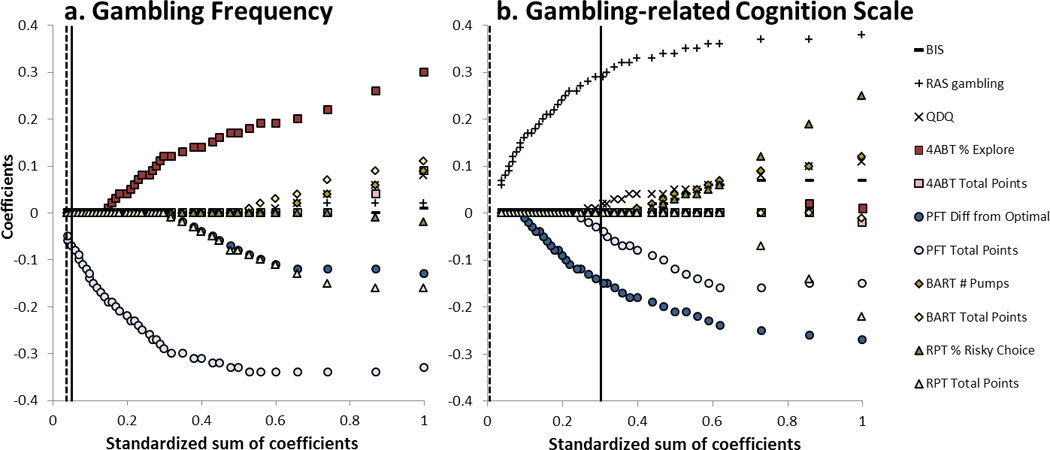
Why do people gamble? Conventional views hold that gambling may be motivated by irrational beliefs, risk-seeking, impulsive temperament, or dysfunction within the same reward circuitry affected by drugs of abuse. An alternate, unexplored perspective is that gambling is an extension of natural foraging behavior to a financial environment. However, when these foraging algorithms are applied to stochastic gambling outcomes, undesirable results may occur. To test this hypothesis, we recruited participants based on their frequency of gambling-yearly (or less), monthly, and weekly-and investigated how gambling frequency related to irrational beliefs, risk-taking/impulsivity, and foraging behavior. We found that increased gambling frequency corresponded to greater gambling-related beliefs, more exploratory choices on an explore/exploit foraging task, and fewer points earned on a Patchy Foraging Task. Gambling-related beliefs negatively related to performance on the Patchy Foraging Task, indicating that individuals with more gambling-related cognitions tended to leave a patch too quickly. This indicates that frequent gamblers have reduced foraging ability to maximize rewards; however, gambling frequency -and by extension, poor foraging ability- was not related to risk-taking or impulsive behavior. These results suggest that gambling reflects the application of a dysfunctional foraging process to financial outcomes.
(c) 2015 APA, all rights reserved).
Figures
References
-
- Anderson BDO, Moore JB. Optimal Filtering. Englewood Cliffs; 1979.
-
- APA. Diagnostic and statistical manual of mental disorders : DSM-IV-TR. Washington, DC: American Psychiatric Association; 2000.
-
- APA. Diagnostic and statistical manual of mental disorders : DSM-5. Washington, DC: American Psychiatric Association; 2013.
Publication types
MeSH terms
Grants and funding
LinkOut - more resources
Full Text Sources
Other Literature Sources
Medical