


Tau post-translational modifications in wild-type and human amyloid precursor protein transgenic mice
- PMID: 26192747
- PMCID: PMC8049446
- DOI: 10.1038/nn.4067
Tau post-translational modifications in wild-type and human amyloid precursor protein transgenic mice
Abstract
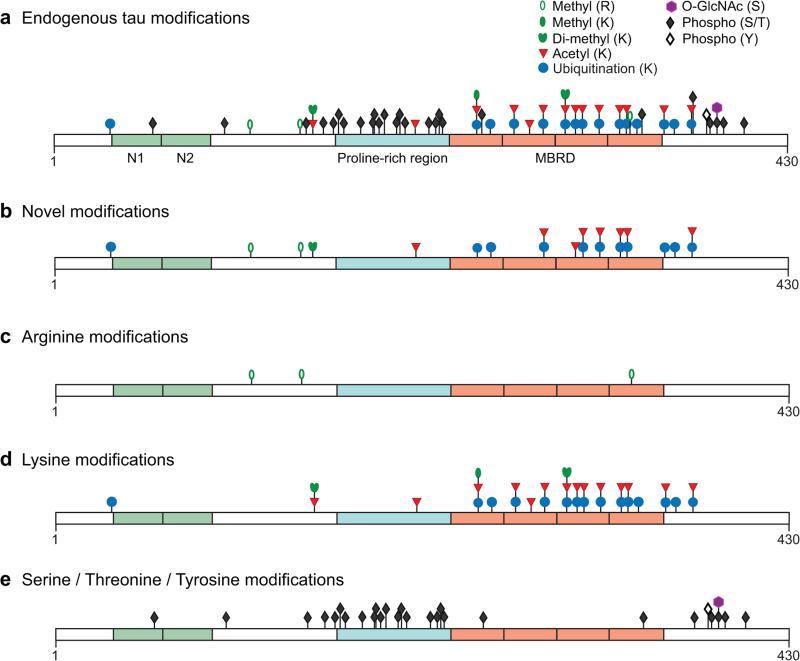
The microtubule-associated protein tau has been implicated in the pathogenesis of Alzheimer's disease (AD) and other neurodegenerative disorders. Reducing tau levels ameliorates AD-related synaptic, network, and behavioral abnormalities in transgenic mice expressing human amyloid precursor protein (hAPP). We used mass spectrometry to characterize the post-translational modification of endogenous tau isolated from wild-type and hAPP mice. We identified seven types of tau modifications at 63 sites in wild-type mice. Wild-type and hAPP mice had similar modifications, supporting the hypothesis that neuronal dysfunction in hAPP mice is enabled by physiological forms of tau. Our findings provide clear evidence for acetylation and ubiquitination of the same lysine residues; some sites were also targeted by lysine methylation. Our findings refute the hypothesis of extensive O-linked N-acetylglucosamine (O-GlcNAc) modification of endogenous tau. The complex post-translational modification of physiological tau suggests that tau is regulated by diverse mechanisms.
Figures
References
-
- Roberson ED, et al. Reducing endogenous tau ameliorates amyloid beta-induced deficits in an Alzheimer's disease mouse model. Science. 2007;316:750–754. - PubMed
-
- Ittner LM, et al. Dendritic function of tau mediates amyloid-beta toxicity in Alzheimer's disease mouse models. Cell. 2010;142:387–397. - PubMed
Publication types
MeSH terms
Substances
Grants and funding
LinkOut - more resources
Full Text Sources
Other Literature Sources
Molecular Biology Databases
