


RiTE database: a resource database for genus-wide rice genomics and evolutionary biology
- PMID: 26194356
- PMCID: PMC4508813
- DOI: 10.1186/s12864-015-1762-3
RiTE database: a resource database for genus-wide rice genomics and evolutionary biology
Abstract
Background: Comparative evolutionary analysis of whole genomes requires not only accurate annotation of gene space, but also proper annotation of the repetitive fraction which is often the largest component of most if not all genomes larger than 50 kb in size.
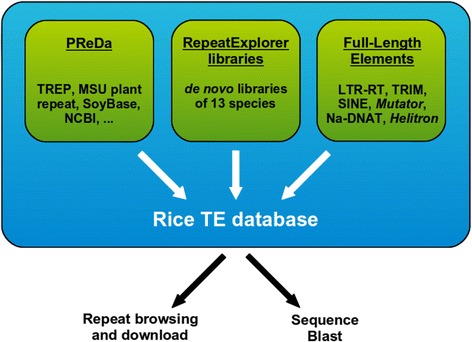
Results: Here we present the Rice TE database (RiTE-db)--a genus-wide collection of transposable elements and repeated sequences across 11 diploid species of the genus Oryza and the closely-related out-group Leersia perrieri. The database consists of more than 170,000 entries divided into three main types: (i) a classified and curated set of publicly-available repeated sequences, (ii) a set of consensus assemblies of highly-repetitive sequences obtained from genome sequencing surveys of 12 species; and (iii) a set of full-length TEs, identified and extracted from 12 whole genome assemblies.
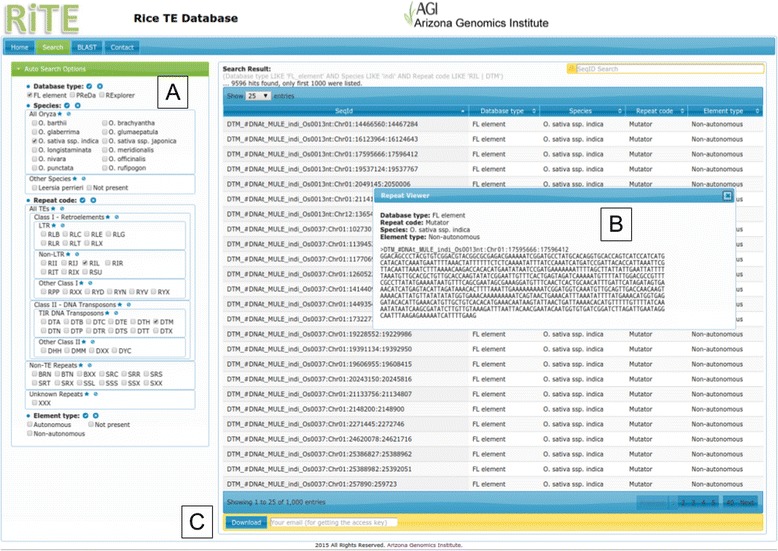
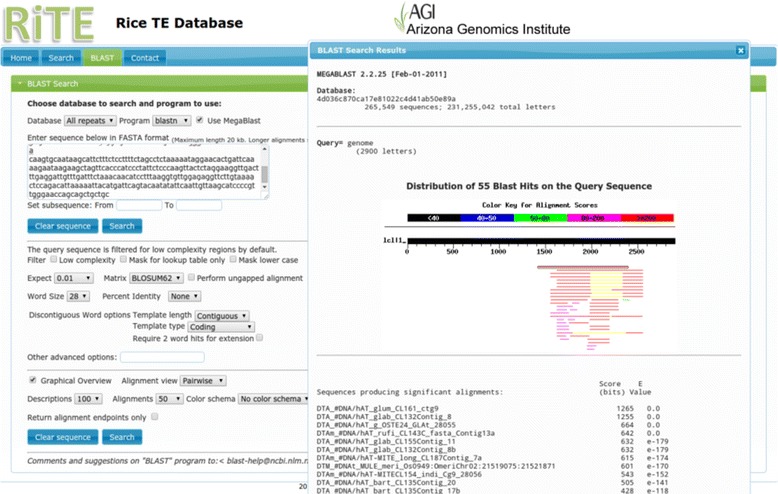
Conclusions: This is the first report of a repeat dataset that spans the majority of repeat variability within an entire genus, and one that includes complete elements as well as unassembled repeats. The database allows sequence browsing, downloading, and similarity searches. Because of the strategy adopted, the RiTE-db opens a new path to unprecedented direct comparative studies that span the entire nuclear repeat content of 15 million years of Oryza diversity.
Figures
References
-
- Saha S, Bridges S, Magbanua ZV, Peterson DG. Computational Approaches and Tools Used in Identification of Dispersed Repetitive DNA Sequences. Trop Plant Biol. 2008;1:85–96. doi: 10.1007/s12042-007-9007-5. - DOI
Publication types
MeSH terms
Substances
LinkOut - more resources
Full Text Sources
Other Literature Sources
Miscellaneous
