


Exploiting the Fanconi Anemia Pathway for Targeted Anti-Cancer Therapy
- PMID: 26194820
- PMCID: PMC4546938
- DOI: 10.14348/molcells.2015.0175
Exploiting the Fanconi Anemia Pathway for Targeted Anti-Cancer Therapy
Abstract
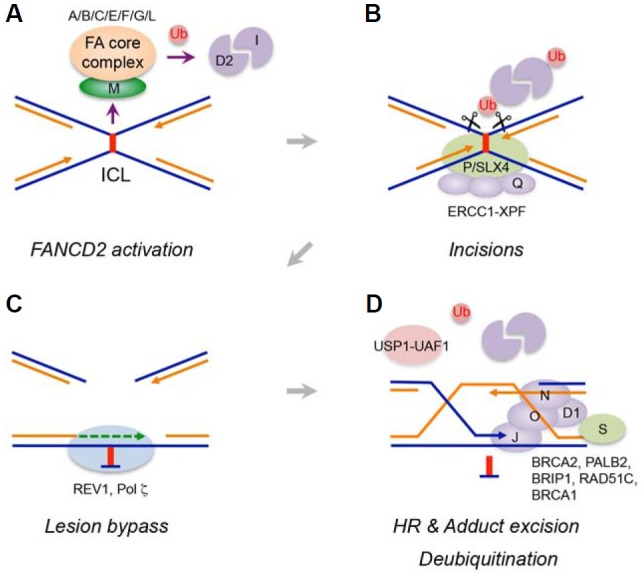
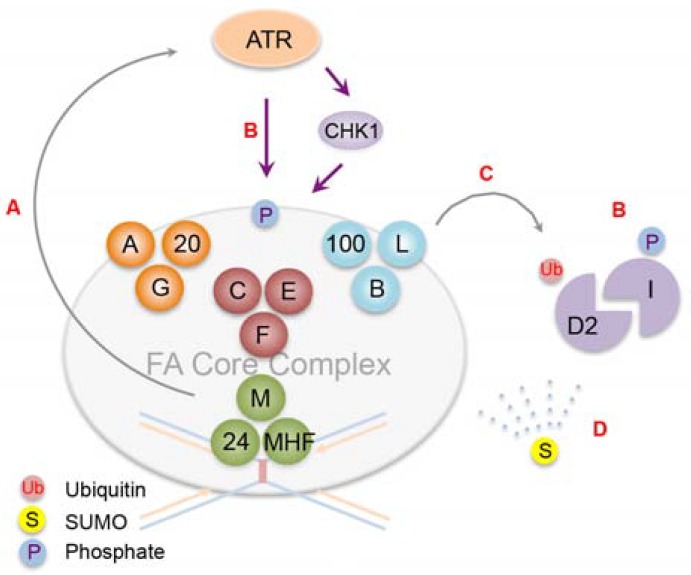
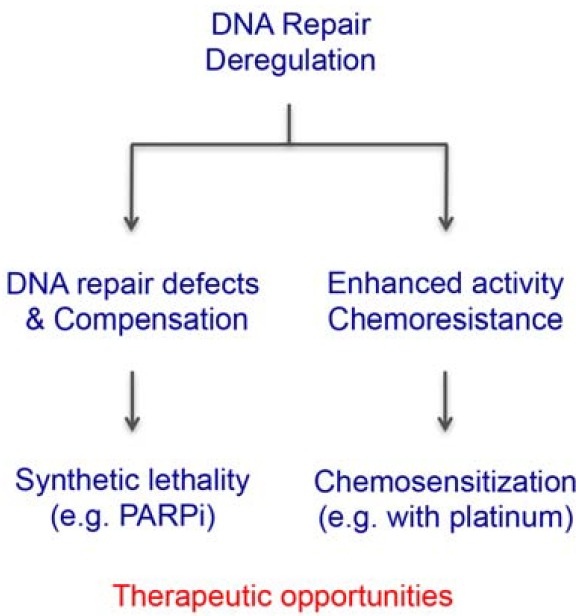
Genome instability, primarily caused by faulty DNA repair mechanisms, drives tumorigenesis. Therapeutic interventions that exploit deregulated DNA repair in cancer have made considerable progress by targeting tumor-specific alterations of DNA repair factors, which either induces synthetic lethality or augments the efficacy of conventional chemotherapy and radiotherapy. The study of Fanconi anemia (FA), a rare inherited blood disorder and cancer predisposition syndrome, has been instrumental in understanding the extent to which DNA repair defects contribute to tumorigenesis. The FA pathway functions to resolve blocked replication forks in response to DNA interstrand cross-links (ICLs), and accumulating knowledge of its activation by the ubiquitin-mediated signaling pathway has provided promising therapeutic opportunities for cancer treatment. Here, we discuss recent advances in our understanding of FA pathway regulation and its potential application for designing tailored therapeutics that take advantage of deregulated DNA ICL repair in cancer.
Keywords: DNA interstrand cross-link; DNA repair; Fanconi anemia; cancer therapeutics; ubiquitin signaling.
Figures
References
-
- Bartkova J., Rezaei N., Liontos M., Karakaidos P., Kletsas D., Issaeva N., Vassiliou L.V., Kolettas E., Niforou K., Zoumpourlis V.C., et al. Oncogene-induced senescence is part of the tumorigenesis barrier imposed by DNA damage checkpoints. Nature. 2006;444:633–637. - PubMed
-
- Blackford A.N., Schwab R.A., Nieminuszczy J., Deans A.J., West S.C., Niedzwiedz W. The DNA translocase activity of FANCM protects stalled replication forks. Human molecular genetics. 2012;21:2005–2016. - PubMed
-
- Bryant H.E., Schultz N., Thomas H.D., Parker K.M., Flower D., Lopez E., Kyle S., Meuth M., Curtin N.J., Helleday T. Specific killing of BRCA2-deficient tumours with inhibitors of poly(ADP-ribose) polymerase. Nature. 2005;434:913–917. - PubMed
Publication types
MeSH terms
Substances
LinkOut - more resources
Full Text Sources
Other Literature Sources
