


The Global Influenza Hospital Surveillance Network (GIHSN): a new platform to describe the epidemiology of severe influenza
- PMID: 26198771
- PMCID: PMC4605407
- DOI: 10.1111/irv.12335
The Global Influenza Hospital Surveillance Network (GIHSN): a new platform to describe the epidemiology of severe influenza
Abstract
Background: Influenza is a global public health problem. However, severe influenza only recently has been addressed in routine surveillance.
Objectives: The Global Influenza Hospital Surveillance Network (GIHSN) was established to study the epidemiology of severe influenza in consecutive seasons in different countries. Our objective is to describe the GIHSN approach and methods.
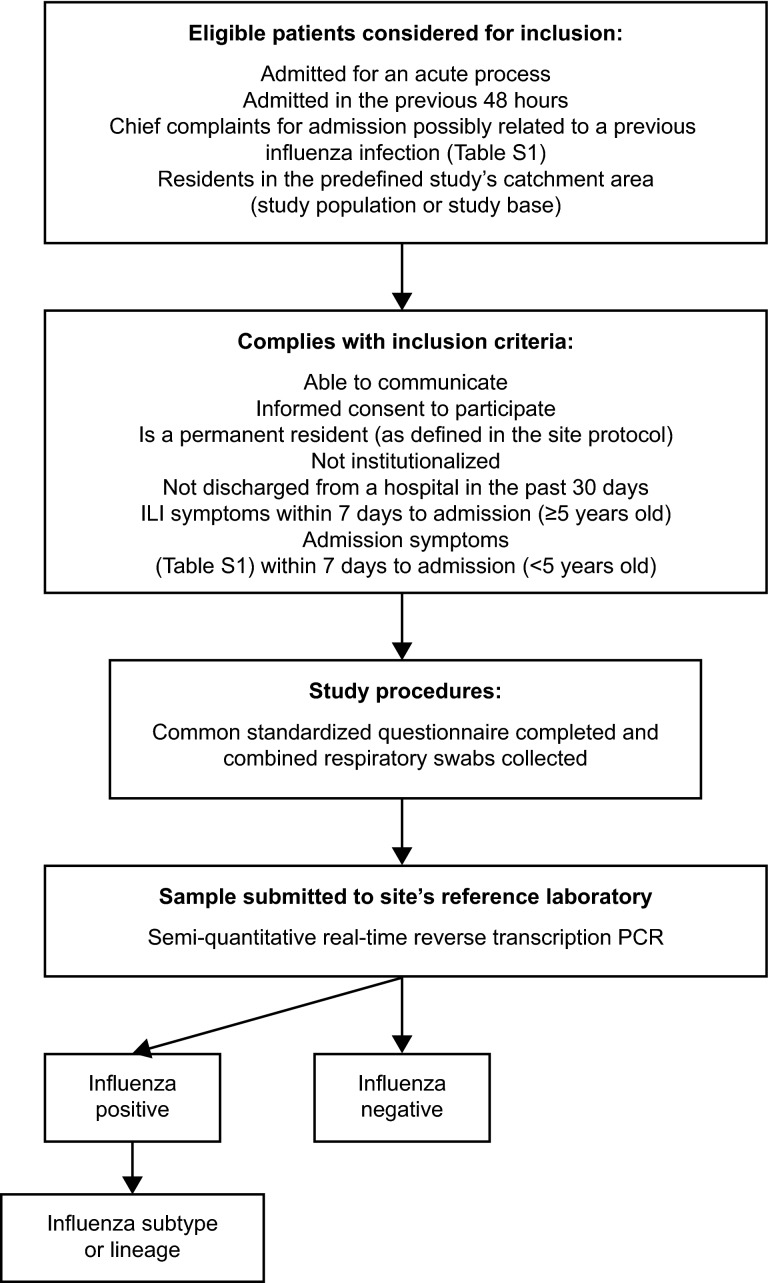
Methods: The GIHSN uses prospective active surveillance to identify consecutive influenza admissions in permanent residents of well-defined geographic areas in sites around the world. A core common protocol is followed. After consent, data are collected on patient characteristics and clinical outcomes, respiratory swabs are obtained, and the presence of influenza virus and subtype or lineage is ascertained by polymerase chain reaction. Data are collated and analyzed at the GIHSN coordination center.
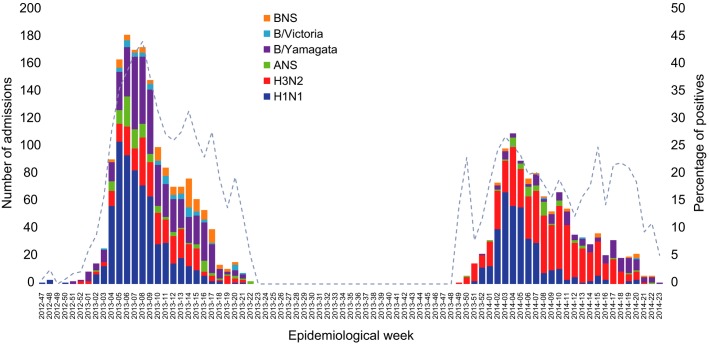
Results: The GIHSN has run its activities for two consecutive influenza seasons, 2012-2013 and 2013-2014, and hospitals in Brazil, China, France, Russian Federation, Turkey, and Spain have been involved in one or both seasons. Consistency on the application of the protocol and heterogeneity for the first season have been addressed in two previous publications. During both seasons, 19 677 eligible admissions were recorded; 11 843 (60%) were included and tested, and 2713 (23%) were positive for influenza: 991 (37%) A(H1N1); 807 (30%) A(H3N2); 583 (21%) B/Yamagata; 56 (2%) B/Victoria and 151 (6%) influenza A; and 125 (5%) influenza B were not characterized.
Conclusions: The GIHSN is a platform that provides information on severe influenza worldwide, applying a common core protocol and a consistent case definition.
Keywords: Hospital; influenza epidemiology; surveillance network.
© 2015 The Authors. Influenza and Other Respiratory Viruses Published by John Wiley & Sons Ltd.
Figures
References
-
- World Health Organization. Seasonal influenza factsheet no. 211. March 2014. Available at http://www.who.int/mediacentre/factsheets/fs211/en/ (Accessed 14 August 2014)
LinkOut - more resources
Full Text Sources
Other Literature Sources
