


Prosthetic Rehabilitation of a Congenital Soft Palate Defect
- PMID: 26199512
- PMCID: PMC4501982
- DOI: 10.1007/s13191-012-0225-7
Prosthetic Rehabilitation of a Congenital Soft Palate Defect
Abstract
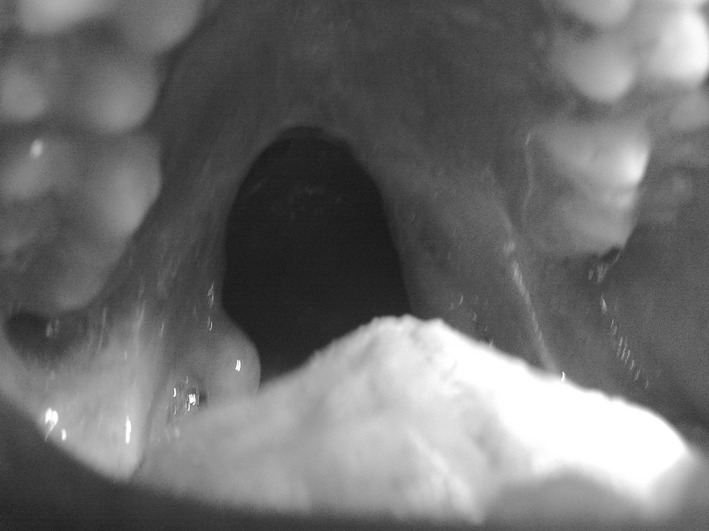
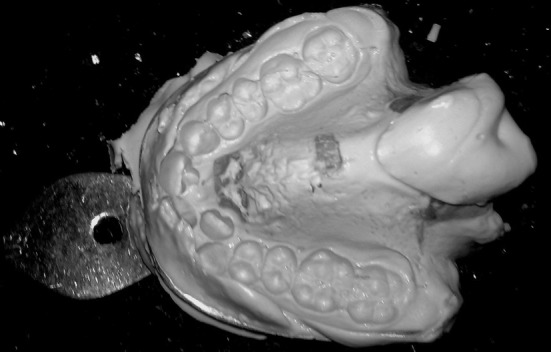
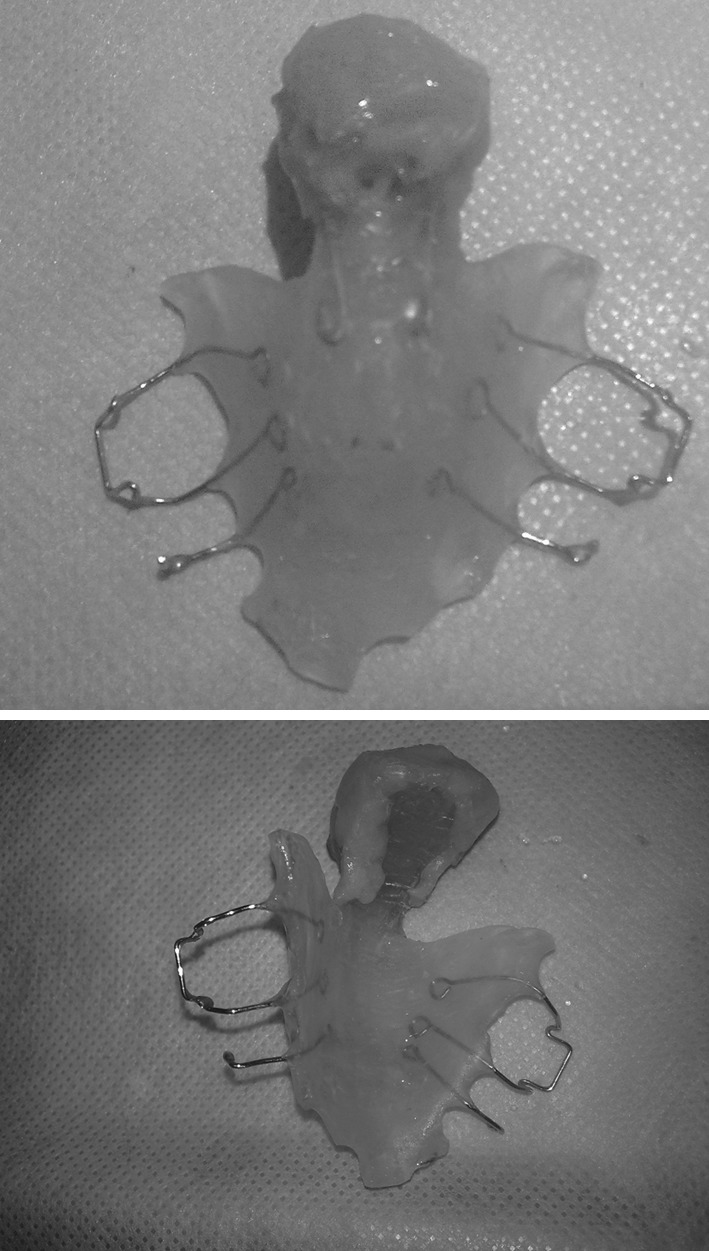
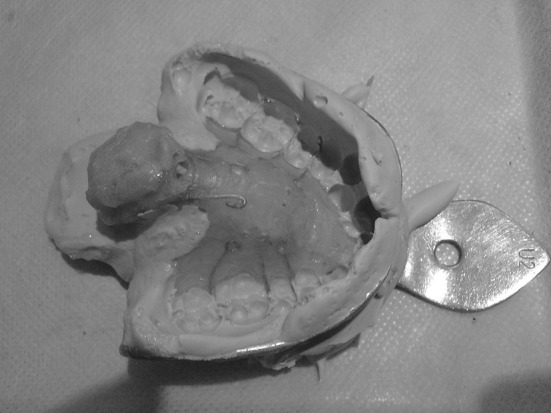
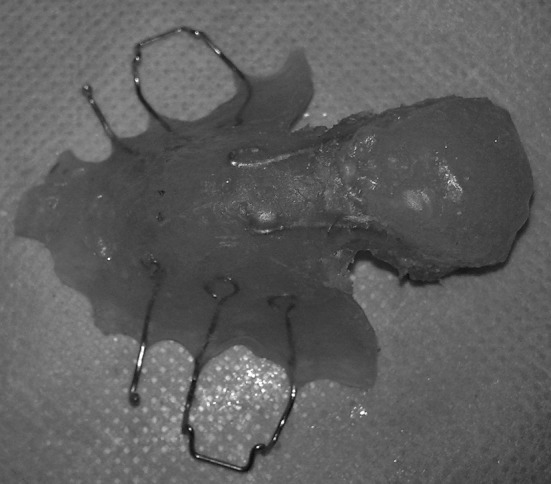
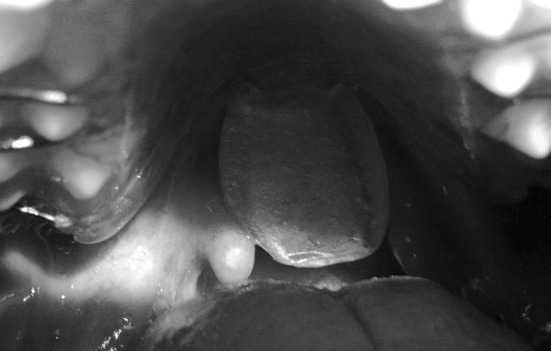
Obturator is derived from the Latin verb obturate which means to close or to shut off. This definition provides an appropriate description of the objective of obturation in patients with palatal defects. The obturator is often helpful in improving the speech of individuals with partial or total velar defects i.e. cleft of soft palate. Soft palate cleft is one of the most common cause of velopharyngeal incompetence, which is the functional inability of the soft palate to effectively seal with the posterior and or lateral pharyngeal walls. In maxillofacial prosthesis the clinician may have the responsibility for reestablishing palatopharyngeal integrity to provide the potential for acceptable speech. Here a case report has been presented in which palatal plate with a solid one piece pharyngeal obturator prosthesis has been used for rehabilitation of a dentulous patient having congenital soft palate defect using functional impression technique.
Keywords: Hypernasality; Pharyngeal obturator; Retention; Soft palate; Speech aid; Velopharyngeal (VP) insufficiency.
Figures






References
-
- Thomas CA, Beumer J III (1979) Maxillofacial rehabilitation prosthodontic and surgical considerations, Ishiyaku EuroAmerica, St. Louis, pp 244–291
-
- Stewart KL, Rudd KD, Kubekar WA (2004) Clinical removable partial prosthodontics, 2nd edn. Ishiyaku EuroAmerica, Inc, Publishers, Tokyo, St. Louis, pp 635–665
-
- Aramany MA. Basic principles of obturator design for partially edentulous patients. Part I. Classification. J Prosthet Dent. 1978;40:54. - PubMed
-
- Paul G, Harlan B. A supportive type prosthetic speech aid. J Prosthet Dent. 1958;8:362–369. doi: 10.1016/0022-3913(58)90169-0. - DOI
Publication types
LinkOut - more resources
Full Text Sources