


The Glycogen Synthase Kinase 3α and β Isoforms Differentially Regulates Interleukin-12p40 Expression in Endothelial Cells Stimulated with Peptidoglycan from Staphylococcus aureus
- PMID: 26200352
- PMCID: PMC4511647
- DOI: 10.1371/journal.pone.0132867
The Glycogen Synthase Kinase 3α and β Isoforms Differentially Regulates Interleukin-12p40 Expression in Endothelial Cells Stimulated with Peptidoglycan from Staphylococcus aureus
Abstract
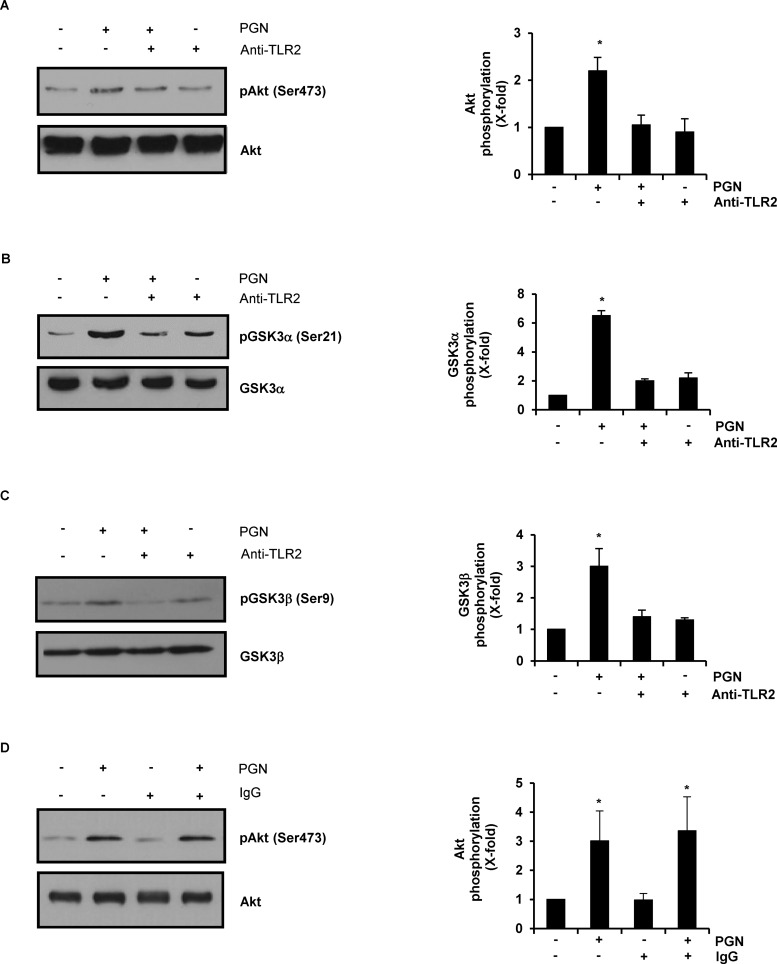
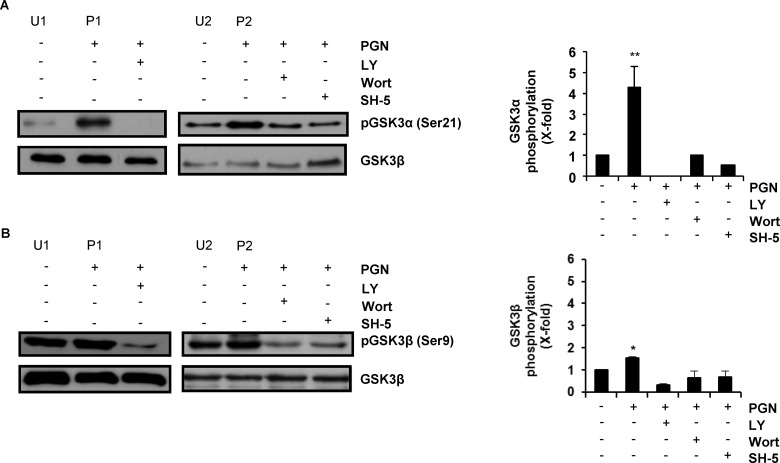
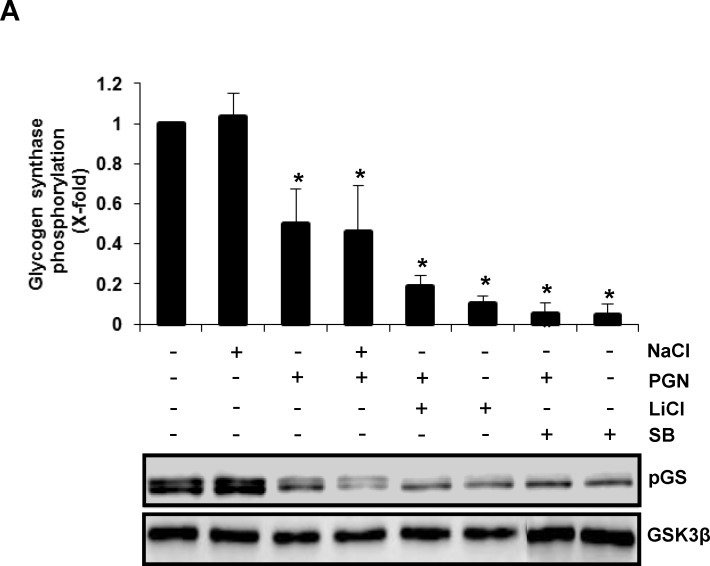
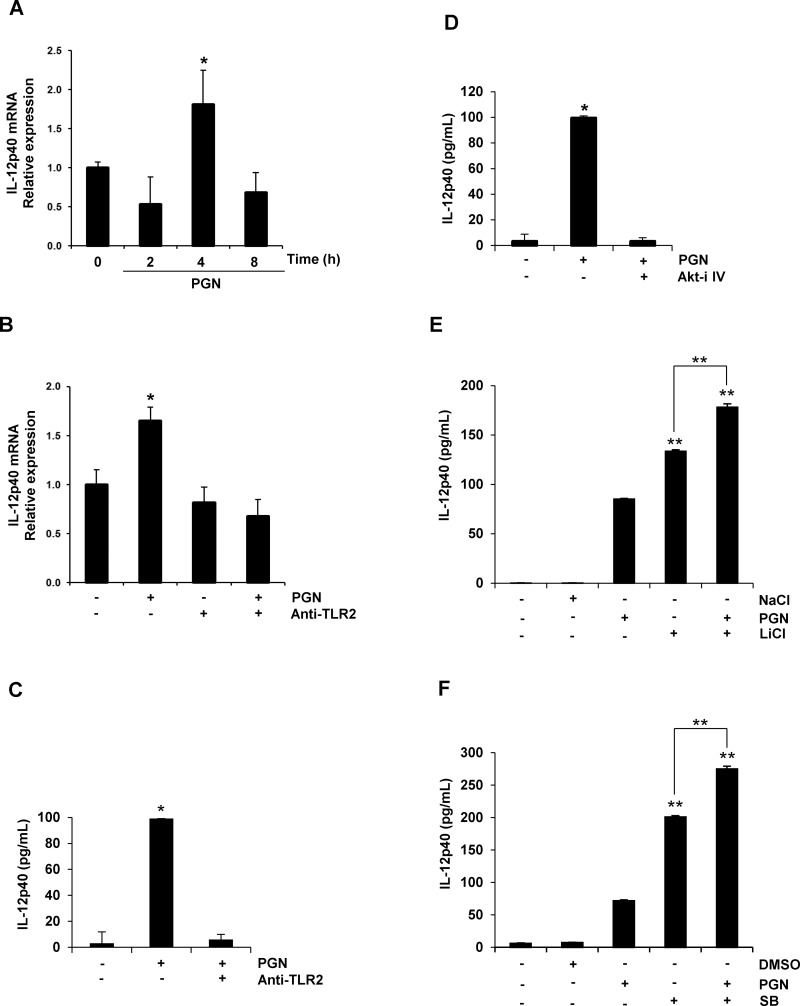
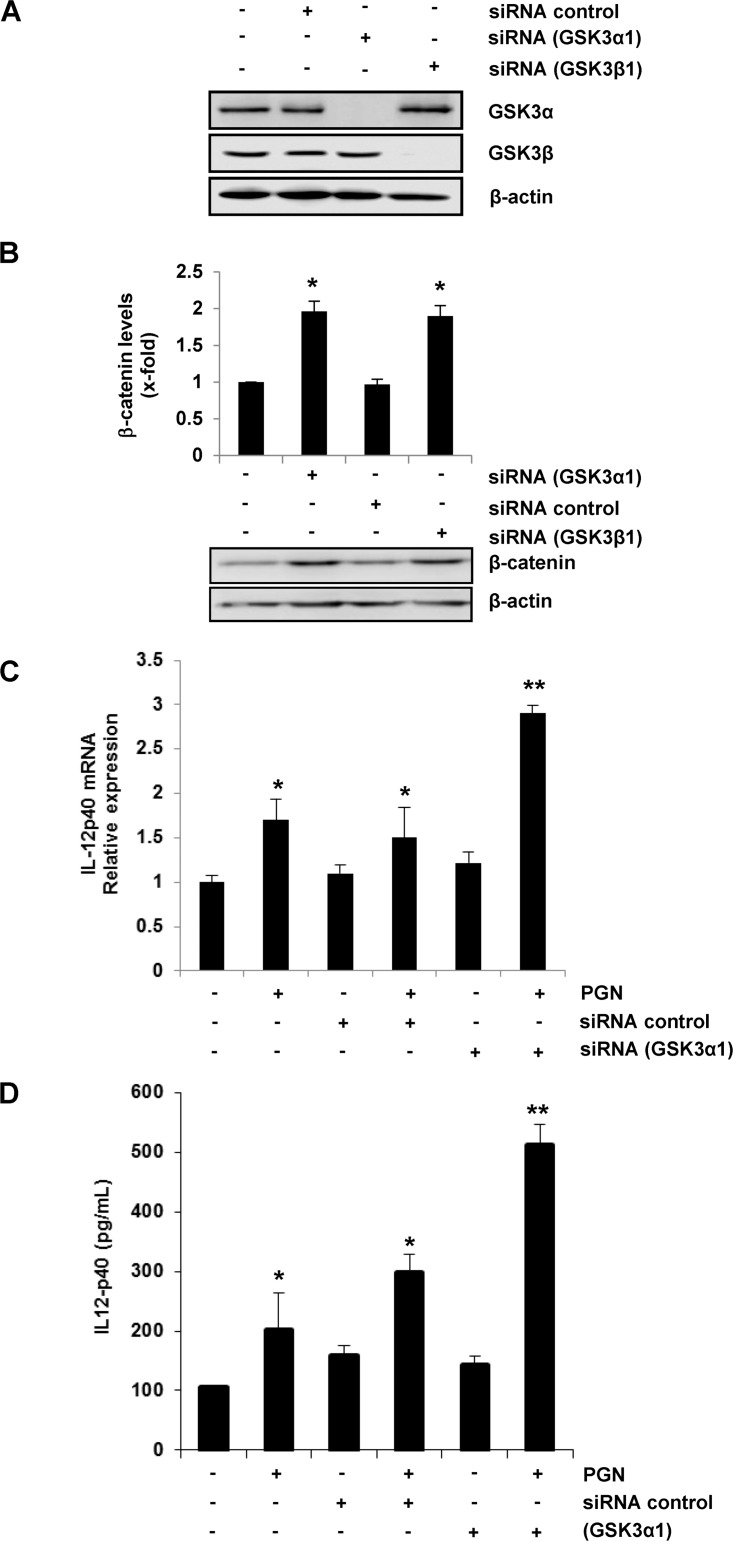
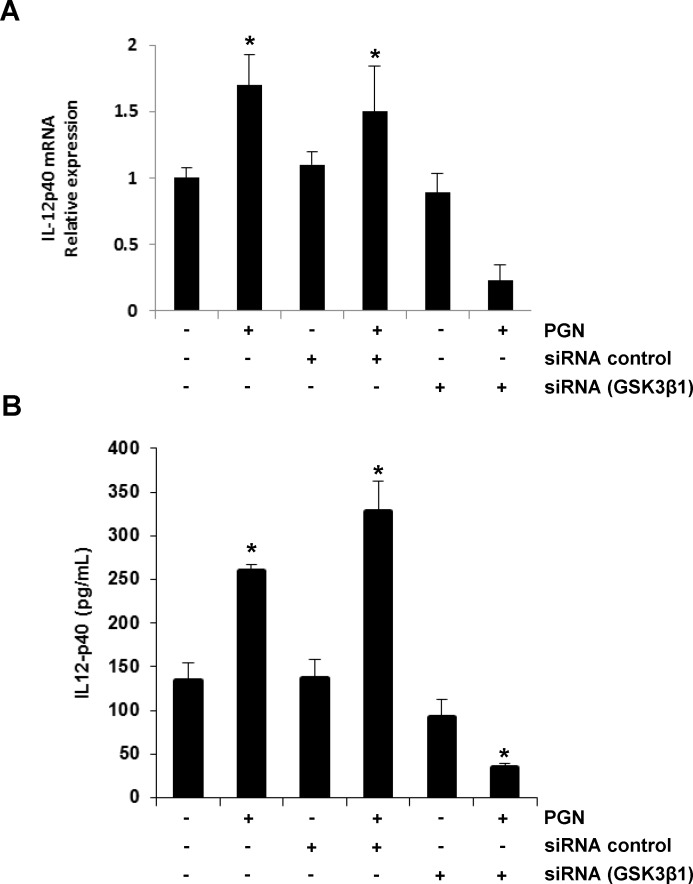
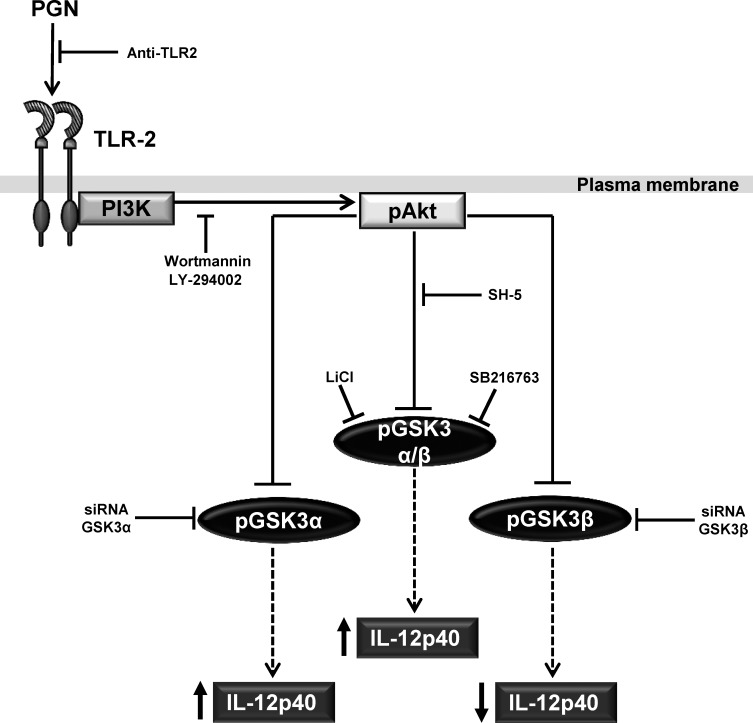
Glycogen synthase kinase 3 (GSK3) is a constitutively active regulatory enzyme that is important in cancer, diabetes, and cardiovascular, neurodegenerative, and psychiatric diseases. While GSK3α is usually important in neurodegenerative and psychiatric diseases GSK3β is fundamental in the inflammatory response caused by bacterial components. Peptidoglycan (PGN), one of the most abundant cell-wall structures of Gram-positive bacteria, is an important inducer of inflammation. To evaluate whether inhibition of GSK3α and GSK3β activity in bovine endothelial cells (BEC) regulates the expression of the pro-inflammatory cytokine IL-12p40, we treated BEC with SDS-purified PGN from Staphylococcus aureus. We found that PGN triggered a TLR2/PI3K/Akt-dependent phosphorylation of GSK3α at Ser21, GSK3β at Ser9, and NF-κB p65 subunit (p65) at Ser536, and the phosphorylation of GSK3α was consistently higher than that of GSK3β. The expression of IL-12p40 was inhibited in BEC stimulated with PGN and pre-treated with a specific neutralizing anti-TLR2 antibody that targets the extracellular domain of TLR2 or by the addition of Akt-i IV (an Akt inhibitor). Inhibition of GSK3α and GSK3β with LiCl or SB216763 induced an increase in IL-12p40 mRNA and protein. The effect of each isoform on IL-12p40 expression was evaluated by siRNA-gene expression silencing of GSK3α and GSK3β. GSK3α gene silencing resulted in a marked increase in IL-12p40 mRNA and protein while GSK3β gene silencing had the opposite effect on IL-12p40 expression. These results indicate that the TLR2/PI3K/Akt-dependent inhibition of GSK3α activity also plays an important role in the inflammatory response caused by stimulation of BEC with PGN from S. aureus.
Conflict of interest statement
Figures
References
-
- McDonald C, Inohara N, Núñez G. Peptidoglycan signaling in innate immunity and inflammatory disease. J Biol Chem. 2005;280: 20177–20180. - PubMed
-
- Chen BC, Kang JC, Lu YT, Hsu MJ, Liao CC, Chiu WT, et al. Rac1 regulates peptidoglycan-induced nuclear factor-kappaB activation and cyclooxygenase-2 expression in RAW 264.7 macrophages by activating the phosphatidylinositol 3-kinase/Akt pathway. Mol Immunol. 2009;46: 1179–1188. 10.1016/j.molimm.2008.11.006 - DOI - PubMed
-
- Lin HY, Tang CH, Chen YH, Wei IH, Chen JH, Lai CH, et al. Peptidoglycan enhances proinflammatory cytokine expression through the TLR2 receptor, MyD88, phosphatidylinositol 3-kinase/AKT and NF-kappaB pathways in BV-2 microglia. Int Immunopharmacol. 2010;10: 883–891. 10.1016/j.intimp.2010.04.026 - DOI - PubMed
Publication types
MeSH terms
Substances
LinkOut - more resources
Full Text Sources
Other Literature Sources
Research Materials
