


Rethinking Rice Preparation for Highly Efficient Removal of Inorganic Arsenic Using Percolating Cooking Water
- PMID: 26200355
- PMCID: PMC4511802
- DOI: 10.1371/journal.pone.0131608
Rethinking Rice Preparation for Highly Efficient Removal of Inorganic Arsenic Using Percolating Cooking Water
Abstract
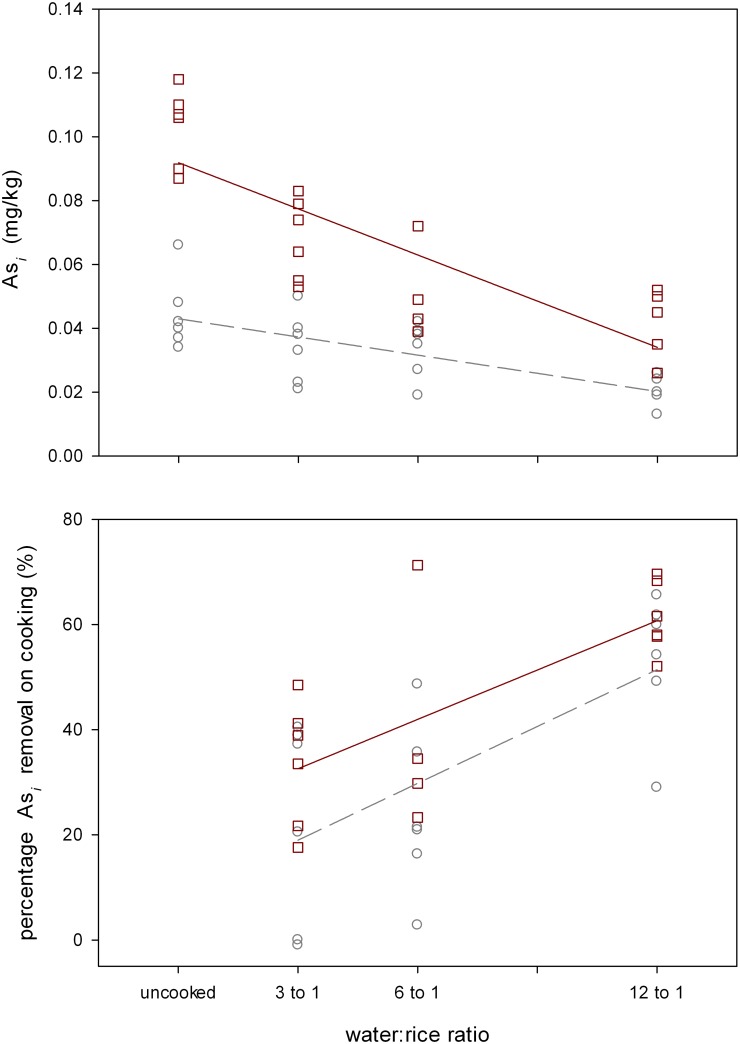
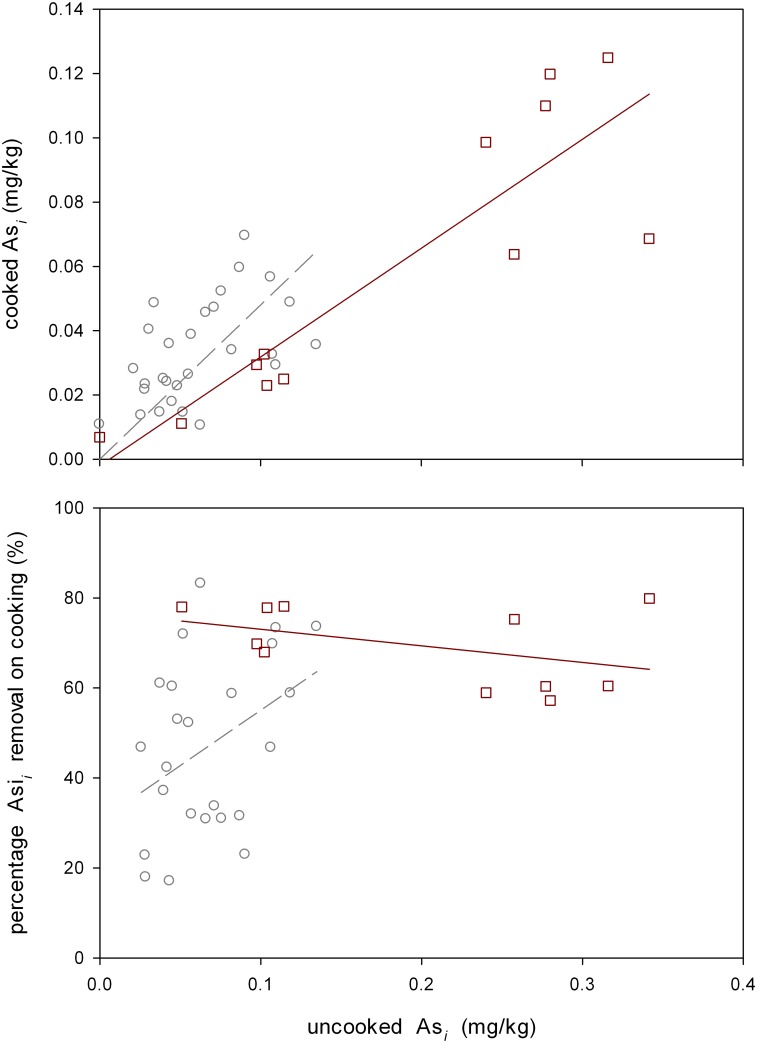
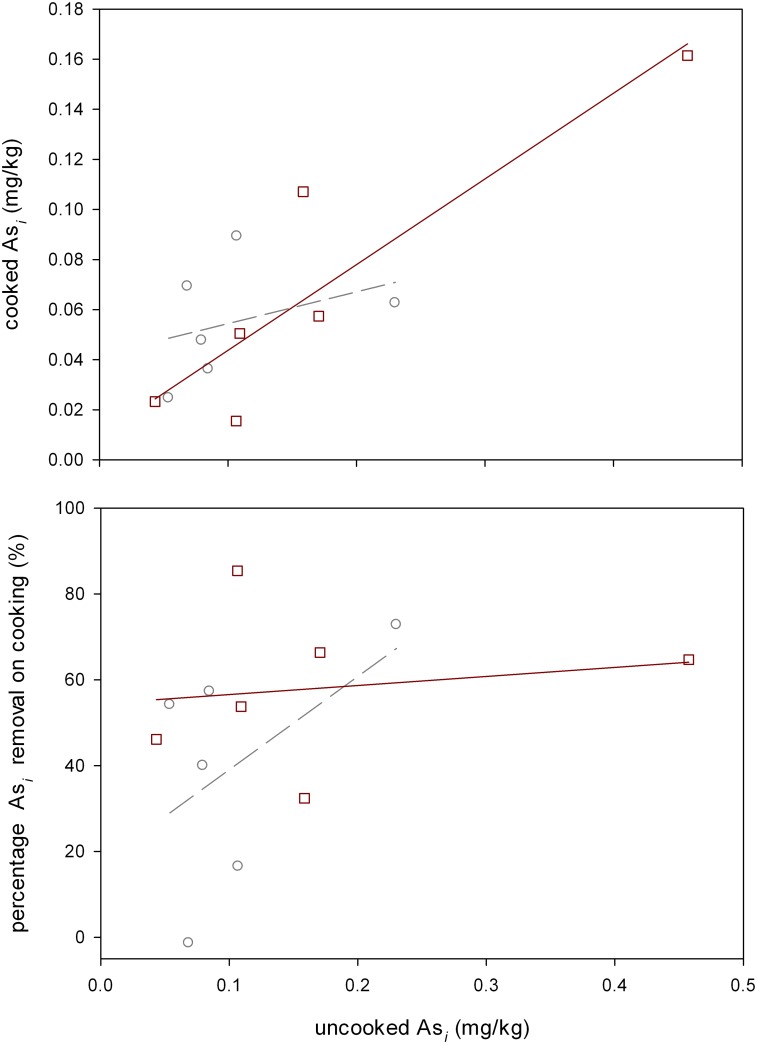
A novel way of cooking rice to maximize the removal of the carcinogen inorganic arsenic (Asi) is presented here. In conventional rice cooking water and grain are in continuous contact, and it is known that the larger the water:rice cooking ratio, the more Asi removed by cooking, suggesting that the Asi in the grain is mobile in water. Experiments were designed where rice is cooked in a continual stream of percolating near boiling water, either low in Asi, or Asi free. This has the advantage of not only exposing grain to large volumes of cooking water, but also physically removes any Asi leached from the grain into the water receiving vessel. The relationship between cooking water volume and Asi removal in conventional rice cooking was demonstrated for the rice types under study. At a water-to-rice cooking ratio of 12:1, 57±5% of Asi could be removed, average of 6 wholegrain and 6 polished rice samples. Two types of percolating technology were tested, one where the cooking water was recycled through condensing boiling water steam and passing the freshly distilled hot water through the grain in a laboratory setting, and one where tap water was used to cook the rice held in an off-the-shelf coffee percolator in a domestic setting. Both approaches proved highly effective in removing Asi from the cooking rice, with up to 85% of Asi removed from individual rice types. For the recycled water experiment 59±8% and 69±10% of Asi was removed, on average, compared to uncooked rice for polished (n=27) and wholegrain (n=13) rice, respectively. For coffee percolation there was no difference between wholegrain and polished rice, and the effectiveness of Asi removal was 49±7% across 6 wholegrain and 6 polished rice samples. The manuscript explores the potential applications and further optimization of this percolating cooking water, high Asi removal, discovery.
Conflict of interest statement
Figures
References
-
- Meharg AA, Williams PN, Adamako E, Lawgali YY, Deacon C, Villada A, et al. Geographical variation in total and inorganic arsenic content of polished (white) rice. Environ Sci Technol. 2009;43: 1612–1617. - PubMed
-
- EFSA. Panel on Contaminants in the Food Chain (CONTAM)/ Scientific opinion on arsenic in food. EFSA J., 2009;7: 1351.
-
- WHO Codex Alimentarius Commission—Geneva 14–18 July 2014. Available: http://www.fao.org/news/story/en/item/238558/icode/.
-
- US FDA Arsenic in rice and rice products. Available: http://www.fda.gov/Food/FoodborneIllnessContaminants/Metals/ucm319870.htm.
-
- Meharg AA, Zhao F-J. Arsenic & rice. Berlin: Springer-Verlag; 2012.
MeSH terms
Substances
LinkOut - more resources
Full Text Sources
Other Literature Sources
Medical
Miscellaneous
