


Antilithiatic Activity of phlorotannin rich extract of Sarghassum Wightii on Calcium Oxalate Urolithiais - InVitro and In Vivo Evaluation
- PMID: 26200544
- PMCID: PMC4752144
- DOI: 10.1590/S1677-5538.IBJU.2014.0357
Antilithiatic Activity of phlorotannin rich extract of Sarghassum Wightii on Calcium Oxalate Urolithiais - InVitro and In Vivo Evaluation
Abstract
Purpose: Urolithiasis is a common urological disorder responsible for serious human affliction and cost to the society with a high recurrence rate. The aim of the present study was to systematically evaluate the phlorotannin rich extract of Sargassum wightii using suitable in vitro and in vivo models to provide scientific evidence for its antilithiatic activity.
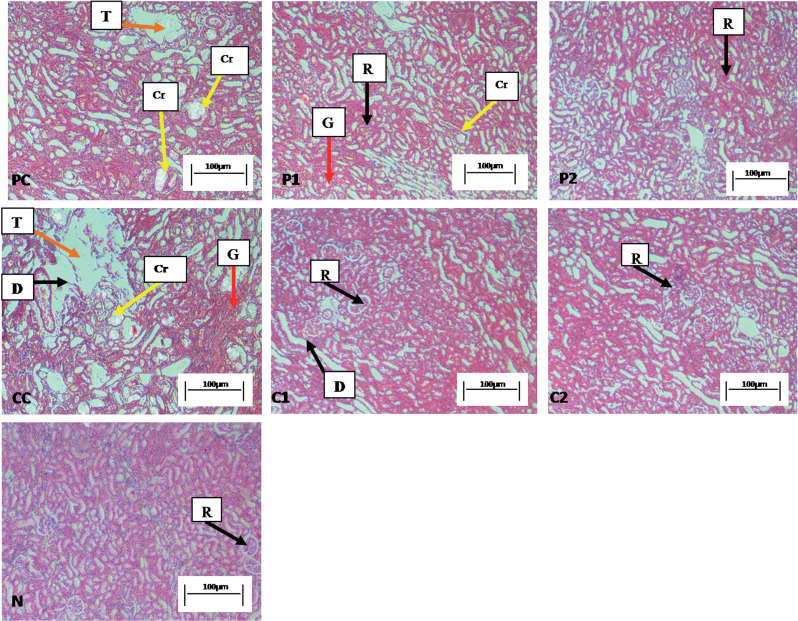
Materials and methods: To explore the effect of Sargassum wightii on calcium oxalate crystallization, in vitro assays like crystal nucleation, aggregation and crystal growth were performed. Calcium oxalate urolithiasis was induced in male Sprague dawley rats using a combination of gentamicin and calculi producing diet (5% ammonium oxalate and rat pellet feed). The biochemical parameters like calcium, oxalate, magnesium, phosphate, sodium and potassium were evaluated in urine, serum and kidney homogenates. Histopathological studies were also done to confirm the biochemical findings.
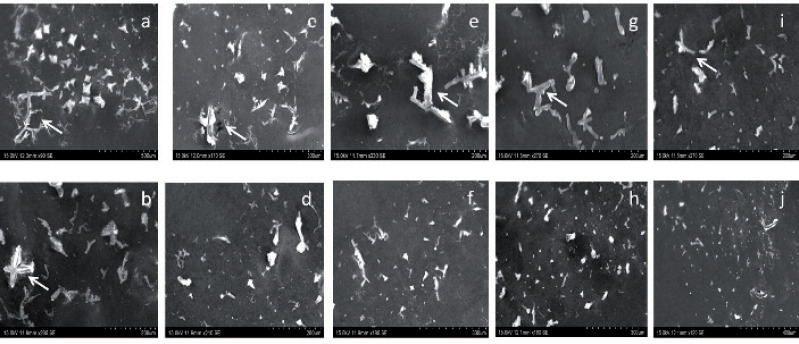
Results: The yield of Sargassum wightii extract was found to be 74.5 gm/kg and confirmed by quantitative analysis. In vitro experiments with Sargassum wightii showed concentration dependent inhibition of calcium oxalate nucleation, aggregation and growth supported by SEM analysis. In the in vivo model, Sargassum wightii reduced both calcium and oxalate supersaturation in urine, serum and deposition in the kidney. The biochemical results were supported by histopathological studies.
Conclusion: The findings of the present study suggest that Sargassum wightii has the ability to prevent nucleation, aggregation and growth of calcium oxalate crystals. Sargassum wightii has better preventive effect on calcium oxalate stone formation indicating its strong potential to develop as a therapeutic option to prevent recurrence of urolithiasis.
Conflict of interest statement
None declared.
Figures
References
-
- Soucie JM, Thun MJ, Coates RJ, McClellan W, Austin H. Demographic and geographic variability of kidney stones in the United States. Kidney Int. 1994;46:893–899. - PubMed
-
- Hughes P. Caring for Australians with Renal Impairment (CARI). The CARI guidelines. Kidney stones epidemiology. Nephrology (Carlton) 2007;12:S26–S30. - PubMed
-
- Pareta SK, Patra KC, Harwansh R. In-vitro calcium oxalate crystallization inhibition by Achyranthes indica linn. Hydroalcoholic extract: An approach to antilithiasis. International Journal of Pharma & Bio Sciences. 2011;2:432–437.
Publication types
MeSH terms
Substances
LinkOut - more resources
Full Text Sources
