


A force balance can explain local and global cell movements during early zebrafish development
- PMID: 26200877
- PMCID: PMC4621544
- DOI: 10.1016/j.bpj.2015.04.029
A force balance can explain local and global cell movements during early zebrafish development
Abstract
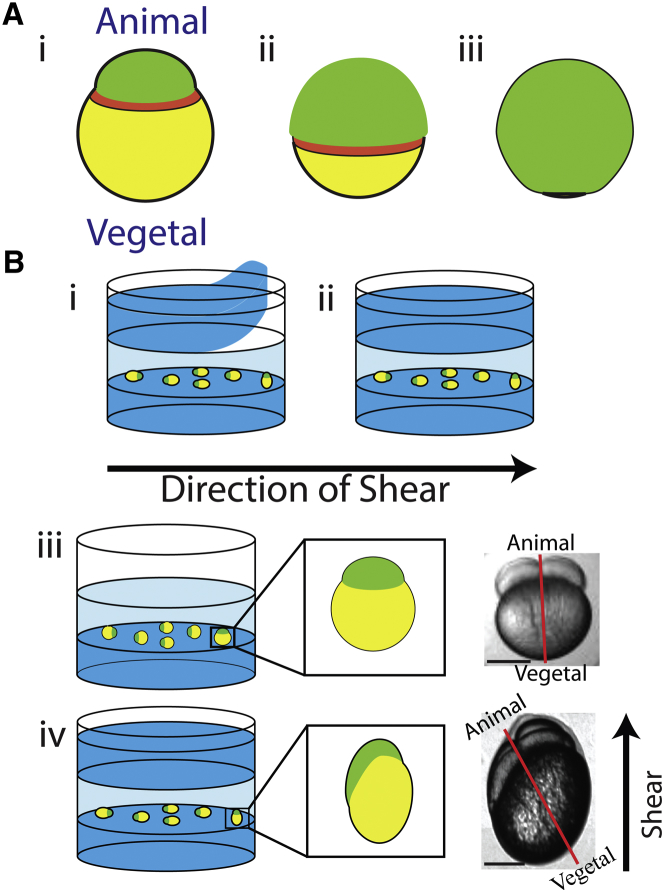
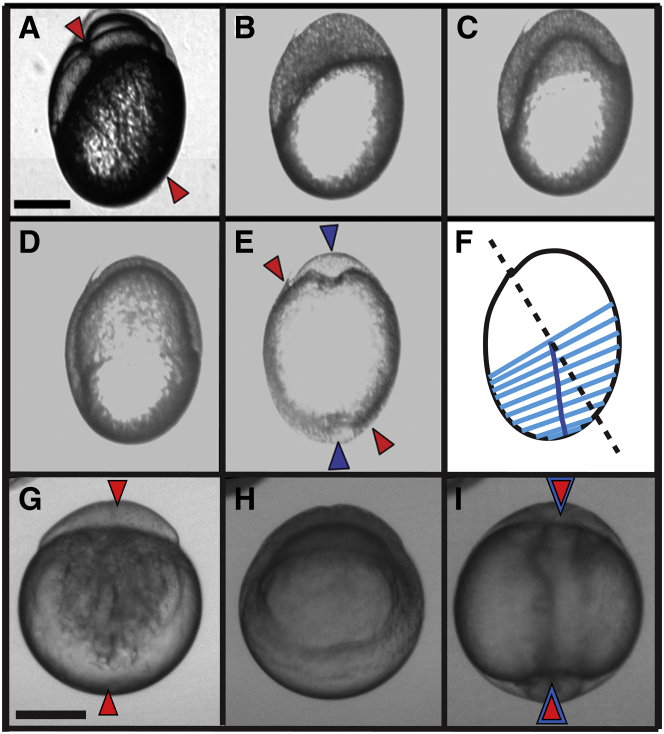
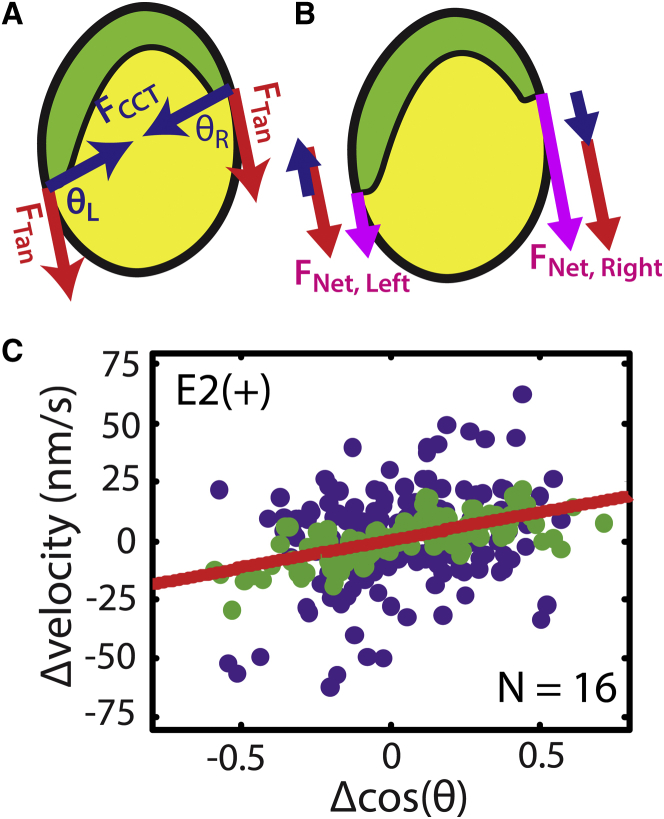
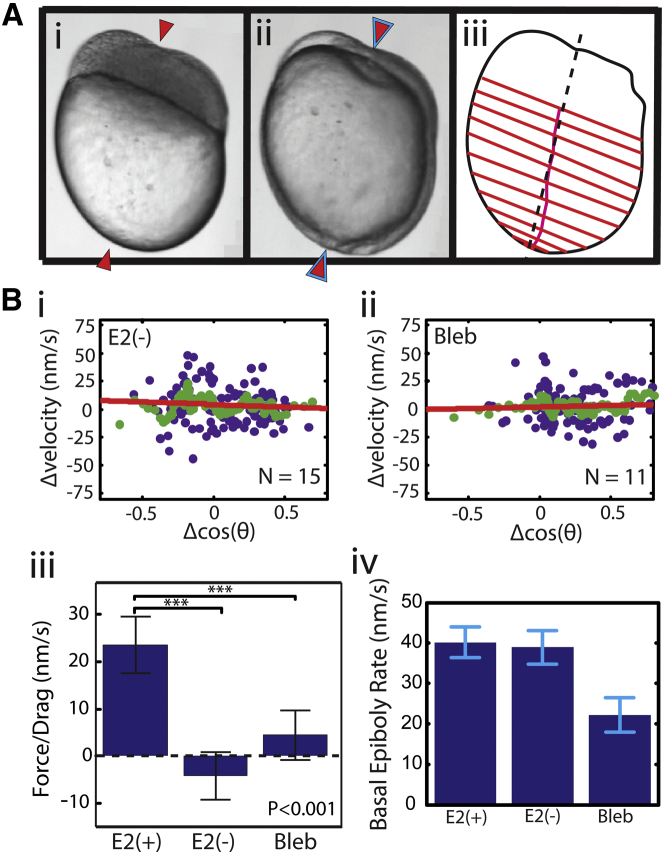
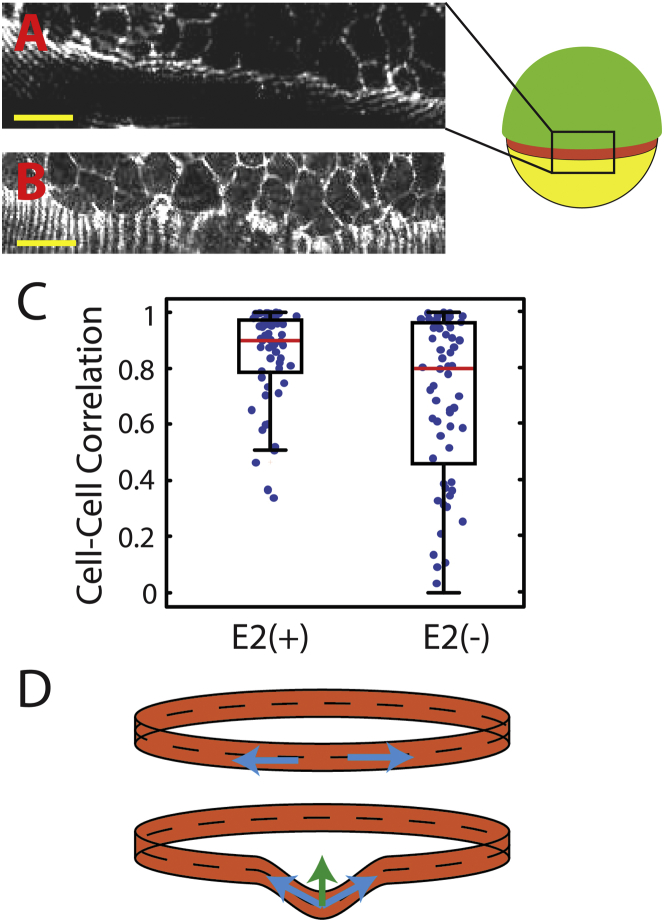
Embryonic morphogenesis takes place via a series of dramatic collective cell movements. The mechanisms that coordinate these intricate structural transformations across an entire organism are not well understood. In this study, we used gentle mechanical deformation of developing zebrafish embryos to probe the role of physical forces in generating long-range intercellular coordination during epiboly, the process in which the blastoderm spreads over the yolk cell. Geometric distortion of the embryo resulted in nonuniform blastoderm migration and realignment of the anterior-posterior (AP) axis, as defined by the locations at which the head and tail form, toward the new long axis of the embryo and away from the initial animal-vegetal axis defined by the starting location of the blastoderm. We found that local alterations in the rate of blastoderm migration correlated with the local geometry of the embryo. Chemical disruption of the contractile ring of actin and myosin immediately vegetal to the blastoderm margin via Ca(2+) reduction or treatment with blebbistatin restored uniform migration and eliminated AP axis reorientation in mechanically deformed embryos; it also resulted in cellular disorganization at the blastoderm margin. Our results support a model in which tension generated by the contractile actomyosin ring coordinates epiboly on both the organismal and cellular scales. Our observations likewise suggest that the AP axis is distinct from the initial animal-vegetal axis in zebrafish.
Copyright © 2015 The Authors. Published by Elsevier Inc. All rights reserved.
Figures
References
-
- Aman A., Piotrowski T. Cell migration during morphogenesis. Dev. Biol. 2010;341:20–33. - PubMed
-
- Friedl P., Gilmour D. Collective cell migration in morphogenesis, regeneration and cancer. Nat. Rev. Mol. Cell Biol. 2009;10:445–457. - PubMed
-
- Trepat X., Wasserman M.R., Fredberg J.J. Physical forces during collective cell migration. Nat. Phys. 2009;5:426–430.
-
- Schier A.F., Talbot W.S. Molecular genetics of axis formation in zebrafish. Annu. Rev. Genet. 2005;39:561–613. - PubMed
-
- Behrndt M., Salbreux G., Heisenberg C.P. Forces driving epithelial spreading in zebrafish gastrulation. Science. 2012;338:257–260. - PubMed
Publication types
MeSH terms
Substances
Grants and funding
LinkOut - more resources
Full Text Sources
Other Literature Sources
Molecular Biology Databases
Miscellaneous
