


TUBERCULOSIS INFECTION MIGHT INCREASE THE RISK OF INVASIVE CANDIDIASIS IN AN IMMUNOCOMPETENT PATIENT
- PMID: 26200971
- PMCID: PMC4544255
- DOI: 10.1590/S0036-46652015000300016
TUBERCULOSIS INFECTION MIGHT INCREASE THE RISK OF INVASIVE CANDIDIASIS IN AN IMMUNOCOMPETENT PATIENT
Abstract
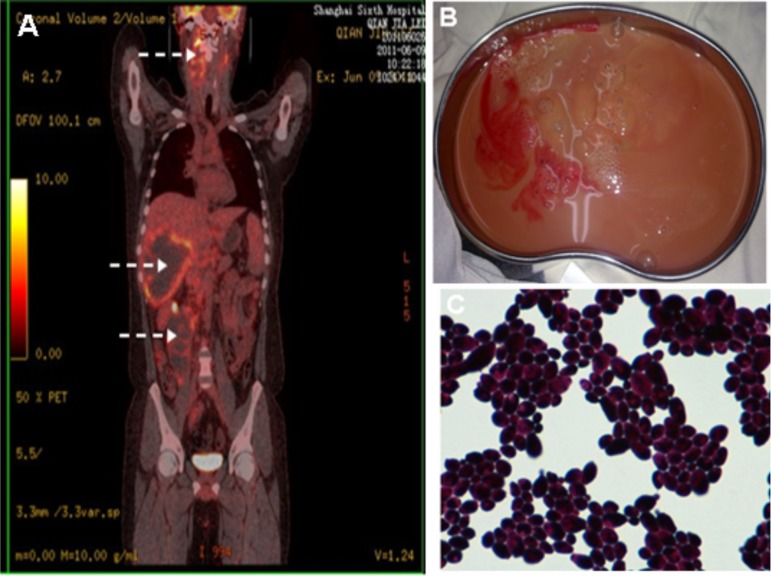
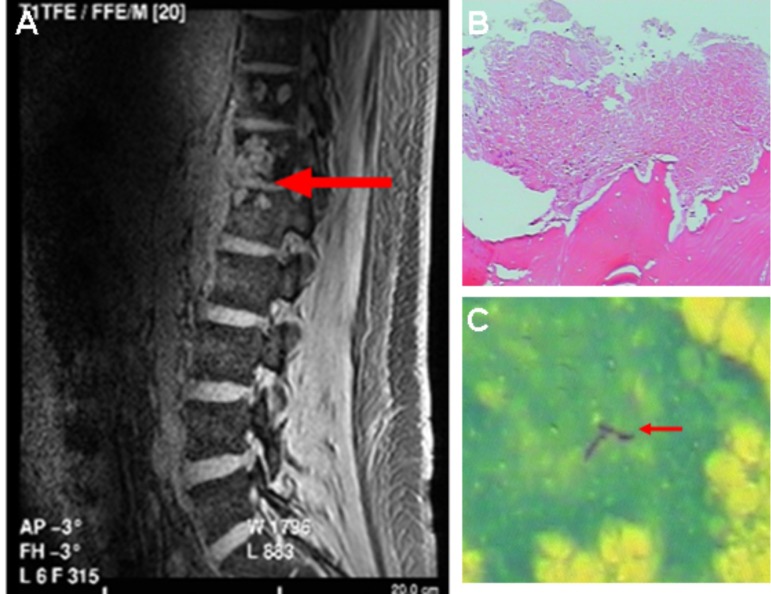
Deep Candida infections commonly occur in immunosuppressed patients. A rare case of a multiple deep organ infection with Candida albicans and spinal tuberculosis was reported in a healthy young man. The 19-year-old man complained of month-long fever and lower back pain. He also had a history of scalded mouth syndrome. Coinfection with Mycobacterium tuberculosis and Candida albicans was diagnosed using the culture of aspirates from different regions. Symptoms improved considerably after antifungal and antituberculous therapy. This case illustrates that infection with tuberculosis might impair the host's immune system and increase the risk of invasive candidiasis in an immunocompetent patient.
As infecções profundas por Candida ocorrem geralmente em pacientes imunossuprimidos. Relatamos caso raro de infecções profundas em múltiplos órgãos por Candida albicans e neuro tuberculose em homem jovem saudável. Um jovem de 19 anos de idade queixou-se de febre e lombalgia há um mês. Relatava ainda histórico de síndrome da boca escaldada. Foi diagnosticada co-infecção por Mycobacterium tuberculosis e Candida albicans em cultura do aspirado de diferentes regiões do organismo. Os sintomas melhoraram significativamente após a terapia antifúngica e antituberculosa. Este caso é apresentado para mostrar que a tuberculose pode prejudicar o sistema imune do hospedeiro e aumentar o risco de candidíase invasiva em paciente imunocompetente.
Figures
References
-
- Almeida AS, Lago PM, Boechat N, Huard RC, Lazzarini LC, Santos AR, et al. Tuberculosis is associated with a down-modulatory lung immune response that impairs Th1-type immunity. J Immunol. 2009;183:718–731. - PubMed
-
- Fridkin SK. The changing face of fungal infections in health care settings. Clin Infect Dis. 2005;41:1455–1460. - PubMed
-
- Hot A, Maunoury C, Poiree S, Lanternier F, Viard JP, Loulergue P, et al. Diagnostic contribution of positron emission tomography with [18F] fluorodeoxyglucose for invasive fungal infections. Clin Microbiol Infect. 2011;17:409–417. - PubMed
Publication types
MeSH terms
LinkOut - more resources
Full Text Sources
