


Provider beliefs associated with cervical cancer screening interval recommendations: A pilot study in Federally Qualified Health Centers
- PMID: 26203428
- PMCID: PMC4508246
- DOI: 10.1016/j.pmedr.2015.05.008
Provider beliefs associated with cervical cancer screening interval recommendations: A pilot study in Federally Qualified Health Centers
Abstract
Background: Among providers who serve low-income and uninsured women, resistance to extending the cervical cancer screening interval following normal Pap and co-test results has been documented. Our objective was to examine provider characteristics and beliefs associated with guideline-consistent screening interval recommendations.
Method: We collected cross-sectional survey data between 2009 and 2010 from 82 primary care providers in six Federally Qualified Health Centers in Illinois, USA. The relationships between characteristics, beliefs, and screening interval recommendations (1 year vs. 3 years) were tested with Pearson chi-square, negative binomial and ordered logistic regression.
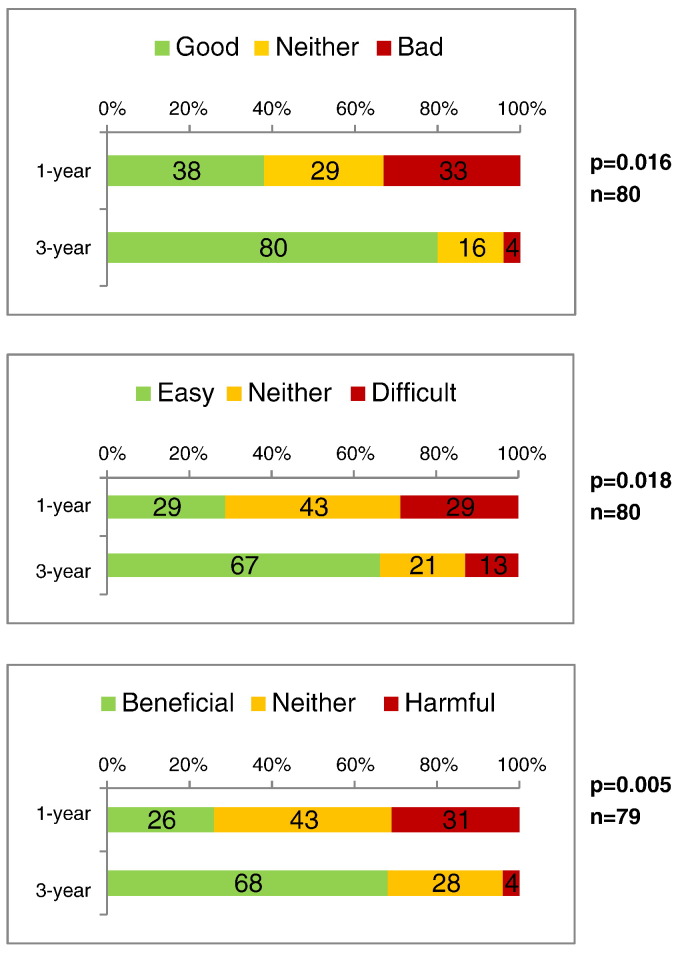
Results: Compared to providers who recommended annual intervals after a normal co-test, providers who recommended a guideline-consistent (i.e., 3 years) screening interval were significantly more likely to report the goodness, ease, and benefit of their recommendation and perceived encouragement for a 3-year interval from professional organizations and journals (p < .05). Providers who recommended a 3-year interval were also less likely to report that longer intervals increase patient risk for cervical cancer (p < .05). Interval recommendations were not associated with provider specialty, gender, or years in practice.
Conclusion: Messages that promote the benefits of longer screening intervals after a normal co-test, the natural history of human papillomavirus and cervical cancer, and low risk of developing cancer with a longer interval may be useful to promote evidence-based screening in this population of Federally Qualified Health Center providers. Dissemination of targeted messages through professional journals and specialty organizations should be considered.
Keywords: Cervical cancer screening; FQHC; Medically underserved; Provider beliefs; Screening intervals.
Figures
References
-
- Abrams M.K., Doty M.M., Ryan J., Hall D., Riley P. The Commonwealth Fund. 2014. Ready or not? How community health centers view their preparedness to care for newly insured patients.
-
- Benard V.B., Johnson C.J., Thompson T.D. Examining the association between socioeconomic status and potential human papillomavirus-associated cancers. Cancer. 2008;113(10 Suppl.):2910–2918. - PubMed
-
- Corbelli J., Borrero S., Bonnema R. Differences among primary care physicians' adherence to 2009 ACOG guidelines for cervical cancer screening. J. Womens Health (Larchmt) 2014;23(5):397–403. - PubMed
Grants and funding
LinkOut - more resources
Full Text Sources
Other Literature Sources
Research Materials