


The Brain Functional State of Music Creation: an fMRI Study of Composers
- PMID: 26203921
- PMCID: PMC4512184
- DOI: 10.1038/srep12277
The Brain Functional State of Music Creation: an fMRI Study of Composers
Abstract
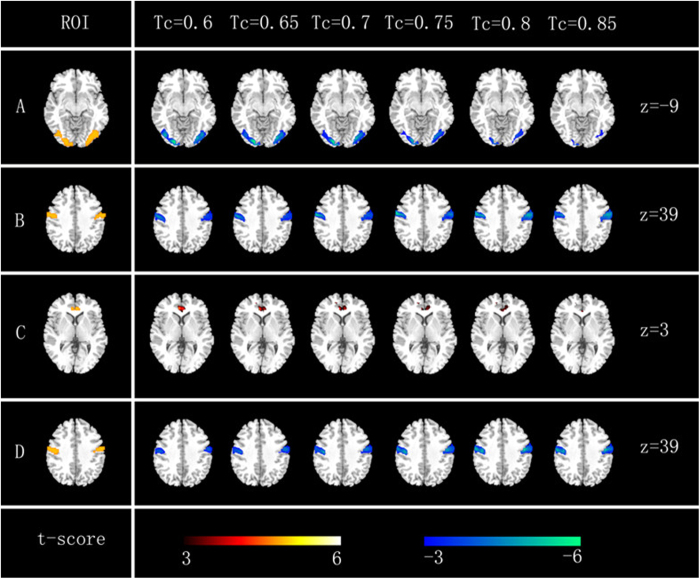
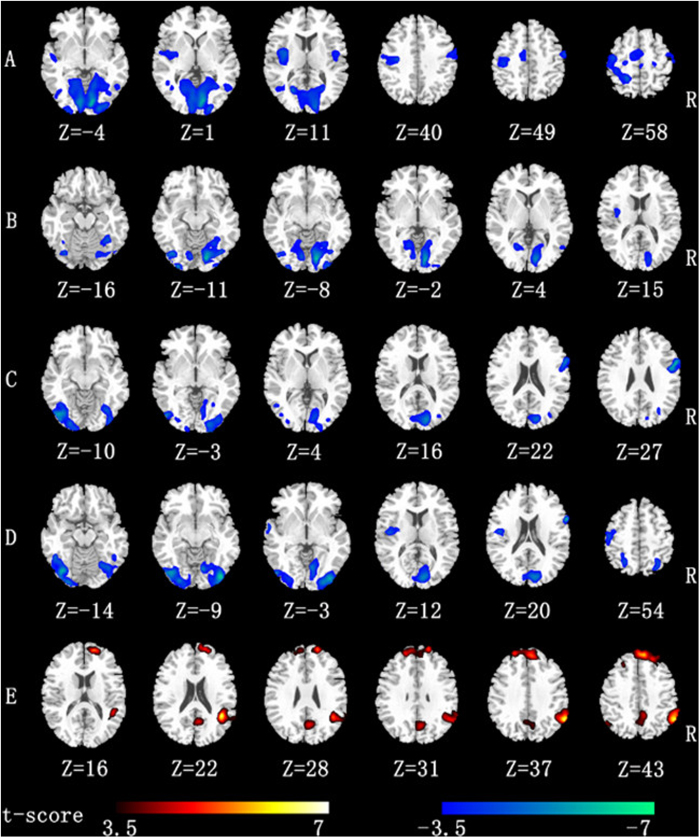
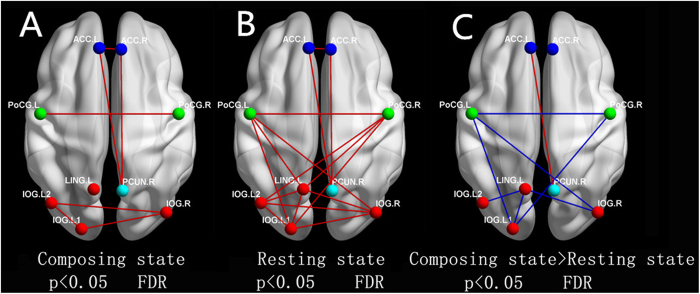
In this study, we used functional magnetic resonance imaging (fMRI) to explore the functional networks in professional composers during the creation of music. We compared the composing state and resting state imagery of 17 composers and found that the functional connectivity of primary networks in the bilateral occipital lobe and bilateral postcentral cortex decreased during the composing period. However, significantly stronger functional connectivity appeared between the anterior cingulate cortex (ACC), the right angular gyrus and the bilateral superior frontal gyrus during composition. These findings indicate that a specific brain state of musical creation is formed when professional composers are composing, in which the integration of the primary visual and motor areas is not necessary. Instead, the neurons of these areas are recruited to enhance the functional connectivity between the ACC and the default mode network (DMN) to plan the integration of musical notes with emotion.
Figures

References
-
- Simonton D. K. Origins of genius. Darwinian perspectives on creativity. (Oxford University Press, 1999).
-
- Sternberg R. J. Handbook of creativity. (Cambridge University Press, 1999).
-
- Lau H. C., Rogers R. D., Ramnani N. & Passingham R. E. Willed action and attention to the selection of action. NeuroImage 21, 1407–1415 (2004). - PubMed
-
- Nathaniel-James D. A. & Frith C. D. The role of the dorsolateral prefrontal cortex: evidence from the effects of contextual constraint in a sentence completion task. NeuroImage 16, 1094–1102 (2002). - PubMed
Publication types
MeSH terms
LinkOut - more resources
Full Text Sources
Other Literature Sources
Medical
