


Bacterial Vaginosis and Subclinical Markers of Genital Tract Inflammation and Mucosal Immunity
- PMID: 26204200
- PMCID: PMC4651020
- DOI: 10.1089/aid.2015.0006
Bacterial Vaginosis and Subclinical Markers of Genital Tract Inflammation and Mucosal Immunity
Abstract
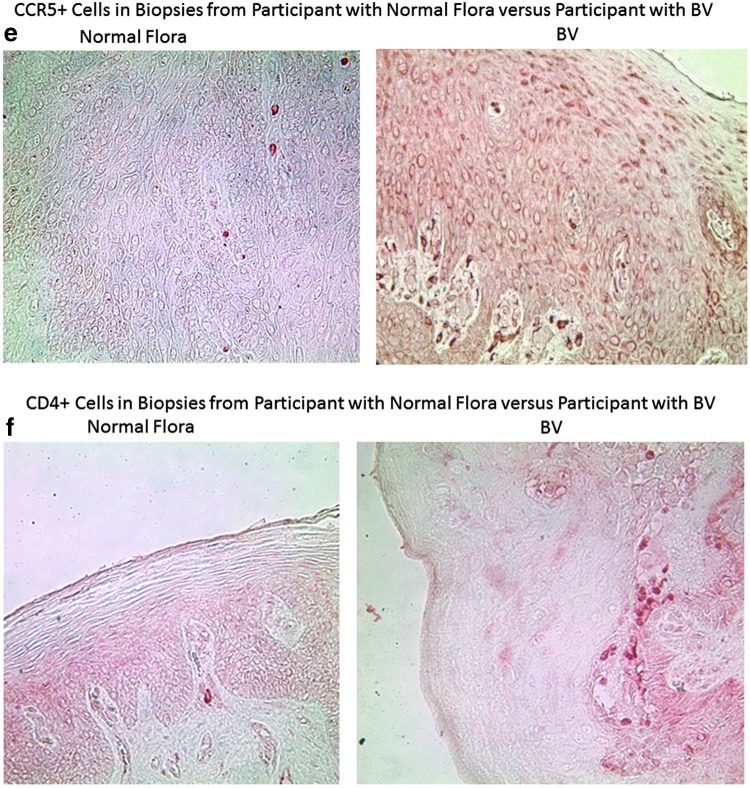
Bacterial vaginosis (BV) has been linked to an increased risk of human immunodeficiency virus (HIV) acquisition and transmission in observational studies, but the underlying biological mechanisms are unknown. We measured biomarkers of subclinical vaginal inflammation, endogenous antimicrobial activity, and vaginal flora in women with BV and repeated sampling 1 week and 1 month after completion of metronidazole therapy. We also compared this cohort of women with BV to a healthy control cohort without BV. A longitudinal, open label study of 33 women with a Nugent score of 4 or higher was conducted. All women had genital swabs, cervicovaginal lavage (CVL) fluid, and cervicovaginal biopsies obtained at enrollment and received 7 days of metronidazole treatment. Repeat sampling was performed approximately 1 week and 1 month after completion of therapy. Participant's baseline samples were compared to a healthy, racially matched control group (n=13) without BV. The CVL from women with resolved BV (Nugent 0-3) had significantly higher anti-HIV activity, secretory leukocyte protease inhibitor (SLPI), and growth-related oncogene alpha (GRO-α) levels and their ectocervical tissues had significantly more CD8 cells in the epithelium. Women with persistent BV after treatment had significantly higher levels of interleukin-1β, tumor necrosis factor alpha (TNF-α), and intercellular adhesion molecule 1 (ICAM-1) in the CVL. At study entry, participants had significantly greater numbers of CCR5(+) immune cells and a higher CD4/CD8 ratio in ectocervical tissues prior to metronidazole treatment, compared to a racially matched cohort of women with a Nugent score of 0-3. These data indicate that BV is associated with changes in select soluble immune mediators, an increase in HIV target cells, and a reduction in endogenous antimicrobial activity, which may contribute to the increased risk of HIV acquisition.
Figures


References
-
- Koumans EH, Sternberg M, Bruce C, et al. : The prevalence of bacterial vaginosis in the United States, 2001–2004; associations with symptoms, sexual behaviors, and reproductive health. Sex Transm Dis 2007;34(11):864–869 - PubMed
-
- Allsworth JE. and Peipert JF: Prevalence of bacterial vaginosis: 2001–2004 National Health and Nutrition Examination Survey data. Obstet Gynecol 2007;109(1):114–120 - PubMed
-
- Kenyon C, Colebunders R, and Crucitti T: The global epidemiology of bacterial vaginosis: A systematic review. Am J Obstet Gynecol 2013;209(6):505–523 - PubMed
-
- Bradshaw CS, Morton AN, Hocking J, et al. : High recurrence rates of bacterial vaginosis over the course of 12 months after oral metronidazole therapy and factors associated with recurrence. J Infect Dis 2006;193(11):1478–1486 - PubMed
Publication types
MeSH terms
Substances
LinkOut - more resources
Full Text Sources
Other Literature Sources
Research Materials
Miscellaneous
