


Regional trade and the nutrition transition: opportunities to strengthen NCD prevention policy in the Southern African Development Community
- PMID: 26205364
- PMCID: PMC4513184
- DOI: 10.3402/gha.v8.28338
Regional trade and the nutrition transition: opportunities to strengthen NCD prevention policy in the Southern African Development Community
Abstract
Background: Addressing diet-related non-communicable diseases (NCDs) will require a multisectoral policy approach that includes the food supply and trade, but implementing effective policies has proved challenging. The Southern African Development Community (SADC) has experienced significant trade and economic liberalization over the past decade; at the same time, the nutrition transition has progressed rapidly in the region. This analysis considers the relationship between regional trade liberalization and changes in the food environment associated with poor diets and NCDs, with the aim of identifying feasible and proactive policy responses to support healthy diets.
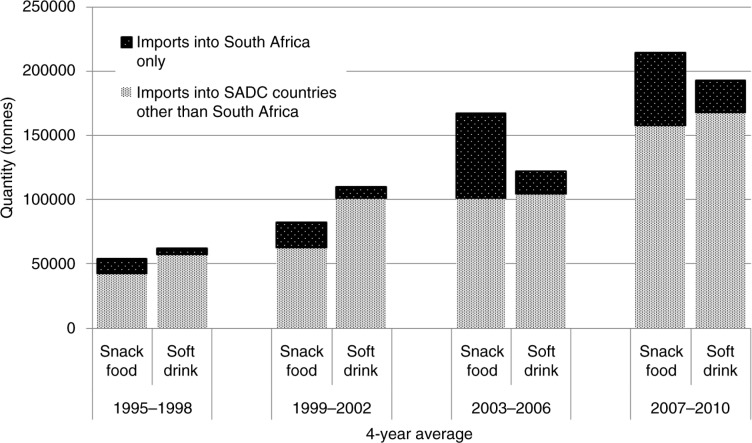
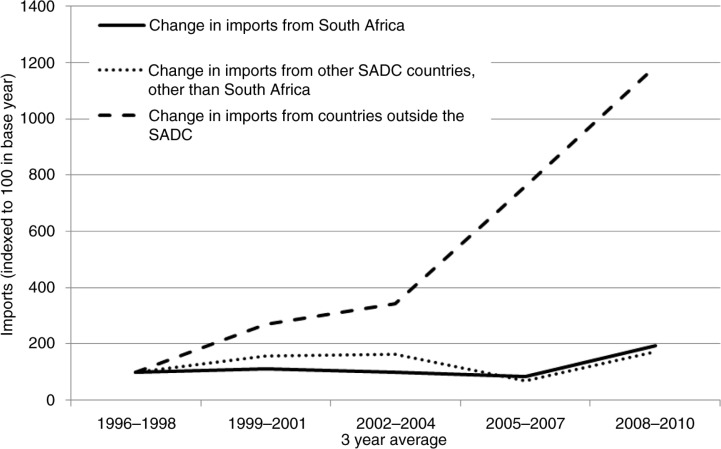
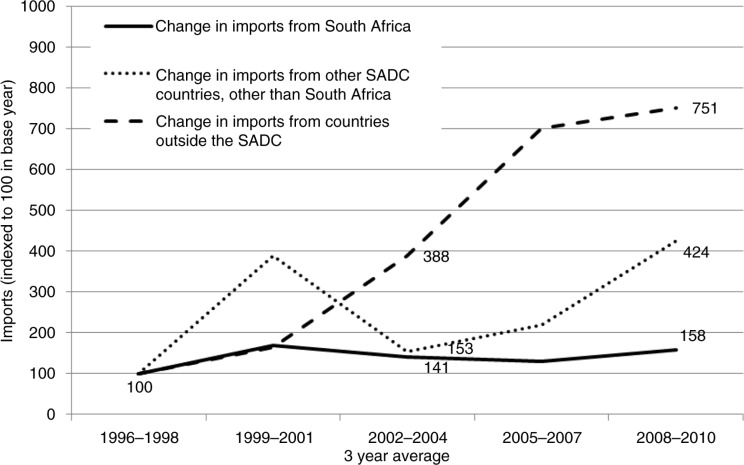
Design: Changes in trade and investment policy for the SADC were documented and compared with time-series graphs of import data for soft drinks and snack foods to assess changes in imports and source country in relation to trade and investment liberalization. Our analysis focuses on regional trade flows.
Results: Diets and the burden of disease in the SADC have changed since the 1990s in parallel with trade and investment liberalization. Imports of soft drinks increased by 76% into SADC countries between 1995 and 2010, and processed snack foods by 83%. South Africa acts as a regional trade and investment hub; it is the major source of imports and investment related to these products into other SADC countries. At the same time, imports of processed foods and soft drinks from outside the region - largely from Asia and the Middle East - are increasing at a dramatic rate with soft drink imports growing by almost 1,200% and processed snack foods by 750%.
Conclusions: There is significant intra-regional trade in products associated with the nutrition transition; however, growing extra-regional trade means that countries face new pressures in implementing strong policies to prevent the increasing burden of diet-related NCDs. Implementation of a regional nutrition policy framework could complement the SADC's ongoing commitment to regional trade policy.
Keywords: Southern Africa; food; health; nutrition; trade.
Figures
References
-
- WHO. Follow-up to the political declaration of the high-level meeting of the general assembly on the prevention and control of non-communicable diseases. Sixty-sixth World Health Assembly WHA66.10 Agenda item 13.1, 13.2; Annex: Global Action Plan for the Prevention and Control of Noncommunicable Diseases 2013–2020; Geneva: World Health Organization. 2013. May 27,
-
- Hunter DJ, Reddy KS. Noncommunicable diseases. N Engl J Med. 2013;369:1336–43. - PubMed
-
- Moodie R, Stuckler D, Monteiro C, Sheron N, Neal B, Thamarangsi T, et al. Profits and pandemics: prevention of harmful effects of tobacco, alcohol, and ultra-processed food and drink industries. Lancet. 2013;381:670–9. - PubMed
-
- Hawkes C, Smith T, Jewell J, Wardle J, Hammond R, Friel S, et al. Smarter food policies for obesity prevention. Lancet. 2015;385:2410–21. - PubMed
-
- Naghavi M, Forouzanfar MH. Burden of non-communicable diseases in sub-Saharan Africa in 1990 and 2010: Global Burden of Diseases, Injuries, and Risk Factors Study 2010. Lancet. 2013;381:S95.
MeSH terms
LinkOut - more resources
Full Text Sources
Other Literature Sources
Medical
Miscellaneous
