


The burden of cervical pre-cancer and cancer in HIV positive women in Zambia: a modeling study
- PMID: 26205980
- PMCID: PMC4512016
- DOI: 10.1186/s12885-015-1558-5
The burden of cervical pre-cancer and cancer in HIV positive women in Zambia: a modeling study
Abstract
Background: HIV infection is associated with a higher incidence of precancerous cervical lesions and their progression to invasive cervical cancer (ICC). Zambia is a global epicenter of HIV and ICC, yet the overall burden of cervical pre-cancer [cervical intraepithelial neoplasia 3 (CIN3)] and ICC among its HIV positive adult female population is unknown. The objective of this study was to determine the burden of cervical disease among HIV positive women in Zambia by estimating the number with CIN3 and ICC.
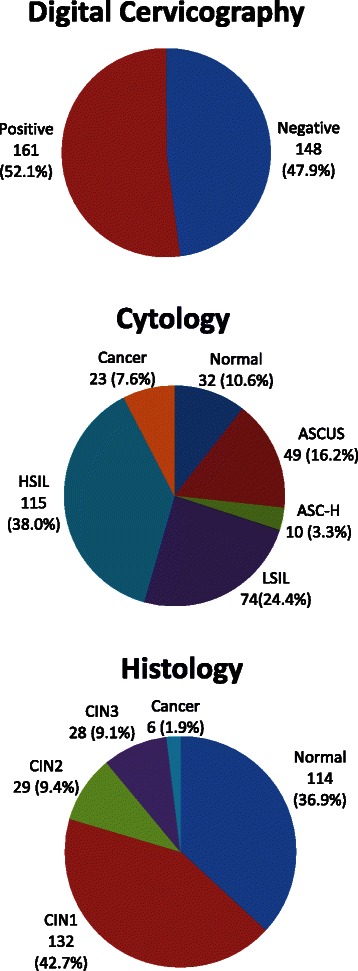
Methods: We conducted a cross-sectional study among 309 HIV positive women attending screening in Lusaka (Zambia's most populated province) to measure the cervical disease burden by visual inspection with acetic acid enhanced by digital cervicography (DC), cytology, and histology. We then used estimates of the prevalence of CIN3 and ICC from the cross-sectional study and Spectrum model-based estimates for HIV infection among Zambian women to estimate the burden of CIN3 and ICC among HIV positive women nationally.
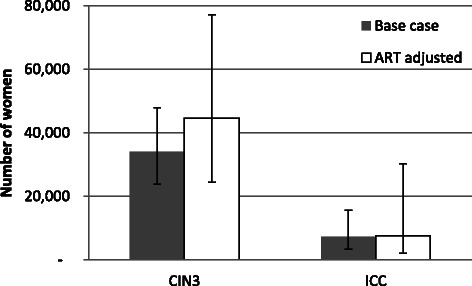
Results: Over half (52 %) of the study participants screened positive by DC, while 45 % had cytologic evidence of high grade squamous intraepithelial lesions (SIL) or worse. Histopathologic evaluation revealed that 20 % of women had evidence of CIN2 or worse, 11 % had CIN3 or worse, and 2 % had ICC. Using the Spectrum model, we therefore estimate that 34,051 HIV positive women in Zambia have CIN3 and 7,297 have ICC.
Conclusions: The DC, cytology, and histology results revealed a large cervical disease burden in this previously unscreened HIV positive population. This very large burden indicates that continued scale-up of cervical cancer screening and treatment is urgently needed.
Figures
References
-
- UNAIDS report on the global AIDS epidemic 2013 [http://www.unaids.org/en/media/unaids/contentassets/documents/epidemiolo...]
Publication types
MeSH terms
Grants and funding
LinkOut - more resources
Full Text Sources
Other Literature Sources
Medical
