


Neurotoxicity of common peripheral nerve block adjuvants
- PMID: 26207854
- PMCID: PMC4606467
- DOI: 10.1097/ACO.0000000000000222
Neurotoxicity of common peripheral nerve block adjuvants
Abstract
Purpose of review: This review outlines the analgesic role of perineural adjuvants for local anesthetic nerve block injections, and evaluates current knowledge regarding whether adjuvants modulate the neurocytologic properties of local anesthetics.
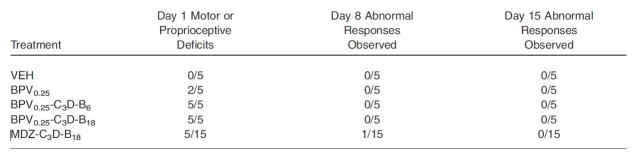
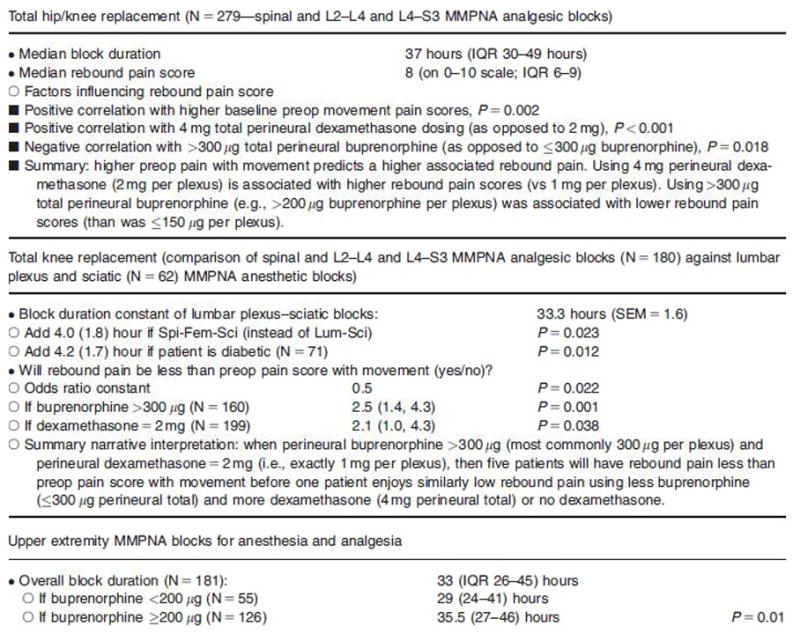
Recent findings: Perineural adjuvant medications such as dexmedetomidine, clonidine, buprenorphine, dexamethasone, and midazolam play unique analgesic roles. The dosing of these medications to prevent neurotoxicity is characterized in various cellular and in-vivo models. Much of this mitigation may be via reducing the dose of local anesthetic used while achieving equal or superior analgesia. Dose-concentration animal models have shown no evidence of deleterious effects. Clinical observations regarding blocks with combined bupivacaine-clonidine-buprenorphine-dexamethasone have shown beneficial effects on block duration and rebound pain without long-term evidence of neurotoxicity. In-vitro and in-vivo studies of perineural clonidine and dexmedetomidine show attenuation of perineural inflammatory responses generated by local anesthetics.
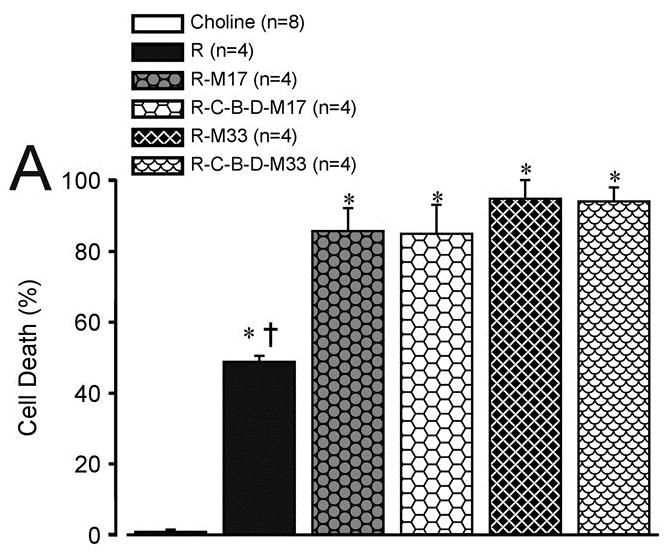
Summary: Dexmedetomidine added as a peripheral nerve blockade adjuvant improves block duration without neurotoxic properties. The combined adjuvants clonidine, buprenorphine, and dexamethasone do not appear to alter local anesthetic neurotoxicity. Midazolam significantly increases local anesthetic neurotoxicity in vitro, but when combined with clonidine-buprenorphine-dexamethasone (sans local anesthetic) produces no in-vitro or in-vivo neurotoxicity. Further larger-species animal testing and human trials will be required to reinforce the clinical applicability of these findings.
Conflict of interest statement
There are no conflicts of interest present. The contents do not reflect the views of the Department of Veterans Affairs or the United States Government.
Figures
References
-
- Lavand’homme PM, Eisenach JC. Perioperative administration of the α2-adrenoceptor agonist clonidine at the site of nerve injury reduces the development of mechanical hypersensitivity and modulates local cytokine expression. Pain. 2003;105(1–2):247–254. - PubMed
-
- Kroin JS, Buvanendran A, Beck DR, et al. Clonidine prolongation of lidocaine analgesia after sciatic nerve block in rats is mediated via the hyperpolarization-activated cation current, not by α-adrenoreceptors. Anesthesiology. 2004 Aug;101(2):488–494. - PubMed
-
- Koppert W, Ihmsen H, Körber N, et al. Different profiles of buprenorphine-induced analgesia and antihyperalgesia in a human pain model. Pain. 2005 Nov;118(1–2):15–22. - PubMed
-
- Leffler A, Frank G, Kristner K, et al. Local anesthetic-like inhibition of voltage gated Na+ channels by the partial μ-opioid receptor agonist buprenorphine. Anesthesiology. 2012 Jun;116(6):1335–1346. - PubMed
Publication types
MeSH terms
Substances
Grants and funding
LinkOut - more resources
Full Text Sources
Other Literature Sources
Medical
Research Materials
