


The Cognitive Effects of Antidepressants in Major Depressive Disorder: A Systematic Review and Meta-Analysis of Randomized Clinical Trials
- PMID: 26209859
- PMCID: PMC4772818
- DOI: 10.1093/ijnp/pyv082
The Cognitive Effects of Antidepressants in Major Depressive Disorder: A Systematic Review and Meta-Analysis of Randomized Clinical Trials
Erratum in
-
Erratum.Int J Neuropsychopharmacol. 2016 Apr 27;19(10):pyw031. doi: 10.1093/ijnp/pyw031. Int J Neuropsychopharmacol. 2016. PMID: 27207904 Free PMC article. No abstract available.
Abstract
Background: Cognitive dysfunction is often present in major depressive disorder (MDD). Several clinical trials have noted a pro-cognitive effect of antidepressants in MDD. The objective of the current systematic review and meta-analysis was to assess the pooled efficacy of antidepressants on various domains of cognition in MDD.
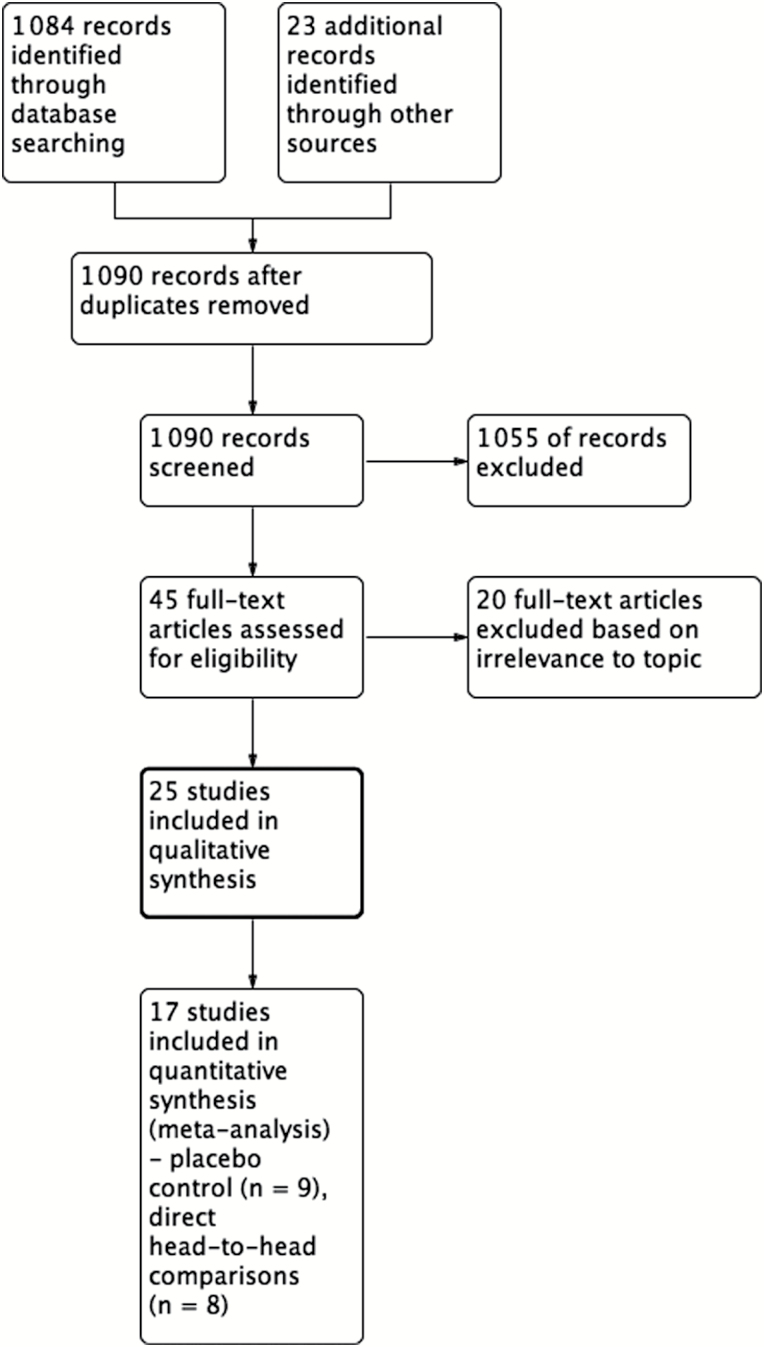
Methods: Trials published prior to April 15, 2015, were identified through searching the Cochrane Central Register of Controlled Trials, PubMed, Embase, PsychINFO, Clinicaltrials.gov, and relevant review articles. Data from randomized clinical trials assessing the cognitive effects of antidepressants were pooled to determine standard mean differences (SMD) using a random-effects model.
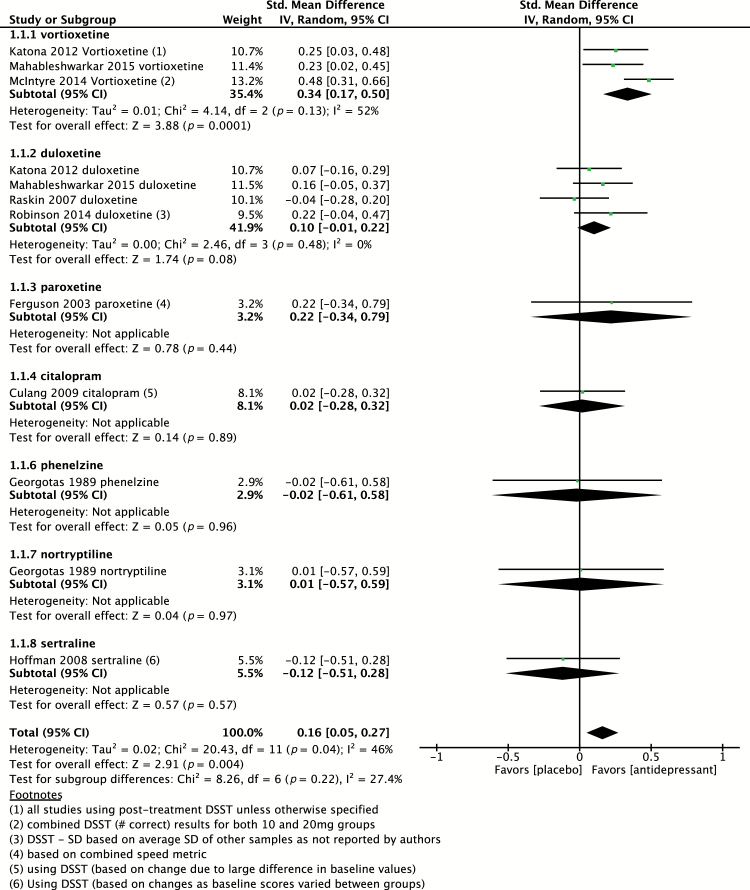
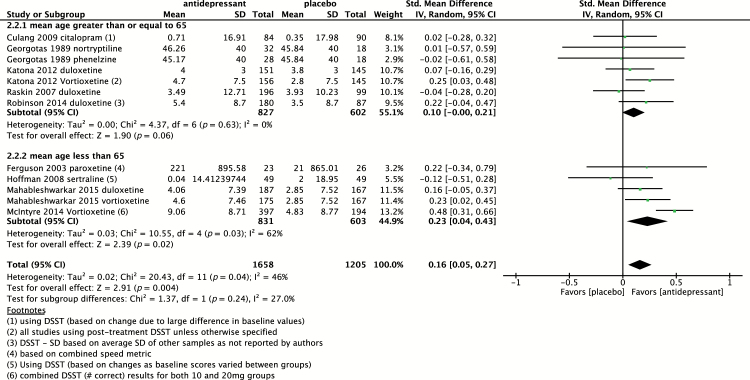
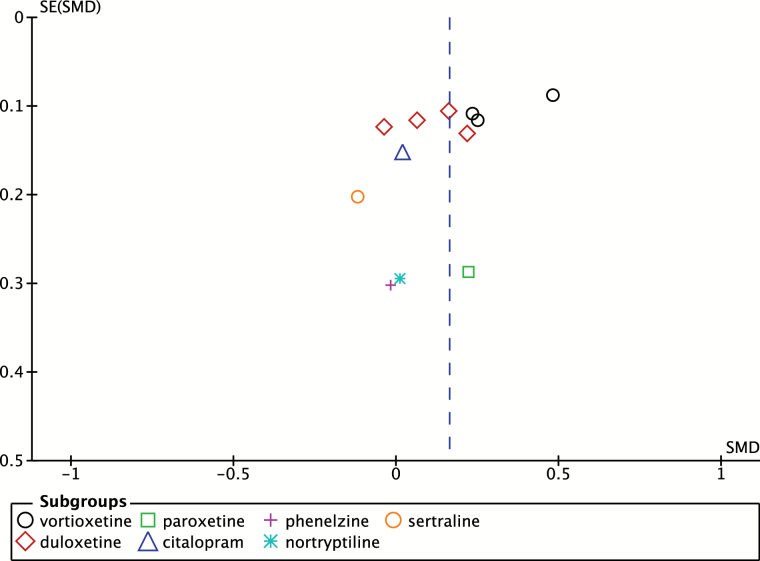
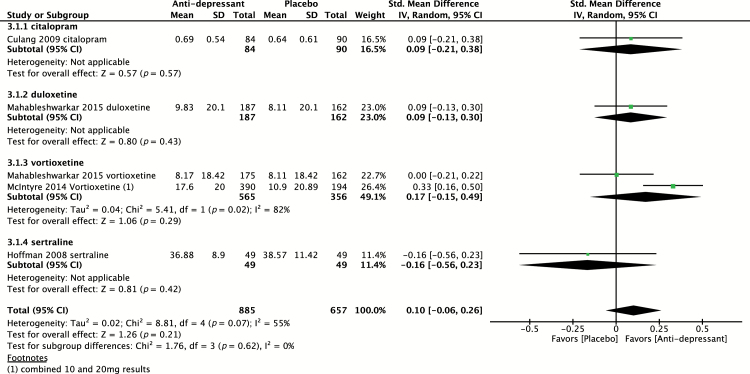
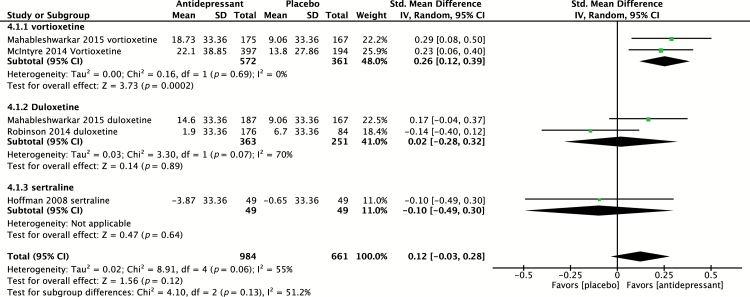
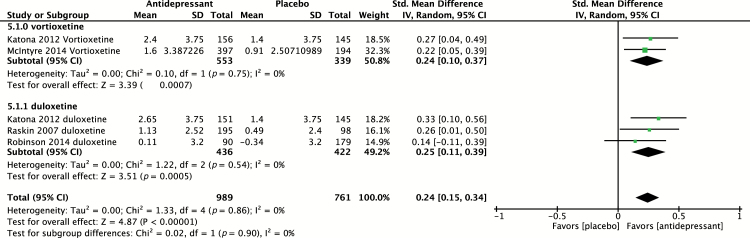
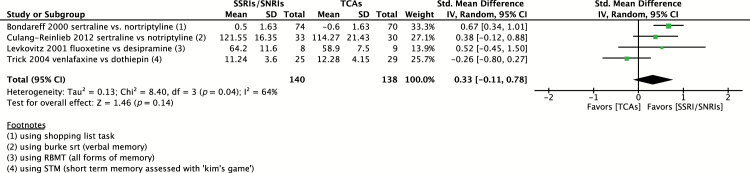
Results: Nine placebo-controlled randomized trials (2 550 participants) evaluating the cognitive effects of vortioxetine (n = 728), duloxetine (n = 714), paroxetine (n = 23), citalopram (n = 84), phenelzine (n = 28), nortryptiline (n = 32), and sertraline (n = 49) were identified. Antidepressants had a positive effect on psychomotor speed (SMD 0.16; 95% confidence interval [CI] 0.05-0.27; I(2) = 46%) and delayed recall (SMD 0.24; 95% CI 0.15-0.34; I(2) = 0%). The effect on cognitive control and executive function did not reach statistical significance. Of note, after removal of vortioxetine from the analysis, statistical significance was lost for psychomotor speed. Eight head-to-head randomized trials comparing the effects of selective serotonin reuptake inhibitors (SSRIs; n = 371), selective serotonin and norepinephrine reuptake inhibitors (SNRIs; n = 25), tricyclic antidepressants (TCAs; n = 138), and norepinephrine and dopamine reuptake inhibitors (NDRIs; n = 46) were identified. No statistically significant difference in cognitive effects was found when pooling results from head-to-head trials of SSRIs, SNRIs, TCAs, and NDRIs. Significant limitations were the heterogeneity of results, limited number of studies, and small sample sizes.
Conclusions: Available evidence suggests that antidepressants have a significant positive effect on psychomotor speed and delayed recall.
Keywords: antidepressants; cognitive function; executive function; major depressive disorder; psychomotor speed; working memory.
© The Author 2015. Published by Oxford University Press on behalf of CINP.
Figures


References
-
- Baune BT, Miller R, McAfoose J, Johnson M, Quirk F, Mitchell D. (2010) The role of cognitive impairment in general functioning in major depression. Psychiatry Res 176:183–189. - PubMed
-
- Baune BT, Renger L. (2014) Pharmacological and non-pharmacological interventions to improve cognitive dysfunction and functional ability in clinical depression--a systematic review. Psychiatry Res 219:25–50. - PubMed
-
- Bondareff W, Alpert M, Friedhoff AJ, Richter EM, Clary CM, Batzar E. (2000) Comparison of sertraline and nortriptyline in the treatment of major depressive disorder in late life. Am J Psych 157:729–736. - PubMed
-
- Bora E, Harrison BJ, Yucel M, Pantelis C. (2013) Cognitive impairment in euthymic major depressive disorder: a meta-analysis. Psychol Med 43:2017–2026. - PubMed
-
- Bortolato B, Carvalho AF, McIntyre RS. (2014) Cognitive dysfunction in major depressive disorder: a state-of-the-art clinical review. CNS Neurol Disord Drug Targets 13:1804–1818. - PubMed
Publication types
MeSH terms
Substances
LinkOut - more resources
Full Text Sources
Other Literature Sources
Medical
Molecular Biology Databases
Miscellaneous
