. 2015 Jul 28:6:7822.
doi: 10.1038/ncomms8822.

The iBeetle large-scale RNAi screen reveals gene functions for insect development and physiology

Affiliations

The iBeetle large-scale RNAi screen reveals gene functions for insect development and physiology

Christian Schmitt-Engel et al. Nat Commun. .

Abstract

Genetic screens are powerful tools to identify the genes required for a given biological process. However, for technical reasons, comprehensive screens have been restricted to very few model organisms. Therefore, although deep sequencing is revealing the genes of ever more insect species, the functional studies predominantly focus on candidate genes previously identified in Drosophila, which is biasing research towards conserved gene functions. RNAi screens in other organisms promise to reduce this bias. Here we present the results of the iBeetle screen, a large-scale, unbiased RNAi screen in the red flour beetle, Tribolium castaneum, which identifies gene functions in embryonic and postembryonic development, physiology and cell biology. The utility of Tribolium as a screening platform is demonstrated by the identification of genes involved in insect epithelial adhesion. This work transcends the restrictions of the candidate gene approach and opens fields of research not accessible in Drosophila.


Conflict of interest statement

M.T. and F.B. are affiliated with Eupheria Biotech GmbH. All other authors declare no competing financial interests.

Figures
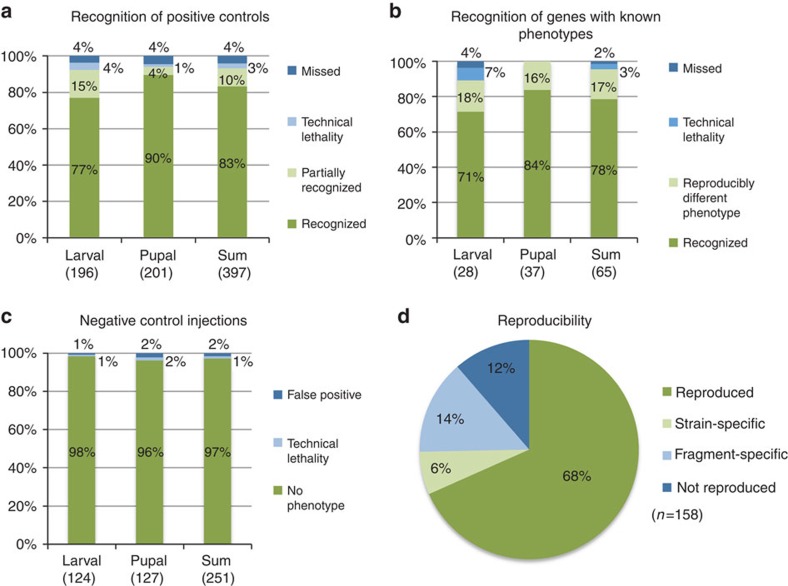
Figure 1
Figure 1. Sensitivity and reproducibility.
(a) Recognition rates of 41 different positive controls shown separately for the larval and pupal injection screens (left and middle bars) and for both together (right bar). About 80% of the positive controls were fully recognized while another 10% were ‘partially recognized' (that is, not all phenotypic aspects were annotated). Only 4% of the positive controls were missed. ‘technical lethality': Expected phenotype not recognized owing to lethality of the animals for example, by injection. (b) Recognition rates for dsRNAs targeting 48 genes with published phenotypes, which had by chance been included in the screen. Of all, 78% were recognized with the published phenotype while 17% were annotated with a ‘reproducibly different phenotype'; that is, the differing phenotype was reproduced in independent experiments under iBeetle conditions. Hence, these different phenotypes are biologically meaningful and reflect that the timing and the degree of gene knockdown influences the phenotype. See Supplementary Note 1 for discussion of these cases. (c) Only 2% of all buffer injections led to false positive annotations. (d) A total of 158 dsRNAs were tested in independent injections with non-overlapping fragments. When the phenotype differed from the screening result, we analysed whether it was a false positive (‘not reproduced'), or whether the genetic background was the reason for the difference (strain specific). Finally, we tested whether the outcome depended on the dsRNA fragment used (fragment specific), which indicated off-target effects or splice variant specific knockdown.
Figure 2
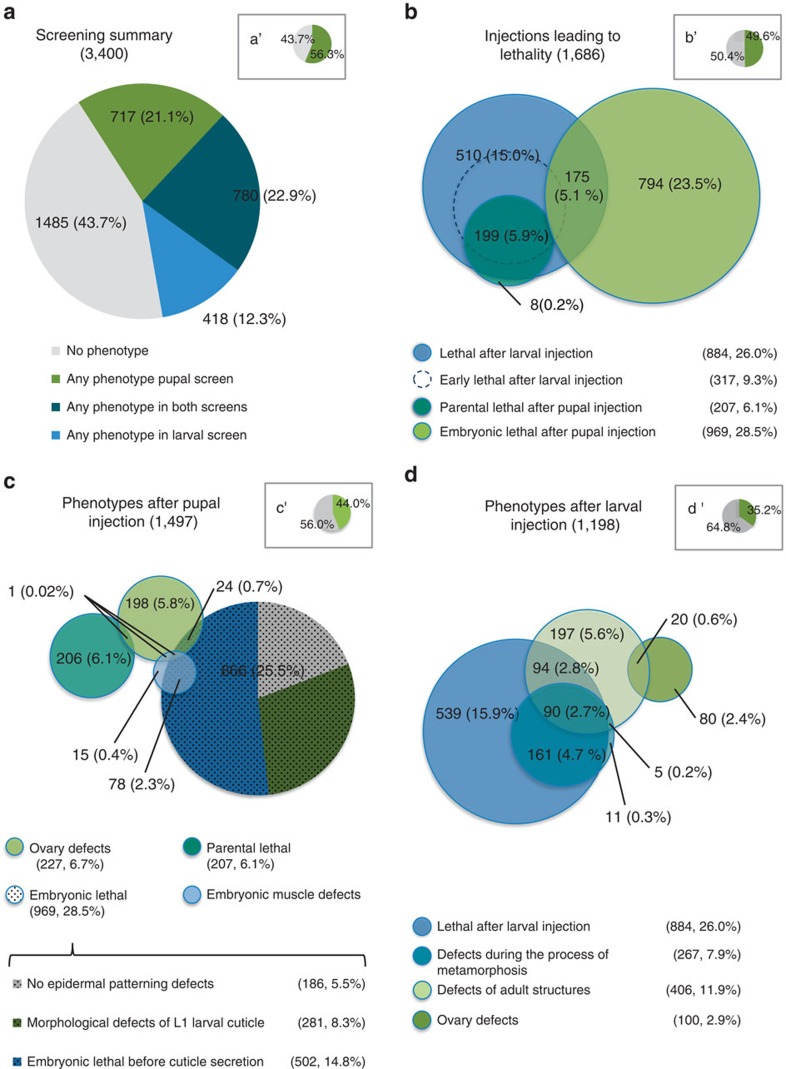
Figure 2. Essential and lethal genes.
(a) For more than 56% of the injected genes, phenotypes were observed. The pupal injection screen revealed phenotypes for a larger portion of genes compared with the larval injection screen. (b) Death of the injected animals was scored 22 days post injection (larval injection; blue circle) and 11 days post injection (pupal and larval injection; dark green and hatched blue circles). Note that embryonic lethality is based on maternal and zygotic gene knockdown. ‘Parental lethal': death of the injected animal. (c) Selected phenotypic categories after pupal injection. Embryonic lethal injections are further categorized showing that more than half of the embryonic lethal genes lead to abortion of embryogenesis before cuticle secretion. (d) Phenotypic categories after larval injection. ‘Defects during the process of metamorphosis': metamorphosis not completed or entered precociously. Insets: relations to the entire data set.
Figure 3
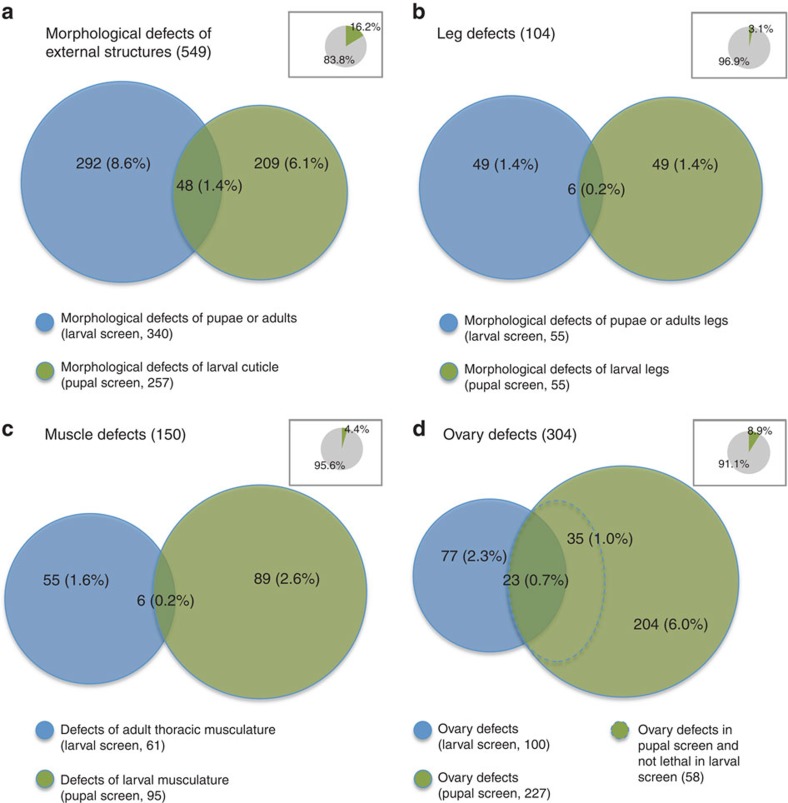
Figure 3. Comparison of gene sets involved in embryonic versus postembryonic development.
(a) The gene sets required for cuticle morphology (that is, epidermal patterning) during embryogenesis and typical insect metamorphosis are largely non-overlapping. This indicates that patterning principles may differ to quite some extent between these two stages of major morphological change. (b,c) This observation also holds true for the subsets affecting leg morphology (b) and GFP marked somatic muscles (c) indicating that both ectodermal and other patterning processes differ. (d) Gene sets required for ovary function. Many genes required for egg production in the pupal injection screen (green circle) were lethal in the larval injection screen. Hence, reduced egg production for these genes was probably due to starvation (green area outside hatched line). When comparing the non-lethal treatments (blue circle and green circle with hatched blue outline) the number of genes with an ovary phenotype in the pupal and larval injection screen are more similar. Insets: relations to the entire data set.
Figure 4
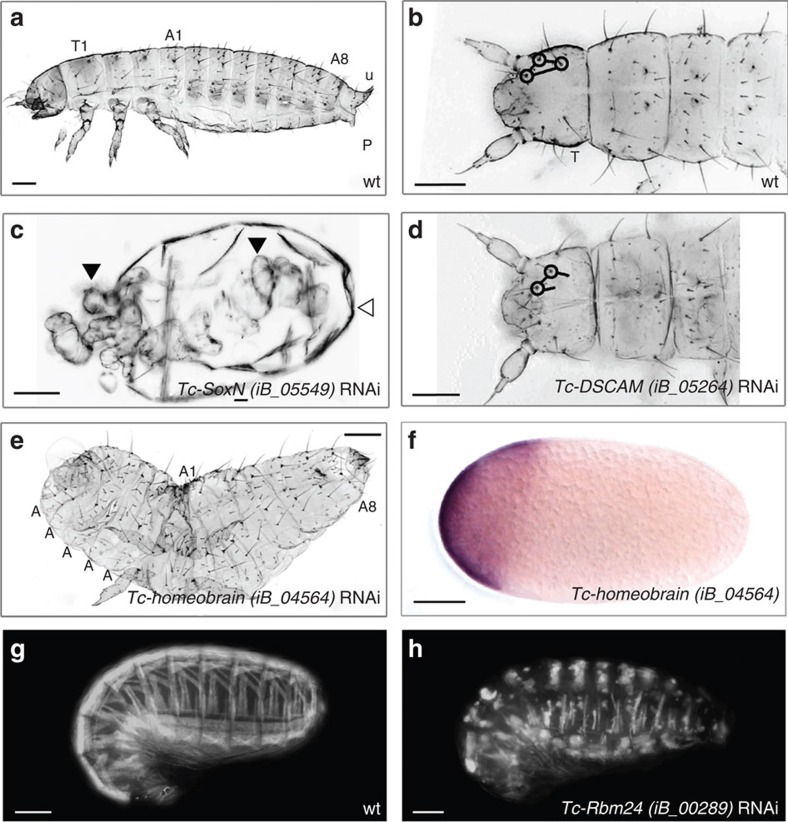
Figure 4. Embryonic phenotypes.
(a,b) Wild-type L1 cuticles, with head setae marked by circles (b). T1: first thoracic segment; A1: first abdominal segment; A8: eighth abdominal segment; U: urogomphi; P: pygopods. (c) Unexpectedly, Tc-SoxN RNAi led to a strongly dorsalized cuticle phenotype without clear axes (embryo: filled arrowheads; vitelline membrane: open arrowhead). (d) Tc-DSCAM RNAi induced the deletion of head setae. (e) Tc-homeobrain RNAi caused a bicaudal phenotype (mirror image abdomina). This function is not known from Drosophila homeobrain and in Tribolium no bicaudal phenotype has been described before. (f) Early anterior zygotic expression of Tc-homeobrain. (g,h) Tc-Rbm24 RNAi led to detached and shortened body wall muscles (wild type pattern in g). A muscle function is conserved in vertebrates while the ortholog was lost in Drosophila. Scale bars indicate 100 μm.
Figure 5
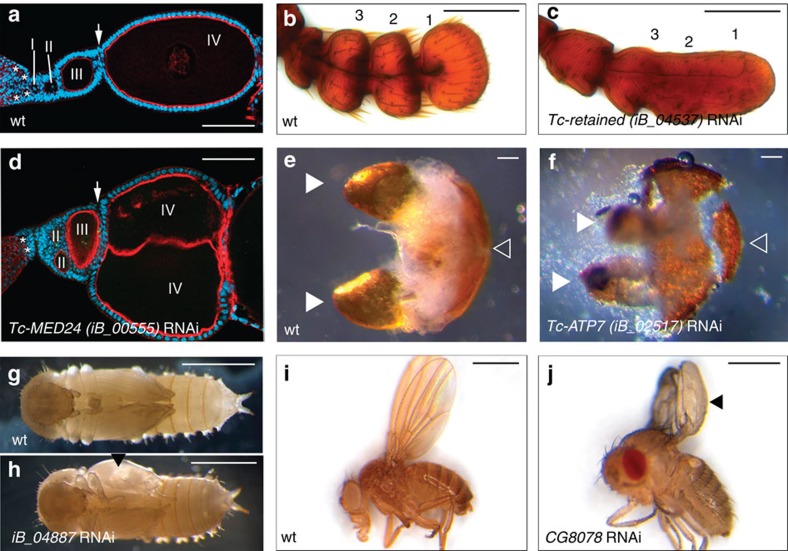
Figure 5. Postembryonic phenotypes.
(a) Wild-type ovary stained for F-actin (red) and DNA (blue). Pro-oocytes (asterisks) become encapsulated by somatic follicle cells and separated by stalk cells (arrow). (d) Upon Tc-MED24 RNAi, egg chambers are misarranged, not separated by stalk cells (arrow) and subsequently they fuse (IV). (b,c) After Tc-retained-RNAi the three most distal antennomeres (1–3) of the adult antenna are fused. (e,f) RNAi against Tc-ATP7 led to strongly reduced odoriferous gland content and partially melanized secretions (white arrowheads; remnant of posterior abdominal cuticle marked by open arrowhead:). (gj) The knockdown of iB_04887 led to wing blisters in Tribolium pupae (arrowhead in h). Transgenic RNAi against the Drosophila ortholog showed the same phenotype, revealing a novel candidate for integrin mediated adhesion (arrowhead in j). Scale bars indicate 100 μm in (af) and 1 mm in (gj).

References

    1. Nüsslein-Volhard C. & Wieschaus E. Mutations affecting segment number and polarity in Drosophila. Nature 287, 795–801 (1980). - PubMed
    1. St Johnston D. The art and design of genetic screens: drosophila melanogaster. Nat. Rev. Genet. 3, 176–188 (2002). - PubMed
    1. Sulston I. A. & Anderson K. V. Embryonic patterning mutants in Tribolium castaneum. Development 122, 805–814 (1996). - PubMed
    1. Maderspacher F., Bucher G. & Klingler M. Pair-rule and gap gene mutants in the flour beetle Tribolium castaneum. Dev. Genes Evol. 208, 558–568 (1998). - PubMed
    1. Pultz M. A. et al. A Genetic screen for zygotic embryonic lethal mutations affecting cuticular morphology in the wasp Nasonia vitripennis. Genetics 154, 1213–1229 (2000). - PMC - PubMed

Publication types

Substances

LinkOut - more resources