


Genetic analysis reveals diversity and genetic relationship among Trichoderma isolates from potting media, cultivated soil and uncultivated soil
- PMID: 26215423
- PMCID: PMC4517564
- DOI: 10.1186/s12866-015-0483-8
Genetic analysis reveals diversity and genetic relationship among Trichoderma isolates from potting media, cultivated soil and uncultivated soil
Abstract
Background: Trichoderma is one of the most common fungi in soil. However, little information is available concerning the diversity of Trichoderma in soil with no previous history of cultivation. This study was conducted to investigate the most common species and the level of genetic relatedness of Trichoderma species from uncultivated soil in relation to cultivated soil and potting media.
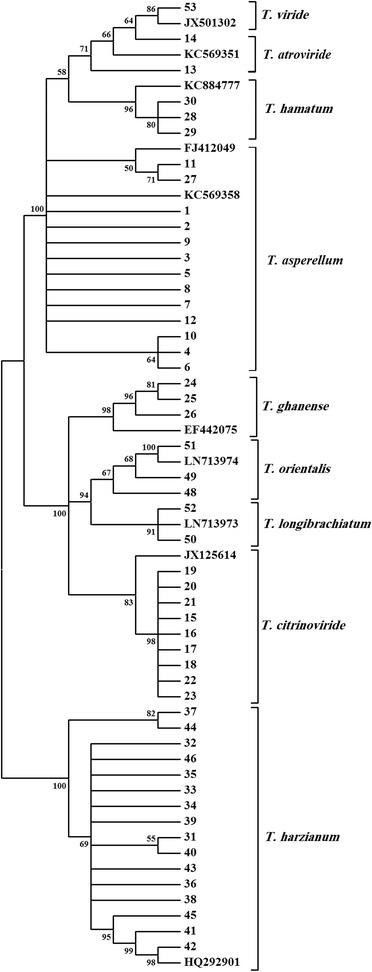
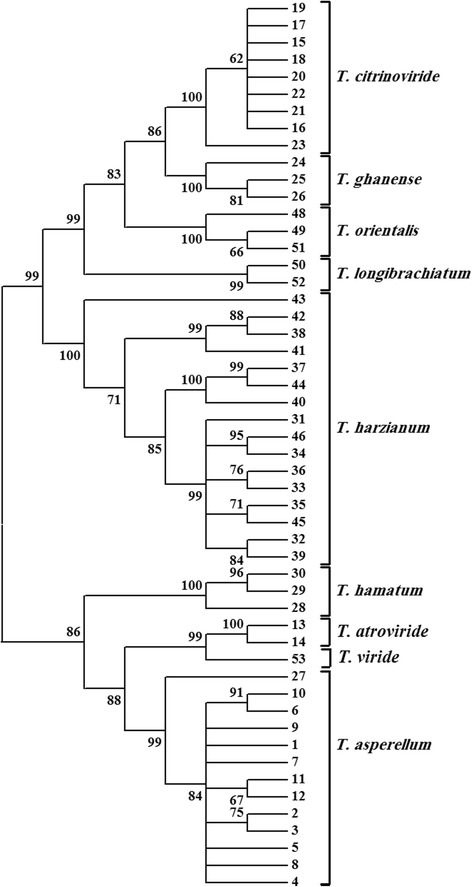
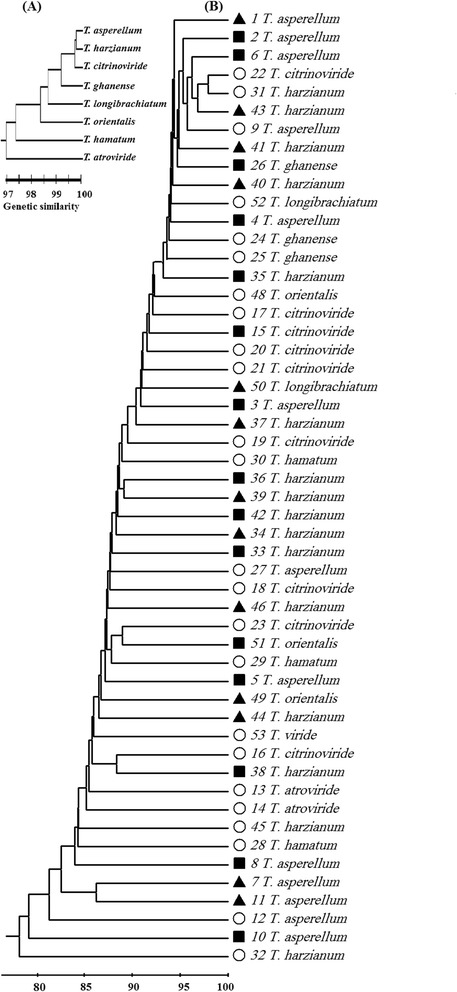
Results: A total of 24, 15 and 13 Trichoderma isolates were recovered from 84 potting media samples, 45 cultivated soil samples and 65 uncultivated soil samples, respectively. Analysis based on the internal transcribed spacer region of the ribosomal RNA (rRNA) and the translation elongation factor gene (EF1) indicated the presence of 9 Trichoderma species: T. harzianum (16 isolates), T. asperellum (13), T. citrinoviride (9), T. orientalis (3), T. ghanense (3), T. hamatum (3), T. longibrachiatum (2), T. atroviride (2), and T. viride (1). All species were found to occur in potting media samples, while five Trichoderma species were recovered from the cultivated soils and four from the uncultivated soils. AFLP analysis of the 52 Trichoderma isolates produced 52 genotypes and 993 polymorphic loci. Low to moderate levels of genetic diversity were found within populations of Trichoderma species (H = 0.0780 to 0.2208). Analysis of Molecular Variance indicated the presence of very low levels of genetic differentiation (Fst = 0.0002 to 0.0139) among populations of the same Trichoderma species obtained from the potting media, cultivated soil and uncultivated soil.
Conclusion: The study provides evidence for occurrence of Trichoderma isolates in soil with no previous history of cultivation. The lack of genetic differentiation among Trichoderma populations from potting media, cultivated soil and uncultivated soil suggests that some factors could have been responsible for moving Trichoderma propagules among the three substrates. The study reports for the first time the presence of 4 Trichoderma species in Oman: T. asperellum, T. ghanense, T. longibrachiatum and T. orientalis.
Figures

References
-
- Harman GE, Taylor AG, Stasz TE. Combining effective strains of Trichoderma harzianum and solid matrix priming to improve biological seed treatments. Plant Dis. 1989;73(8):631–7. doi: 10.1094/PD-73-0631. - DOI
-
- Yurnaliza R, Aryantha INP, Esyanti RR, Susanto A. Antagonistic activity assessment of fungal endophytes from oil palm tissues against ganoderma boninense pat. Plant Pathol J. 2014;13:257–67. doi: 10.3923/ppj.2014.257.267. - DOI
-
- Al-Sadi AM, Al-Said FA, Al-Kiyumi KS, Al-Mahrouqi RS, Al-Mahmooli IH, Deadman ML. Etiology and characterization of cucumber vine decline in Oman. Crop Prot. 2011;30:192–7. doi: 10.1016/j.cropro.2010.10.013. - DOI
Publication types
MeSH terms
Substances
LinkOut - more resources
Full Text Sources
Other Literature Sources
Miscellaneous
